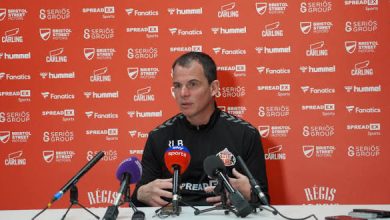
Sunderland used 1000 IQ tactic against arsenal in draw and no body even realised

Sunderland used 1000 IQ tactic against Arsenal in their recent draw, and nobody even realised what was going on until after the final whistle. What looked like a simple defensive setup was actually a brilliantly executed plan from the Sunderland manager, one that completely disrupted Arsenal’s usual attacking rhythm and forced them into unfamiliar territory.

From the start, many assumed Sunderland would sit deep and defend for their lives, but that wasn’t exactly the case. Instead, they combined compact defending with a subtle pressing trap that targeted Arsenal’s most dangerous build-up zones. Whenever Arsenal tried to play through the middle, particularly through Declan Rice and Martin Ødegaard, Sunderland’s midfield trio shifted in unison, cutting off the central passing lanes while allowing the ball to move wide. It seemed harmless, but this was the key to the plan.
By forcing Arsenal to play down the flanks, Sunderland were able to limit their creativity and make them predictable. Arsenal’s wingers, who usually thrive on one on one situations, were constantly doubled up on by Sunderland’s full-backs and tracking midfielders. This meant Bukayo Saka and Gabriel Martinelli had no space to create dangerous moments, and instead of stretching Sunderland’s defense, they found themselves frustrated and recycling the ball backwards.


The most underrated part of Sunderland’s 1000 IQ tactic was how they used their forwards off the ball. Instead of pressing high all the time, they alternated their triggers. One forward would step up to press Arsenal’s centre-back, while the other would drop into midfield to block the passing lane to Rice. This subtle adjustment left Arsenal’s build-up unbalanced, often forcing David Raya into long balls that Sunderland’s defenders could easily handle. It looked like Arsenal were dominating possession, but Sunderland were the ones controlling where that possession went.
Another clever twist came in the timing of Sunderland’s counters. Most teams break forward immediately after winning the ball, but Sunderland were patient. They often held onto the ball for a few seconds, drawing Arsenal’s midfield forward before releasing quick diagonal passes into the space behind the full-backs. That’s how they created several promising moments, using Arsenal’s aggressive positioning against them. It wasn’t about quantity of chances, but quality and timing.
In the second half, when Arsenal tried to overload the midfield by bringing in another attacking player, Sunderland adjusted again. The manager instructed his side to move into a 4-1-4-1 shape, with the single pivot sitting deep to block any through balls. This compactness meant Arsenal had to rely on crosses, which suited Sunderland’s tall defenders perfectly. Every header, clearance, and second ball was won with determination, all part of a plan that seemed improvised but had clearly been rehearsed on the training ground.

Even the substitutions were part of the master plan. Late in the game, Sunderland brought on fresh legs who pressed relentlessly in the final minutes, ensuring Arsenal couldn’t build any momentum for a last-minute winner. The crowd may have thought Sunderland were simply fighting for the point, but in truth, they were executing the final phase of their tactical design, conserving energy early, then using it intelligently when Arsenal started to tire.
When the whistle blew, most headlines focused on Arsenal’s “off day” or “lack of creativity,” but those who watched closely knew it was no coincidence. Sunderland didn’t just park the bus, they played the game like chess, anticipating Arsenal’s every move and responding with precision.
It was a performance that proved why tactics and intelligence matter just as much as individual quality. Sunderland may not have the big names or budget, but on that day, they outsmarted one of the Premier League’s most sophisticated sides. A 1000 IQ tactic indeed, and one that deserves far more recognition than it got.