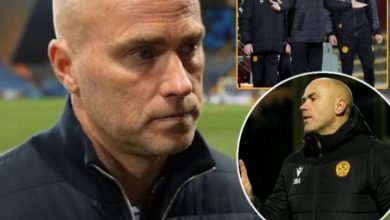
Steve Clarke Drops Key Defender from Scotland Squad After Training Ground Incident – Tactical Shake-Up Ahead of Greece World Cup Qualifier

With Scotland’s FIFA World Cup European Qualifier against Greece looming on Saturday, 15 November (20:45 kick-off), national team manager Steve Clarke has made a dramatic and controversial decision that’s sent shockwaves through Scottish football. A key defender has been dropped from the squad following a training ground incident, just days before one of the most crucial fixtures in Scotland’s qualifying campaign.

The decision has not only forced Clarke into a late tactical rethink but also reignited debates around discipline, leadership, and passion within the Scotland camp. Insiders describe the move as “decisive but divisive,” signalling that Clarke’s commitment to team harmony outweighs even the most dependable individual performances.

Key star Anthony Ralston, the Celtic right-back whose energy, determination, and fearless approach have made him a favourite among fans. His omission comes as a major surprise, particularly given his excellent domestic form and growing influence on the international stage. Ralston had been widely tipped to start in Athens, offering width, defensive reliability, and attacking drive down the right flank.
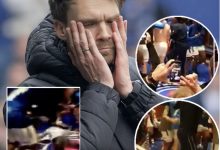
Sources close to the national team revealed that the decision stems from an incident during a high-intensity training session at Oriam, Scotland’s national performance centre. According to witnesses, Ralston reacted angrily after a late challenge during a small-sided drill and exchanged heated words with a member of the coaching team.
While the confrontation was quickly de-escalated, Clarke reportedly viewed the episode as a breach of the discipline and unity that underpin his squad culture. “Steve doesn’t tolerate distractions,” said a source close to the camp. “He values passion but when it crosses a line, he acts. It’s about standards.”

As a result, Ralston has been omitted from the travelling squad to Athens, with Nathan Patterson and Aaron Hickey now vying to start in the right-back position for Saturday night’s clash.
Divided Reaction Among Fans
The move has sharply divided opinion across Scotland. On social media, fans have expressed both shock and support in equal measure. Celtic supporters, in particular, have rallied behind Ralston, describing the decision as “harsh” and “unnecessary” ahead of such an important qualifier.
“Ralston wears his heart on his sleeve,” one fan posted on X (formerly Twitter). “He gives everything for the badge. Dropping him before a World Cup qualifier feels extreme.”
Others, however, have defended Clarke’s no-nonsense stance. “Discipline comes first,” wrote another supporter. “If Clarke feels someone’s behaviour affects the team, he’s right to act. That’s why we’ve made progress under him.”
Tactical Implications for Scotland

Ralston’s absence leaves a noticeable gap in Clarke’s tactical setup. The Celtic full-back’s relentless work rate and understanding with John McGinn and Scott McTominay have been vital to Scotland’s shape and rhythm, especially when transitioning from defence to attack.
Without him, Clarke may opt for Hickey, whose attacking instinct could stretch Greece’s defence, or Patterson, who offers a steadier defensive presence. Either way, the shift is expected to impact how Scotland approach the flanks in Athens.
“Tactically, it’s not just about replacing a player,” said BBC pundit Michael Stewart. “Ralston provides a certain balance his energy and overlap allow Scotland to press higher and maintain shape. Without him, they’ll have to adapt quickly against a technically strong Greek side.”
Clarke Keeps His Cards Close
During Thursday’s pre-match press conference, Clarke remained tight-lipped about the issue, refusing to confirm names or elaborate on reports. “We deal with things internally,” he said. “My focus is on the team, on preparation, and on maintaining the standards that have taken us this far.”
It’s a typical Clarke response—measured, disciplined, and protective of the group. Yet the timing of the decision, so close to a pivotal World Cup qualifier, has raised questions about whether the Scotland boss has taken an unnecessary risk by sacrificing experience and familiarity in the name of discipline.
A Test of Character for Ralston
For Anthony Ralston, the setback is likely to sting. Having fought his way into both Celtic’s starting XI and Scotland’s plans through persistence and professionalism, this marks a rare moment of turbulence.

Those close to the player describe him as “disappointed but determined” to bounce back. Celtic manager Brendan Rodgers is believed to have privately encouraged his defender to use the situation as motivation. “Tony’s built his career on resilience,” a source at Celtic Park said. “He’s been written off before, and every time, he’s come back stronger.”
Eyes on Athens
As Scotland travel to Athens for Saturday’s crucial qualifier, attention now turns to how Clarke’s men will respond to the disruption. With Greece also fighting for a place in the top two of the group, the stakes couldn’t be higher.
For Clarke, this is more than just a tactical adjustment it’s a reaffirmation of his managerial philosophy: no player, no matter how popular, is above the collective.
Whether this bold call proves to be a moment of managerial masterstroke or a costly gamble will become clear under the floodlights in Athens. But one thing is certain Scotland’s pursuit of World Cup qualification continues without one of their Celtic heroes, and the echoes of this decision will linger long after the final whistle.