Unai Emery Praises Nottingham Forest Midfielder’s Strength and Composure After Aston Villa’s Controlled 3–1 Victory at Villa Park
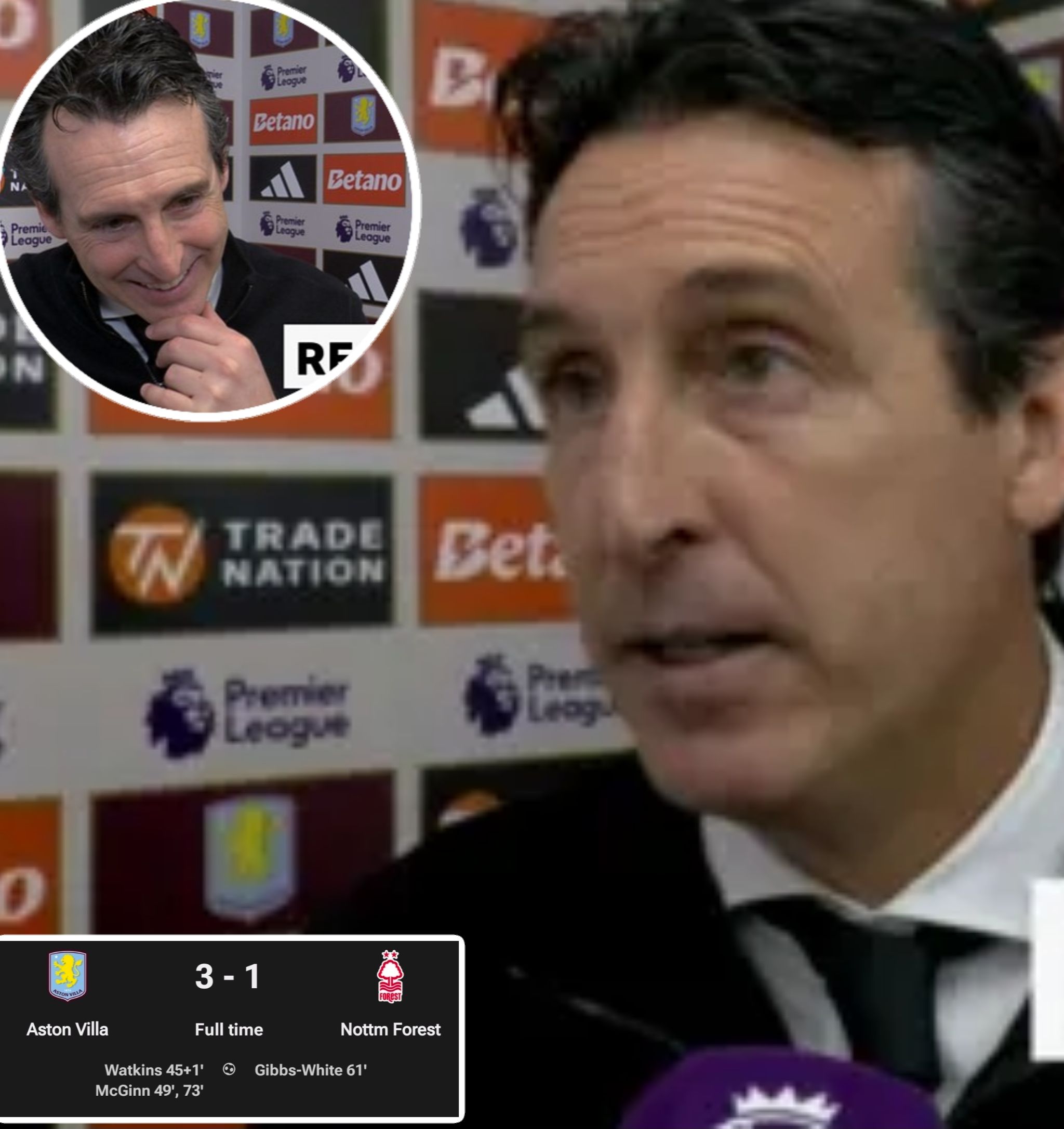
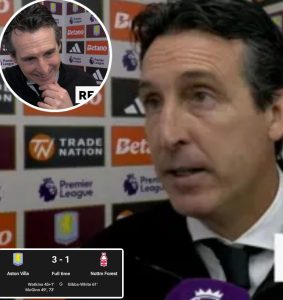
Aston Villa head coach Unai Emery said his side’s 3–1 home victory over Nottingham Forest was built on structure, discipline and decisive moments, while also offering notable praise for an opposition midfielder whose performance stood out despite defeat.
Villa claimed all three points at Villa Park after recovering from a brief first-half setback, reasserting control through improved tempo and game management after the interval. While the scoreline reflected the home side’s attacking efficiency, Emery acknowledged that Forest posed challenges, particularly through midfield, and required Villa to maintain concentration throughout.
“We deserved to win because of our control and balance in the game,” Emery said. “But Nottingham Forest competed well, especially in midfield. There was a player who showed a lot of strength and confidence, even when the game was difficult.”
Villa’s Authority in Possession

From the opening stages, Aston Villa established territorial control. Emery’s side dominated possession and circulated the ball patiently, aiming to draw Forest out of their defensive structure. Douglas Luiz operated as the central pivot, allowing John McGinn and Youri Tielemans to advance into pockets of space between Forest’s midfield and defensive lines.
Villa’s full-backs pushed high early, stretching the pitch and creating space for wide players Leon Bailey and Moussa Diaby to drift inside. Forest responded by adopting a compact defensive shape, focusing on denying central space and limiting Villa’s ability to play through the middle.
The home side’s early pressure was rewarded in the 18th minute. Bailey, operating on the right, cut inside onto his stronger foot and threaded a precise pass into Ollie Watkins. The forward’s movement across the defensive line created separation from his marker, allowing him to guide a composed finish into the far corner.
“We were organised and calm with the ball,” Emery said. “The goal came because we understood when to accelerate.”
Forest’s Measured Response
Rather than retreat after conceding, Nottingham Forest adjusted their approach. They began to play more directly through midfield, looking to exploit spaces left behind Villa’s advancing defensive line and disrupt the home side’s rhythm.
Forest’s equaliser arrived during their most effective spell of the first half. A quick transition caught Villa momentarily stretched, allowing Forest to progress into the final third before finishing low past the goalkeeper. The goal briefly shifted momentum and forced Villa into a period of defensive focus.
“After the equaliser, we had to suffer,” Emery admitted. “That moment was important for our mentality.”
For several minutes, Forest pressed higher and competed aggressively for second balls, reducing Villa’s control and forcing the home side to play with greater caution.
The Midfield Contest
As the first half progressed, Villa gradually regained authority. Centre-backs Ezri Konsa and Pau Torres stepped higher up the pitch, compressing space and enabling Villa to sustain pressure through improved counter-pressing.
It was during this phase that one Nottingham Forest midfielder emerged as a key figure. Morgan Gibbs-White, operating between the lines, consistently demanded possession and attempted to drive his side forward. His strength in shielding the ball and confidence in tight spaces allowed Forest to remain competitive even as Villa dominated territory.
Gibbs-White’s influence was particularly evident in Forest’s transitional moments, where he carried the ball forward under pressure and linked play into attacking areas.
“He continued to take responsibility,” Emery said. “That shows confidence and personality.”
Villa’s Adjustment After Half-Time
The second half began with a noticeable increase in Villa’s tempo. Emery instructed his side to move the ball more quickly and press higher up the pitch, reducing the time and space available to Forest’s midfield.
The adjustment proved effective. Forest were forced deeper, and their ability to progress the ball centrally diminished as Villa regained control of second balls and passing hookup.
Villa’s second goal arrived in the 58th minute following a sustained spell of possession. Tielemans found space between Forest’s midfield and defensive lines and delivered a measured pass into Watkins. The striker held off his marker and finished decisively, restoring Villa’s lead.
“The second goal gave us control again,” Emery said. “After that, we were more stable.”
Forest’s Continued Resistance
Despite falling behind for a second time, Forest did not abandon their structure. Gibbs-White continued to drop deeper to collect possession, attempting to carry the ball forward and provide an outlet as Forest searched for a route back into the match.
His work rate and physical presence remained evident, particularly as Villa increased their pressing intensity. However, Forest’s attacking threat was increasingly limited by Villa’s improved defensive organisation.
McGinn and Luiz screened effectively in front of the back line, while Konsa and Torres maintained a compact shape, restricting Forest to speculative efforts from distance.
“They did not stop competing,” Emery noted. “That is something you must respect.”
Decisive Late Goal
As Forest committed additional players forward in search of an equaliser, space opened up in midfield. Villa capitalised on this in the latter stages to secure the result.
The third goal arrived following a turnover in midfield. Diaby carried the ball forward at pace before releasing Bailey on the right. The winger delivered a low cross into the penalty area, where Douglas Luiz arrived late to finish first time and make it 3–1.
The goal underlined Villa’s efficiency in transition and their ability to exploit moments when the opposition took risks.
“When we had the opportunity to finish the game, we did,” Emery said. “That is important for consistency.”
Managing the Final Stages
With a two-goal advantage, Villa shifted their focus to game management. Possession was retained more cautiously, the tempo reduced, and Forest were prevented from building sustained pressure.
Villa’s midfield controlled the closing stages, while the defensive line remained compact and disciplined. Forest were limited to long-range efforts and isolated attacks, reflecting Villa’s improved control.
“We finished the match with balance,” Emery said. “That is a sign of growth.”
Perspective on the Result
The victory reinforced Aston Villa’s progress under Emery, highlighting their ability to respond to setbacks and assert control at key moments. Watkins’ movement and finishing proved decisive, while Bailey’s creativity and Luiz’s influence in midfield were central to the outcome.
For Nottingham Forest, the result was a disappointment, but there were positives in their competitiveness and individual performances, particularly in midfield. Gibbs-White’s display offered encouragement despite the result.
Emery’s assessment reflected that balance.
“Football is not only about the score,” he said. “It is also about mentality and how players compete.”
Aston Villa’s 3–1 win was ultimately defined by organisation, patience and clinical execution. While the result underlined the home side’s quality and control, Emery’s post-match comments ensured recognition was also given to individual performance on the opposing side.
In a league where matches are often decided by fine margins, the contest served as an example of how structure and composure can shape outcomes and how individual quality can still stand out, even in defeat.