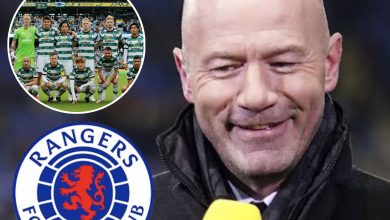
Dundee united manager Jim Goodwin revealed the first half chant from Celtic FC fans that need to be investigated

Dundee United manager Jim Goodwin has called for an investigation after revealing that a chant heard from sections of the Celtic FC support during the first half of their recent league encounter crossed a line and should not be ignored by the authorities. Speaking candidly after the match, Goodwin said the nature of the chant went beyond the usual football rivalry and raised serious concerns about standards inside Scottish stadiums.
According to the United boss, the chant was clearly audible from the touchline and was repeated several times during the opening 45 minutes. While he stopped short of repeating the exact words in full, Goodwin made it clear that the content was offensive and targeted in a way that he believes warrants scrutiny from the Scottish FA and league officials. He stressed that managers and players should not be expected to simply accept such behaviour as “part of the game.”

Goodwin’s comments came in response to a question about the atmosphere at Celtic Park, which is often praised for its intensity and passion. However, the Dundee United manager was keen to draw a distinction between passionate support and chants that cross into unacceptable territory. He acknowledged that Celtic have one of the biggest and most vocal fanbases in the country but insisted that size and history do not exempt any club from responsibility.
“There’s a line between backing your team and singing something that shouldn’t be heard in any football ground,” Goodwin explained. “We talk a lot about respect in the game, about inclusion and setting the right example. If we’re serious about that, then these things can’t just be brushed aside because of who the home team is or where the game is being played.”

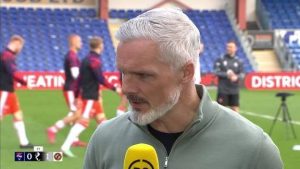
The incident has added another chapter to ongoing debates in Scottish football about supporter behaviour and consistency in enforcement. In recent seasons, clubs and managers have faced sanctions for comments made in interviews, while players have been punished for relatively minor infractions on the pitch. Goodwin’s frustration appeared rooted in what he sees as an imbalance, where those inside the game are heavily scrutinised but issues in the stands can sometimes pass without consequence.
Celtic, for their part, have not yet issued a formal response to Goodwin’s remarks. The club has previously stated its commitment to tackling unacceptable behaviour among supporters and has worked with fan groups to promote positive backing of the team. Whether this particular chant will be addressed remains to be seen, but Goodwin’s public comments are likely to increase pressure on the authorities to act.
From Dundee United’s perspective, the focus remains on football matters, but Goodwin felt compelled to speak out because of the wider implications. He pointed out that players, staff, and even match officials are affected by what comes from the stands, especially when chants are personal or derogatory. In his view, ignoring the issue only allows it to grow.

The Scottish FA now faces a familiar dilemma. Investigating supporter behaviour can be complex, particularly in large stadiums where identifying individuals is difficult. However, calls for action are growing louder, not just from Goodwin but from other figures across the game who want clearer standards and firmer responses.
Ultimately, Goodwin’s intervention is about more than one chant or one match. It reflects a broader concern about the culture surrounding Scottish football and the message being sent to younger supporters. As he concluded, if the game truly wants to move forward, then everyone involved, clubs, managers, players, and fans alike, must be held to the same standards. Whether this latest controversy leads to meaningful action will be closely watched in the weeks ahead.