Celtic Fans Call Out the Board Over Silence and Poor Decisions
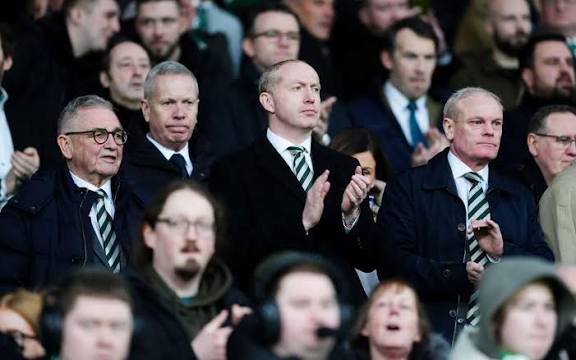
 Late Saturday night, the Celtic Fans Collective dropped one of the most forceful and wide-ranging statements the supporter community has released all season and it did not pull its punches. The message didn’t just echo long-held frustrations; it laid out, in gritty detail, why large segments of the fanbase feel abandoned, ignored, and disrespected by the club’s leadership.
The backdrop to the statement is chaotic: interim chairman Brian Wilson’s public appeal for unity, issued after the abrupt dismissal of Wilfried Nancy and Paul Tisdale and the dramatic return of Martin O’Neill as manager, was meant to calm the waters and get supporters behind the side for the crucial second half of the season.
But the Collective which represents a wide coalition of supporters, including fan clubs, independent fan media and influential supporter groups says that plea for “togetherness” rings hollow without real engagement or meaningful action. They welcomed the call for unity in principle and accepted it in good faith, even as anger continued to grow in the stands and calls for boycotts resurfaced.
In the days after Wilson’s appeal, the Collective took the rare step of publicly reaching out with an open letter, asking for a direct meeting to discuss how to rebuild trust and bridge the widening divide. Their understanding was clear: this would require honest dialogue, mediation, and accountability from the club’s leadership.
According to the Collective, that offer was met with blatant silence. No engagement. No response. Instead, Wilson spent part of this week in a national newspaper criticising the Scottish Government as “tired and visionless,” a public attack that only reinforced supporters’ belief that fan concerns are being sidelined while opinion pieces get headlines.

The statement also pulls no punches on the footballing side of things. With O’Neill back in charge, pressure has immediately fallen on him to steady a ship that has looked rudderless. The manager himself — a beloved figure from Celtic’s past has admitted publicly that the January transfer window was poorly planned, leaving the squad short of the reinforcements needed to sustain a title push.
That disconnect between ambition and action strikes at the heart of supporters’ frustration: more than a year after selling their star striker, Celtic still lack a proper replacement and appear reactive rather than proactive in recruitment. Fans see financial resources available including healthy reserves yet no clear strategy, vision or urgency from those running the club. 
But the Collective doesn’t limit criticism to the pitch. Their statement also called out longstanding governance issues, condemning the absence of dialogue, the ongoing ban on the Green Brigade ultras, and the broader exclusion of fan media and supporter voices from meaningful conversation all of which have widened the gap between the club and its supporters.
The Green Brigade ban, in particular, has become a flashpoint. The ultras group remain sidelined from Celtic Park matches after sanctions based on claimed safety concerns and past incidents, a decision that many fans view as symbolic of the club’s unwillingness to engage with its own supporters on anything beyond surface-level PR. 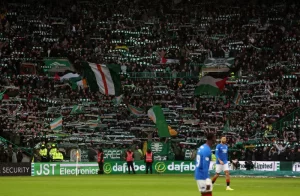
Overall, the Collective’s response is not an emotional rant it’s a detailed, structured critique. By echoing Wilson’s own phrasing back at him and describing the board as “tired and visionless,” supporters are making a stark point: unity cannot be ordered or demanded from the stands; it has to be earned through respect, action, and accountability.
For a club that prides itself on heritage, community and identity, the Collective’s message was unmistakable:
If Celtic truly values its people, it must start acting like it before disconnect becomes permanent.