Professional Game Match Officials Limited PGMOL Release Eye-Opening VAR Audio Over Controversial Ladislav Krejčí Red Card in Wolves’ Defeat to Crystal Palace
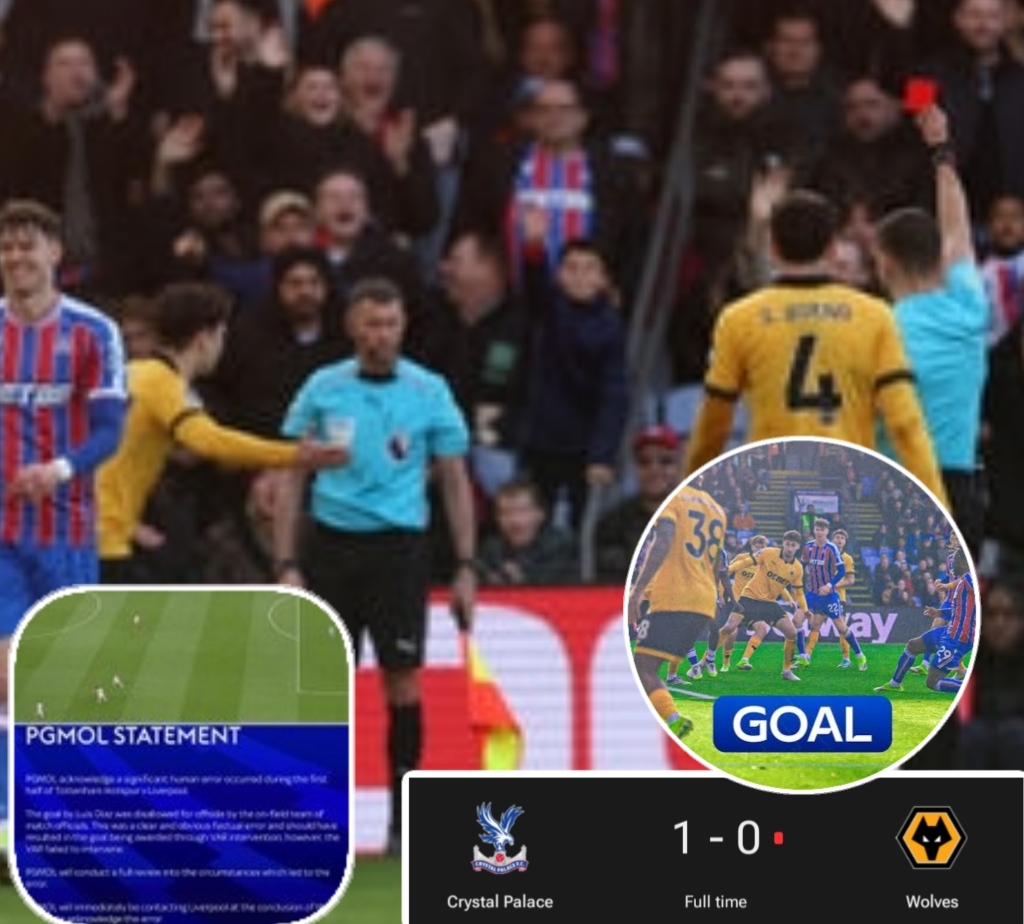
In a dramatic twist to Sunday’s Premier League action, the Professional Game Match Officials Limited (PGMOL) has released the official VAR audio relating to the hotly debated red card shown to Wolverhampton Wanderers midfielder Ladislav Krejčí in their 1–0 loss to Crystal Palace at Selhurst Park. The audio published amid a drive for greater refereeing transparency sheds new light on a decision that swung the game in Palace’s favour and sparked fierce debate among fans, pundits, and pundits alike.
Krejčí’s dismissal came in the 61st minute of a tightly contested match that was level and evenly poised until that point. Moments after being cautioned for a cynical challenge, Krejčí received a second yellow card this time for deliberately kicking the ball away after the referee’s whistle resulting in his immediate sending-off. With Wolves reduced to ten men, Palace seized their opportunity, and Evann Guessand’s dramatic 90th-minute winner ultimately secured all three points for the hosts.

VAR Audio Reveals Officials’ Deliberations
The VAR communication, released publicly by PGMOL, reveals how match officials arrived at their conclusion. In the audio, the VAR official clearly confirms that the second offence delaying a restart by kicking the ball met the criteria for a mandatory caution under Premier League protocols.

“The whistle has gone. The ball has been kicked away. That is universal caution territory mandatory yellow.”
The on-field referee, the assistant referee, and the VAR then aligned on this judgment, acknowledging that while the second booking was unfortunate in timing and consequence, it adhered to the letter of the rules. Crucially, the VAR team also emphasised that a yellow-card decision such as this cannot be upgraded or overturned unless it involves mistaken identity or a direct red-card-qualifying offence.
This clarification was central to PGMOL’s decision to release the audio. It represents an effort by the officiating body to explain the fine margins and procedural threshold that govern VAR interventions especially in contentious moments that have major implications for results.
Wolves React to Controversy
Reactions from the Wolves camp were mixed following the publication of the VAR audio. Manager Rob Edwards acknowledged that while the decision was technically correct, it felt “harsh” given the context a tightly balanced game and a split-second moment of frustration from his player. Wolves supporters echoed that sentiment across social media, questioning the consistency of VAR guidance and whether similar incidents in other fixtures have been treated differently.
For a club enduring a difficult season near the bottom of the Premier League table, the timing of the red card was especially painful. A late penalty miss by Wolves striker Tolu Arokodare earlier in the game added further frustration; his effort was saved by Palace goalkeeper Dean Henderson, keeping the score level before Krejčí’s dismissal.
The Match and Its Turning Point
The match itself was a tense affair, with Wolves frustrated but disciplined through the first hour. Arokodare’s penalty miss in the 43rd minute had appeared to give Wolves a foothold, but the second yellow card to Krejčí fundamentally changed the dynamics of the game. From that point on, Wolves adopted a deeper and more cautious shape, seeking to preserve parity.
Crystal Palace, buoyed by the extra man, gradually asserted control. They pressed higher up the pitch, created more forward momentum, and stretched Wolves’ defence. Their persistence paid off deep into added time, when Guessand introduced as a substitute latched on to a cut-back to fire home the decisive goal and seal a dramatic 1–0 victory.
PGMOL’s Continued Push for Transparency
The release of the VAR audio follows a series of transparency initiatives by PGMOL in recent years. Officials have increasingly shared behind-the-scenes communication from controversial decisions in an attempt to demystify the decision-making process and address fan frustration over VAR.
Supporters often express confusion over why some decisions are reviewed and others are not. PGMOL’s explanation in this case made clear that, under current protocols, VAR is not empowered to re-referee yellow-card decisions even if they have game-changing consequences unless they meet the criteria for a potential straight red or involve mistaken identity.
PGMOL has stated that releasing the audio was aimed at helping the footballing public understand both the mechanics and the mindset of officials during the decision-making process.
Debate Rages On
Reactions to the audio have been polarised. Some fans and pundits praised PGMOL for shedding light on the otherwise private deliberations of VAR officials. They argue that greater transparency could help restore trust in the system and reduce speculation on social media.
Others, however, feel the audio raises more questions than it answers particularly around the consistency of applying the “delay of restart” caution and how such interpretations can materially influence a match outcome. Critics argue that the rules may require revision to grant referees greater discretion in the context of a game’s flow.
Looking Ahead
For Wolves, the focus now shifts to recovery and resilience after what manager Rob Edwards described as “a tough day at the office.” The club faces another challenging set of fixtures with squad morale tested by a cruel blend of missed opportunities and strict officiating interpretations.
At Crystal Palace, the victory represents a crucial boost in confidence and league points, easing first-team pressure and offering a rare moment of celebration amid a difficult run of form. Still, the debate over the VAR decision and the release of the audio is likely to continue dominating post-match discussions in the days ahead.
Broader Implications
This episode highlights the increasingly central role that VAR communication plays in modern football not just as an officiating tool, but as a public relations instrument. As technology and protocols evolve, so too will the expectations of supporters, clubs, and pundits for clarity and consistency in how decisions are communicated and justified. Whether the release of VAR audio becomes a regular feature remains to be seen, but for now it has once again thrust the nuances of officiating into the spotlight.