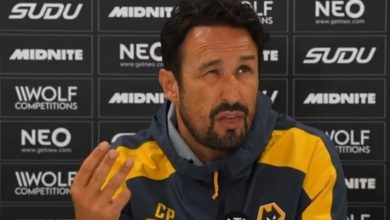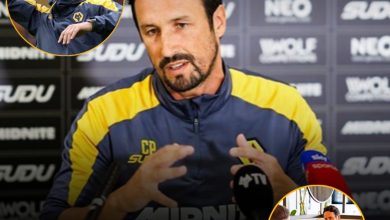
When injuries struck Molineux just weeks into the new Championship season, César Peixoto faced a choice that would define Wolves’ campaign.
He could panic. He could demand emergency signings. He could tear up his squad plan and start again.
Instead, he made a decision that baffled supporters but is now being vindicated: he trusted what he already had.
And now, as the fixtures pile up, the Portuguese coach is speaking openly about the thinking behind those calls.

The Injury Crisis
The blows came thick and fast. Kieran Trippier, the marquee summer signing, was sidelined with a knee injury. Yerson Mosquera, the defensive anchor, suffered ankle ligament damage on the opening day. Jean-Ricner Bellegarde was out with a hamstring problem. Rafiki Said hadn’t kicked a ball since pre-season with a knee issue of his own.
Then came the cruellest blow. Raúl Jiménez limped off against Everton in the EFL Cup with a knee injury, leaving the ground in a brace.
Peixoto didn’t hide his frustration. “Unfortunately, we are frustrated because Raul will stay injured for a few weeks,” he said. “It is not a muscular injury, a small injury in the knee. It is not bad, but he is a key player for us.”
He explained the delicate balancing act with the 35-year-old striker. “He was only going to play 45 minutes, like Krejci. Raul needed to play because he didn’t play 90 minutes in the last game… At his age, we have to manage his minutes, but playing too few minutes isn’t good either.”
By the international break, Peixoto was managing a squad held together by tape and hope.
Most coaches would have used the emergency loan window. Peixoto did the opposite.
“We have five centre-backs, we have three right-backs, so we don’t need to go to the market to change the situation,” he said.

The logic was clinical. Peixoto wanted four centre-backs for his 4-2-3-1 system. No more. No less. Every additional body was a wage, a disruption, a player who wouldn’t get minutes.
“When I talked with the players, I was very honest with them,” Peixoto explained. “We only need four centre-backs. It’s like that.”
It was a decision rooted in his vision for the squad. “I want a team with two players per position to fight each other, to stay competitive during the week, to stay more competitive in the games,” he said. “The Championship has a lot of games, tough games. All the games are tough and we need solutions.”
The Vindication
What happened next silenced the doubters.

Nasser Djiga the man who benefited from Mosquera’s misfortune grabbed his opportunity with both hands. With Djiga and Toti forming an unlikely partnership, Wolves racked up back-to-back clean sheets, including a Black Country derby victory over West Brom.
Peixoto was measured in his assessment. “I’m happy, I think it’s very positive. We start to build a strong team, a competitive team, a strong and competitive group but I think we have a lot to improve.”
He understood the bigger picture. “A lot of players come now from injury or come later when we stay all together, we stay more strong from the bench to win the game like we do against Sheffield.”
Tommy Doyle, who has featured from the bench in every league game, revealed how Peixoto’s playing experience has shaped his approach.
“On the ball, no one’s afraid to give the ball away. No one’s afraid to try a pass as long as we’re working hard and running for each other,” Doyle said. “He really instils that into us.”
The Fixture Run That Defines the Season
Now comes the moment of truth. The next six weeks will tell us everything about whether Wolves are genuine promotion contenders.
Burnley (A) Friday 16 October, 8pm
The match after they play Bolton immediately after the international break is a rematch of last season’s final Premier League day. Turf Moor under the lights, live on television. Burnley’s home form has been poor just one win in their last five at Turf Moor, with heavy defeats to Norwich and West Brom. This is the kind of match that separates promotion teams from also-rans.
Portsmouth (H) Tuesday 20 October, 7:45pm
A rearranged fixture squeezed into a congested October schedule. Peixoto has already spoken about managing minutes Jiménez is 35, Trippier isn’t getting younger and this is where squad depth becomes critical.

Watford (H) Saturday 24 October, 3pm
Back at Molineux, where Wolves have been formidable. The home crowd has rediscovered its voice after the derby win. Dropping points here would undo much of the good work.
Another home fixture, another opportunity to pile pressure on the teams above. Back-to-back home games represent a golden chance to build momentum before the November international break.
The International Break Reset
Rather than viewing the pause as a threat to momentum, Peixoto used it as a rehabilitation window.
“For us it’s important because we have four or five players who we want to keep fit and stay closer to, to play more minutes to have more options in the team,” he explained.
“There are some players I don’t want to go to the national team – to stay with us, to work on their fitness,” he admitted. “But it is what it is, we have national team quality, meaning they will go.
He even contacted national team managers directly. “Bellegarde, I talked with the coach of his national team to try to manage the minutes he’s going to play there. To not have injury problems.”
“It’s important to rest,” he added. “Not only physically, but mentally, it is important too. It’s very tough, the Championship.”
The Lesson
Peixoto has been clear about what lies ahead.
“I’m ready for the difficulties that are going to happen during the Championship and I hope after the national break we have all the players together to go, because after that we have five or six games in a row and we need all the players, and I’m ready to fight until the end.”
“I analysed and studied all the teams that have been promoted in the last year. I saw a lot of games of the championship, and I know well what’s going to happen, but we have to stay ready because this Championship is very tough.”
Wolves fans are now saying the same thing: Peixoto knew what he was doing all along.
At a time when the easy answer was to spend, he trusted. When the temptation was to panic, he planned. And when injuries threatened to derail a promotion push before it had even gathered speed, he found solutions from within.
The fixture list is about to deliver its verdict. But the coach who refused to panic when the injuries hit has already shown he knows exactly what he’s doing.