PGMOL HAS JUST RELEASED A STATEMENT RESPONDING TO BOURNEMOUTH’S OFFICIATING ALLEGATIONS.. THE STATEMENT HAS CAUSED MORE CONTROVERSY
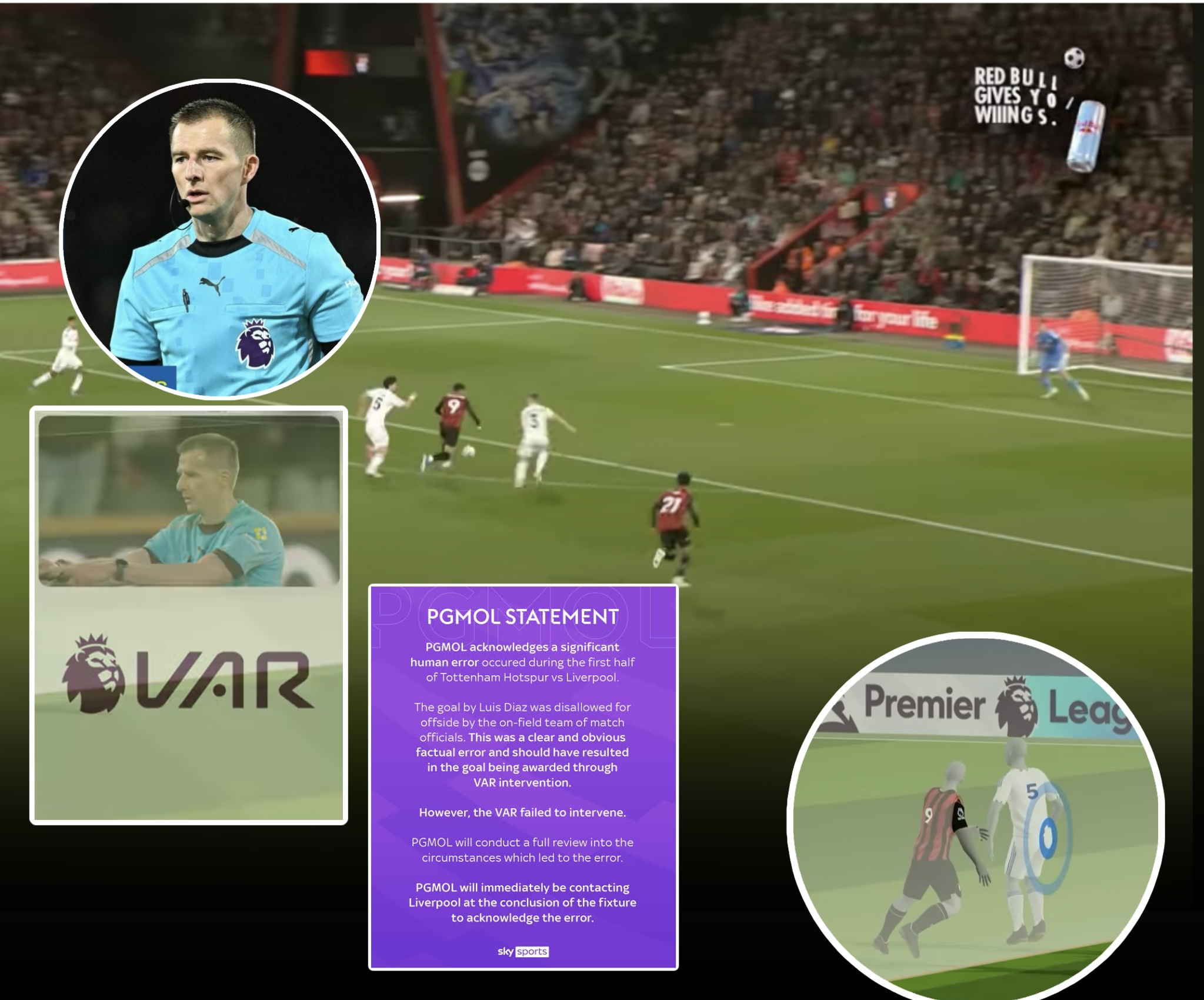
The Professional Game Match Officials Limited (PGMOL) has issued a detailed and strongly worded statement in response to growing controversy surrounding the Premier League fixture between AFC Bournemouth and Leeds United, a match that has become one of the most debated officiating incidents of the season.
The game, which ended in a dramatic draw, has been overshadowed by disputes over key VAR decisions, particularly Bournemouth’s disallowed goal and Leeds United’s late equaliser. Both incidents have sparked widespread criticism from fans, analysts, and club representatives, with accusations of inconsistency in officiating standards dominating post-match discussions.

Bournemouth, in particular, expressed strong dissatisfaction following the final whistle, with players and staff questioning the interpretation of offside laws and the threshold used for VAR intervention. The intensity of the reaction led to increased pressure on PGMOL to provide clarity on how the decisions were reached.
In response, PGMOL confirmed that a full internal review was conducted immediately after the match. This review included all available broadcast footage, VAR camera angles, and communication between the on-field referee and the Video Assistant Referee team.

PGMOL OFFICIAL STATEMENT
“PGMOL has reviewed all incidents from the AFC Bournemouth vs Leeds United match in full, including all available broadcast angles, VAR footage, and on-field official communications.
Following this review, we can confirm that the refereeing team applied the Laws of the Game correctly in real time and in line with current Premier League VAR protocols.”
“Regarding the disallowed Bournemouth goal, the officials determined that the decision met the criteria for offside as interpreted under current guidelines. The positioning and involvement of attacking players were assessed as part of active play.”
“Regarding Leeds United’s late equalising goal, the VAR team reviewed the possibility of offside interference with the goalkeeper. After careful analysis, it was concluded that there was no clear and obvious impact on the goalkeeper’s ability to play the ball, and therefore the on-field decision to award the goal was correct.”
This explanation suggests that the decision was not based solely on the attacking player’s position at the moment of the pass, but also on their involvement in influencing play, which is a key factor in modern offside rulings.
Despite this clarification, Bournemouth supporters and staff remain unconvinced, arguing that similar marginal calls have been handled differently in other Premier League matches.

This explanation confirms that while the attacking player was in an advanced position, officials did not believe the level of interference met the threshold required to overturn the goal.
However, this interpretation has already been challenged by former players and pundits, many of whom argue that blocking a goalkeeper’s sightline should be sufficient grounds for offside interference.
Despite this, the reaction from Bournemouth has remained critical, with reports suggesting frustration within the club over what they perceive as inconsistent application of VAR guidelines.
PGMOL DEFENDS MATCH OFFICIALS
The governing body went further to defend the integrity of the officials involved in the match, rejecting any suggestion of bias or external influence.
“PGMOL maintains full confidence in the match officials involved and stands by the integrity and accuracy of the decisions made during this fixture.”
This direct defence comes amid heated social media debate, where some fans suggested the refereeing decisions favoured Leeds United during key moments of the match.
PGMOL has firmly rejected such claims, reiterating that all decisions were made independently and in accordance with official protocol.
WIDER IMPACT AND ONGOING DEBATE
The fallout from the match has once again reignited discussion around VAR consistency in the Premier League. While the system was introduced to reduce clear and obvious errors, critics argue it has instead created new layers of interpretation and controversy.
The Bournemouth vs Leeds match has now become a case study in how offside interference is judged differently depending on context, timing, and subjective referee interpretation.
Former referees have also weighed in, with some supporting the decisions and others suggesting that the threshold for “interference with play” remains unclear and inconsistently applied across matches.

For Bournemouth, the frustration is compounded by the timing of the equaliser, which came in stoppage time and denied them what would have been a crucial victory.
Leeds United, meanwhile, will view the outcome as a hard-earned point, with their late pressure rewarded under the current interpretation of the rules
While PGMOL’s statement aims to bring clarity and finality to the debate, the controversy surrounding the match is unlikely to disappear quickly. The differing interpretations of key incidents have only intensified scrutiny on VAR decision-making in English football.
As the Premier League season continues, this fixture will likely be referenced as another example of how fine margins and subjective officiating calls can dramatically influence results, emotions, and narratives in modern football.