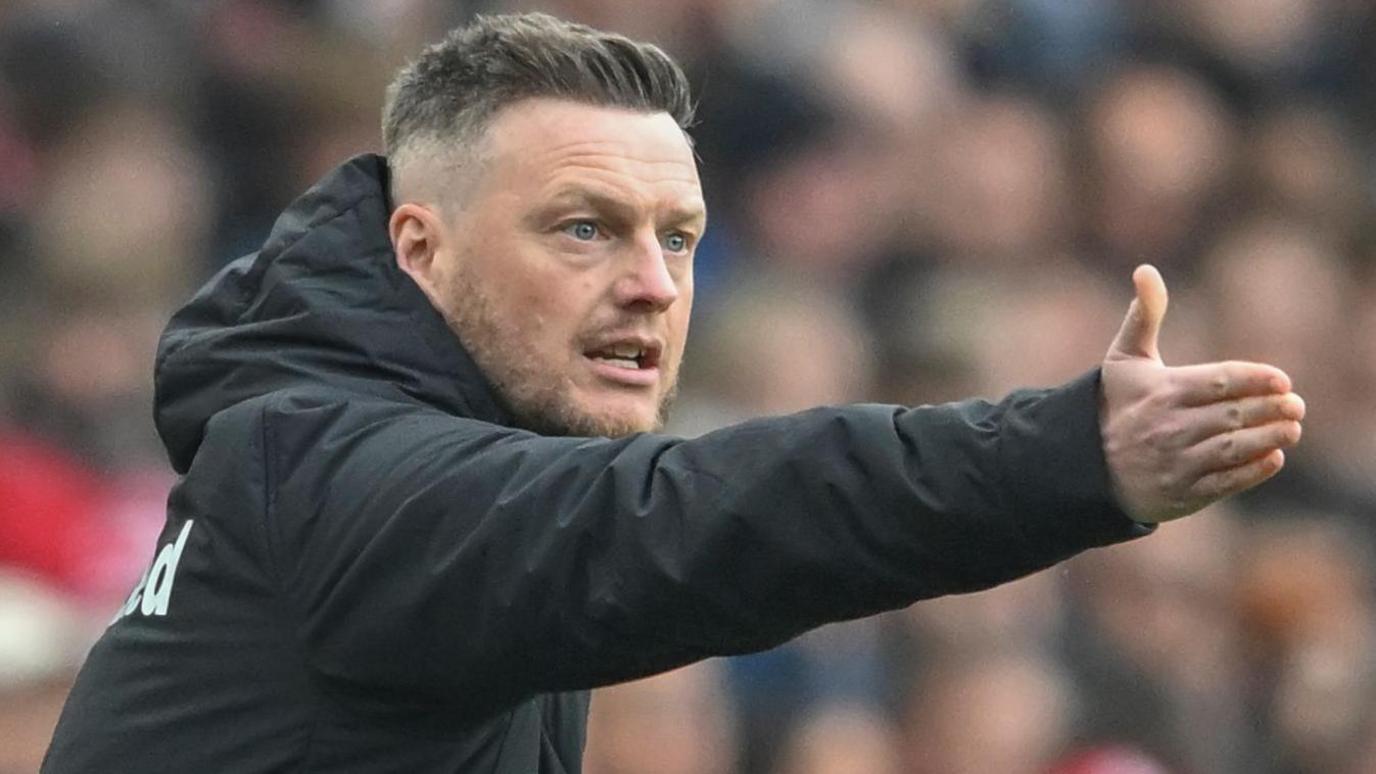
Wolves head coach Cesar Peixoto is reportedly facing scrutiny over an alleged touchline outburst directed at a Middlesbrough player during his side’s 1–0 defeat at the hands of Middlesbrough, with head coach Kim Hellberg said to have raised the incident during his post-match interview.
The incident, which supposedly occurred around the 67th minute, has become the centre of a developing controversy with questions being raised about the conduct expected of managers in English football.

According to the report, the controversy began when Wolves midfielder Jean-Ricner Bellegarde was shown a yellow card following a hard challenge on Middlesbrough forward Tommy Conway. While the decision was being discussed on the touchline, Peixoto allegedly reacted angrily towards Conway, making a remark in Portuguese that reportedly questioned the Middlesbrough forward’s response to contact.
The alleged comments have since become the subject of debate, with the incident raising questions about whether emotions during a fiercely contested Championship fixture crossed the line of acceptable professional conduct.
HELLBERG REPORTEDLY FURIOUS AFTER ALLEGED TOUCHLINE REMARK
Hellberg was reportedly visibly furious after allegedly hearing Peixoto’s comments, with the situation said to have escalated before touchline officials intervened to prevent the disagreement from developing further.
The Middlesbrough head coach was subsequently asked during his post-match interview why he had appeared so angry when the cameras captured him on the touchline during the game.
Hellberg reportedly explained that his reaction was connected to the alleged remarks directed at Conway after Bellegarde received his yellow card.
He was said to have been particularly unhappy with the suggestion that the Middlesbrough forward had exaggerated the contact, believing that a coach should be able to express disagreement with a refereeing decision without making personal remarks about an opposing player.
The exchange reportedly unfolded in front of both technical areas, making it a potentially uncomfortable moment for those present as tensions threatened to overshadow the football itself.

One of the most significant aspects of the allegation is the language Peixoto reportedly used. According to the account, the Wolves coach allegedly described Conway as falling like a pregnant woman, questioning why the forward had gone down following the challenge.
The alleged phrase has become the central talking point in the controversy, with critics questioning whether such a personal remark would be acceptable from a manager operating at Championship level.

EFL SCRUTINY AND POSSIBLE SANCTIONS
Reports are currently emerging that the English Football League (EFL) is examining the alleged incident and the circumstances surrounding the exchange.
If an incident of this nature were formally reported, the relevant authorities could consider the available evidence, including match footage, officials’ reports and any statements provided by those involved.
However, an investigation would not automatically mean that a breach had occurred. Any potential disciplinary action would depend on the applicable rules, the evidence available and the conclusions reached by the relevant authorities.
The possibility of sanctions has nevertheless become a major talking point in this imagined story, particularly because the alleged remarks were supposedly made during an emotionally charged period of the match.

Managers are expected to challenge decisions and defend their players, but there is a clear distinction between criticising a referee’s decision and directing inappropriate personal comments at an opponent.
For Wolves, the controversy threatens to shift attention away from their performance in a match that ended in a narrow defeat. For Middlesbrough, meanwhile, the focus has turned towards the treatment of Conway and whether the alleged touchline behaviour crossed a professional boundary.
The 1–0 result already represented a disappointing outcome for Wolves in this scenario. The suggestion that their coach could face further scrutiny would add another layer of frustration to an afternoon in which the visitors failed to secure a positive result.
FANS QUESTION PEIXOTO’S PROFESSIONALISM
The alleged incident has also sparked an imagined debate among supporters, with some questioning why a manager would direct such a remark at an opposing player simply because his team was losing or struggling to influence the match.
One supporter wrote: “Why would a coach speak about another team’s player like that? You can disagree with a decision, but there should still be respect. That is not the example managers should be setting.”
Another fan argued that football’s competitive nature should not become an excuse for personal attacks, insisting that coaches must remain responsible for their behaviour even when decisions go against their teams.
The debate has centred on whether Peixoto’s alleged reaction, if it had occurred, would represent the kind of touchline conduct that football authorities should take seriously.
Others would argue that heated exchanges are part of football and that the full context of any alleged remark must be established before conclusions are drawn.
A CONTROVERSY THAT WOULD DEMAND ANSWERS
For now, the scrutiny surrounding Peixoto centres on the alleged remarks about Conway, the reported reaction from Hellberg and the intervention of touchline officials.
If a comparable incident were genuinely reported, the priority would be to establish exactly what was said, whether the comments breached any relevant rules and whether there was sufficient evidence to justify disciplinary proceedings.
Until such matters were established, neither an investigation nor a possible sanction should be treated as proof of wrongdoing.
What is your take? Should coaches face disciplinary action for alleged touchline remarks of this nature, or should authorities consider the full context before taking action?