Carragher Goes to WAR With Neville Over England — “You’re Completely Wrong, Gary”
By Sports Desk | World Cup 2026
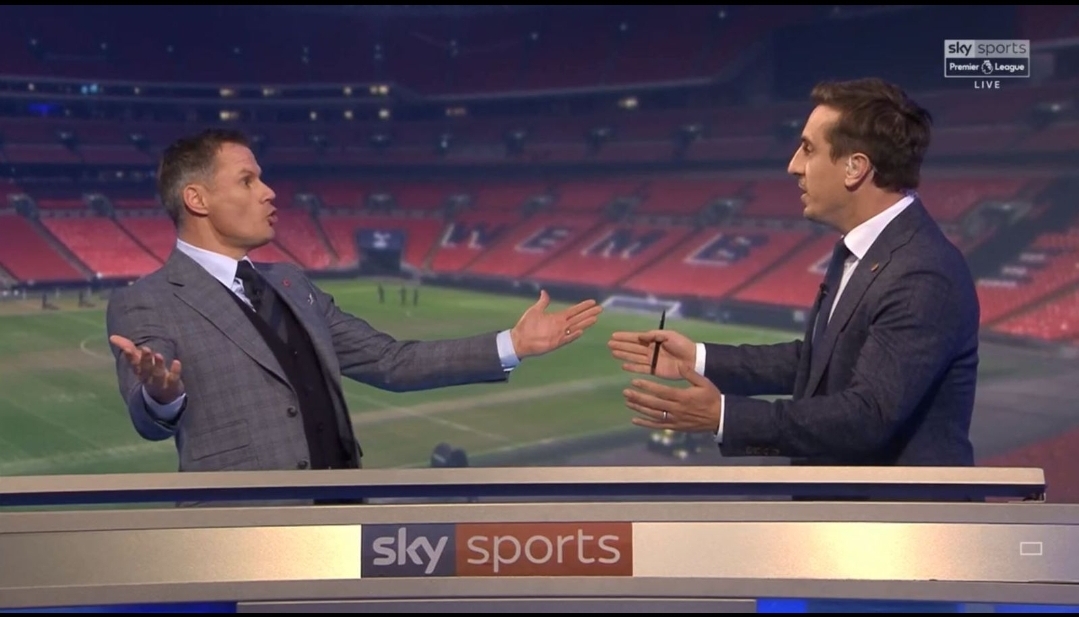
The gloves are off. Two of English football’s biggest personalities have found themselves on opposite sides of a major debate following England’s latest victory at the 2026 FIFA World Cup. Jamie Carragher and Gary Neville, long-time colleagues and frequent rivals in the television studio, have clashed over Thomas Tuchel’s controversial team selection and the performance of England’s defence.

England secured the result they wanted, collecting three valuable points as they continued their World Cup campaign. However, despite the victory, the performance raised questions among supporters and pundits alike. Much of the discussion centred on Tuchel’s decision to rotate his defensive unit and hand opportunities to younger players on one of football’s biggest stages.
The England manager’s bold approach was always likely to attract attention. With the knockout stages approaching and squad management becoming increasingly important, Tuchel chose to trust several less experienced players rather than rely entirely on his established defensive options. While the move demonstrated confidence in England’s squad depth, it also created uncertainty at the back during several periods of the match.

That uncertainty became the centre of a heated debate between Carragher and Neville.
Neville defended the England manager’s decision, arguing that major tournaments are not won by a starting eleven alone. According to the former Manchester United captain, successful teams require depth, flexibility and players who are ready to perform when called upon. Giving younger members of the squad valuable World Cup experience now could prove vital later in the competition when injuries, suspensions or fatigue become significant factors.

For Neville, the bigger picture is clear. England are not simply trying to win one match; they are attempting to build momentum for an entire tournament. Exposing young players to high-pressure situations today could provide Tuchel with additional options when the stakes become even higher in the knockout rounds.
Carragher, however, strongly disagreed.
The former Liverpool defender questioned whether a World Cup is the right environment for defensive experimentation. While acknowledging the importance of squad development, Carragher argued that defensive partnerships rely heavily on trust, communication and familiarity. In his view, changing key defensive personnel too frequently can create instability and confusion, particularly against opponents capable of exploiting even the smallest mistakes.
His concerns were reflected in parts of England’s performance. Although the team ultimately secured victory, there were moments when the defensive line appeared uncertain. Positioning errors, delayed reactions and occasional communication issues allowed the opposition to create dangerous situations that might have been punished by stronger teams.
Carragher’s argument carries weight because of his own playing career. During his 17 years at Liverpool, he built a reputation as one of the most disciplined defenders in English football. His experience at the highest level has shaped his belief that tournament success is often built on defensive consistency rather than experimentation.

From Carragher’s perspective, England already possess enough quality throughout the squad. The priority should be establishing a reliable defensive structure capable of handling the intense pressure of knockout football. Every match, every decision and every defensive partnership could prove decisive when margins become increasingly small.
Neville, meanwhile, remained firm in his support for Tuchel. He believes the England manager deserves credit for thinking ahead rather than focusing solely on immediate results. Modern tournaments are physically demanding, and managers must prepare for unexpected challenges. Having additional players with meaningful World Cup experience could become one of England’s greatest advantages later in the competition.
The disagreement between the two pundits reflects a wider debate among England supporters. Some believe the defence looked vulnerable despite the victory, while others view Tuchel’s approach as sensible long-term planning designed to maximise England’s chances of lifting the trophy.
What cannot be disputed is that England remain one of the strongest teams in the tournament. Their attacking options are among the best in world football, while the midfield continues to provide creativity, energy and control. Yet questions surrounding the defence refuse to disappear.
As the World Cup progresses, attention will remain firmly fixed on Tuchel’s decisions. If England continue winning, the manager’s faith in his squad depth will be praised as a masterstroke. If defensive problems emerge against stronger opposition, critics will point to matches like this as an early warning sign.
For now, the debate continues. Carragher is not backing down. Neville remains convinced he is right. And as England move closer to the business end of the tournament, the spotlight on their defence will only grow brighter.