You’ve Done Nothing But Talk!” John McGinn Fires Back at Former Scotland Legend After Constant Attacks on Him and Steve Clarke’s Scotland
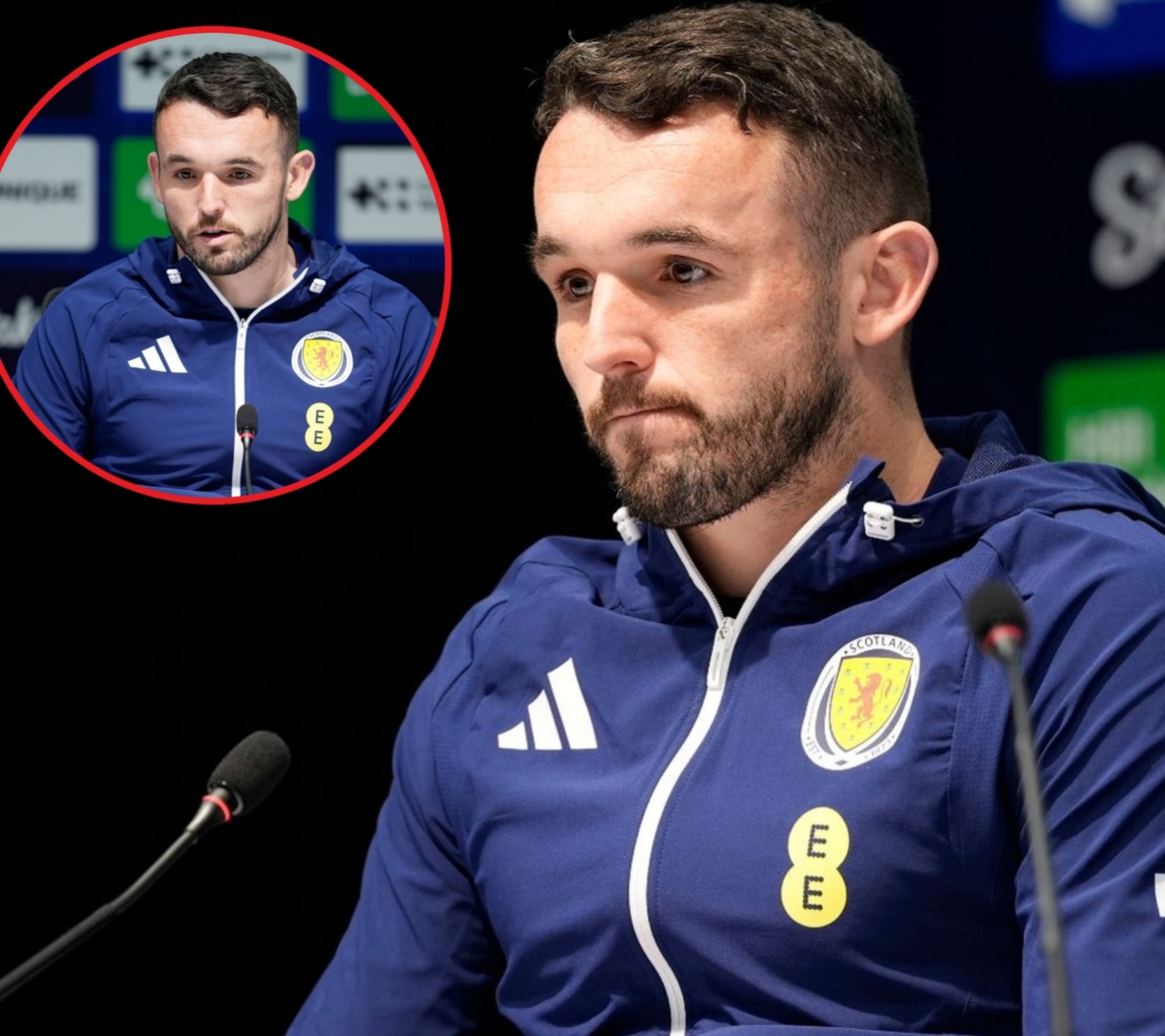
John McGinn has delivered a passionate and emotional defence of both himself and Scotland manager Steve Clarke, responding strongly to ongoing criticism of the national team’s performances, tactical identity, and consistency on the international stage.
Speaking in a post-training interview ahead of Scotland’s crucial World Cup group-stage clash with Brazil, McGinn insisted that external commentary has become increasingly negative and does not reflect the work being done inside the camp.
Scotland’s campaign remains finely balanced after a mixed start, but the midfielder believes belief is still strong within the squad despite outside doubts.

“People don’t see what we’re building every day”

McGinn opened the interview by acknowledging that scrutiny is part of international football but suggested that the current level of criticism has become excessive and repetitive.
“We know what it is when you play for Scotland,” McGinn said. “There’s always going to be opinions, especially now with how football is. Everyone has a platform, everyone has something to say. But sometimes it feels like people don’t really see what we’re doing every day.”
The Aston Villa midfielder stressed that Scotland are still developing under Clarke and pointed to the limited time international teams have together compared to club sides.
“We come in, we work, we prepare quickly, and we go into massive games,” he explained. “It’s not like club football where you get weeks on the training ground. People sometimes forget that.”
McGinn insisted that progress is being made internally, even if results or moments in matches do not always reflect it externally.
“We’re building something. It’s not perfect, we know that. But there is structure, belief, and improvement.”
Strong backing for Steve Clarke
McGinn also delivered a strong defence of Steve Clarke, who continues to face scrutiny over Scotland’s tactical approach in major tournaments and qualification campaigns.
“The manager has been brilliant for us,” McGinn said. “He’s brought stability, organisation, and belief. We’re a much more competitive team now than we were before.”
He added that people often overlook how far Scotland have come under Clarke.
“People forget where we were before he came in. Now we’re a team that’s hard to beat and capable of competing in big matches.”
McGinn made it clear the dressing room remains fully united behind Clarke despite external pressure.
“In the squad, we’re all behind him. That’s what matters most.”
Scotland’s World Cup record adds context to the pressure
Much of the current debate around Scotland also ties into their long-standing World Cup history one that has often shaped expectations and criticism of every generation.
Scotland have qualified for the World Cup multiple times but have historically struggled to make an impact on the biggest stage, often exiting at the group stage despite competitive squads and strong individual talent.

That historical pressure is something former Scotland players have often referenced when analysing the current team and it is part of the backdrop to McGinn’s frustration with constant criticism.
McGinn’s emotional response in interview
The tone of the interview shifted sharply when McGinn was asked about repeated criticism from former players and pundits questioning Scotland’s midfield control and attacking output.
“You’ve done nothing but talk,” McGinn said firmly. “That’s the frustration. It’s easy to sit outside, watch games, and break everything down afterwards. But we’re the ones actually going out there, playing under pressure, representing our country.”
He continued:
“I respect people who have played the game, I really do. But sometimes it feels like there’s constant negativity, like nothing we do is ever good enough.”
McGinn stressed that there is a difference between fair analysis and what he sees as repetitive negativity.
“We’re trying to improve every day, and sometimes that doesn’t get acknowledged.”
Graeme Souness World Cup analysis puts debate in perspective
When pressed further, McGinn’s comments were clearly influenced by long-standing criticism from former Scotland captain Graeme Souness a figure whose own World Cup history often fuels debate about expectations versus achievement in Scottish football..

Souness represented Scotland at three World Cup tournaments (1978, 1982, and 1986), but despite his status as one of the country’s greatest midfielders, his international tournament story is defined more by frustration than success.
He missed key games in 1978 through injury issues, played a full role in 1982 including scoring against the Soviet Union, and endured a difficult 1986 campaign in Mexico where Scotland again failed to progress beyond the group stage.
Across all three tournaments, Scotland were eliminated early each time, highlighting a recurring theme in that era: strong individual talent but limited team progression on the world stage.
That historical context is often used in modern debate because it shows that even some of Scotland’s greatest players were unable to break the nation’s long-standing World Cup barrier.
McGinn acknowledged that legacy indirectly during the interview.
“Of course I respect what people have done in the game,” he said. “But every generation has its own challenges. We’re trying to write our own story.”
Brazil showdown looms
Attention now turns to Scotland’s decisive final group-stage match against Brazil, a fixture that will determine their World Cup fate.
Scotland currently sit on one win and one defeat, having beaten Haiti 1–0 before losing 1–0 to Morocco. That leaves qualification still possible but dependent on a strong result against the tournament favourites.
Brazil represent the toughest test of Scotland’s campaign so far, with Clarke’s side needing a disciplined and clinical performance to stand any chance of progressing.
Fan reaction divides opinion
McGinn’s comments quickly sparked debate among supporters, with opinions split across social media.
Some backed the midfielder strongly:
“He’s absolutely right too much negativity around Scotland.”
“Finally someone in the squad defending the team.”
“People forget how hard international football is.”
Others disagreed:
“Souness earned the right to speak.”
“You have to respect former players.”
“Criticism comes with the territory.”
Clarke remains focused
Despite the media attention, Steve Clarke is understood to have remained fully focused on preparations for the Brazil match, with players urged to avoid distractions and concentrate on performance.
McGinn echoed that message as he concluded:
“At the end of the day, it’s about what happens on the pitch. That’s where we’re judged.”
What happens next
Scotland now head into one of their biggest matches in years, with World Cup progression still within reach but requiring a major performance against Brazil.
McGinn is expected to play a central leadership role once again but his interview has already set the tone: frustration with outside criticism, strong backing for the manager, and a clear message that, in his view, too many voices around the team have simply “done nothing but talk.”