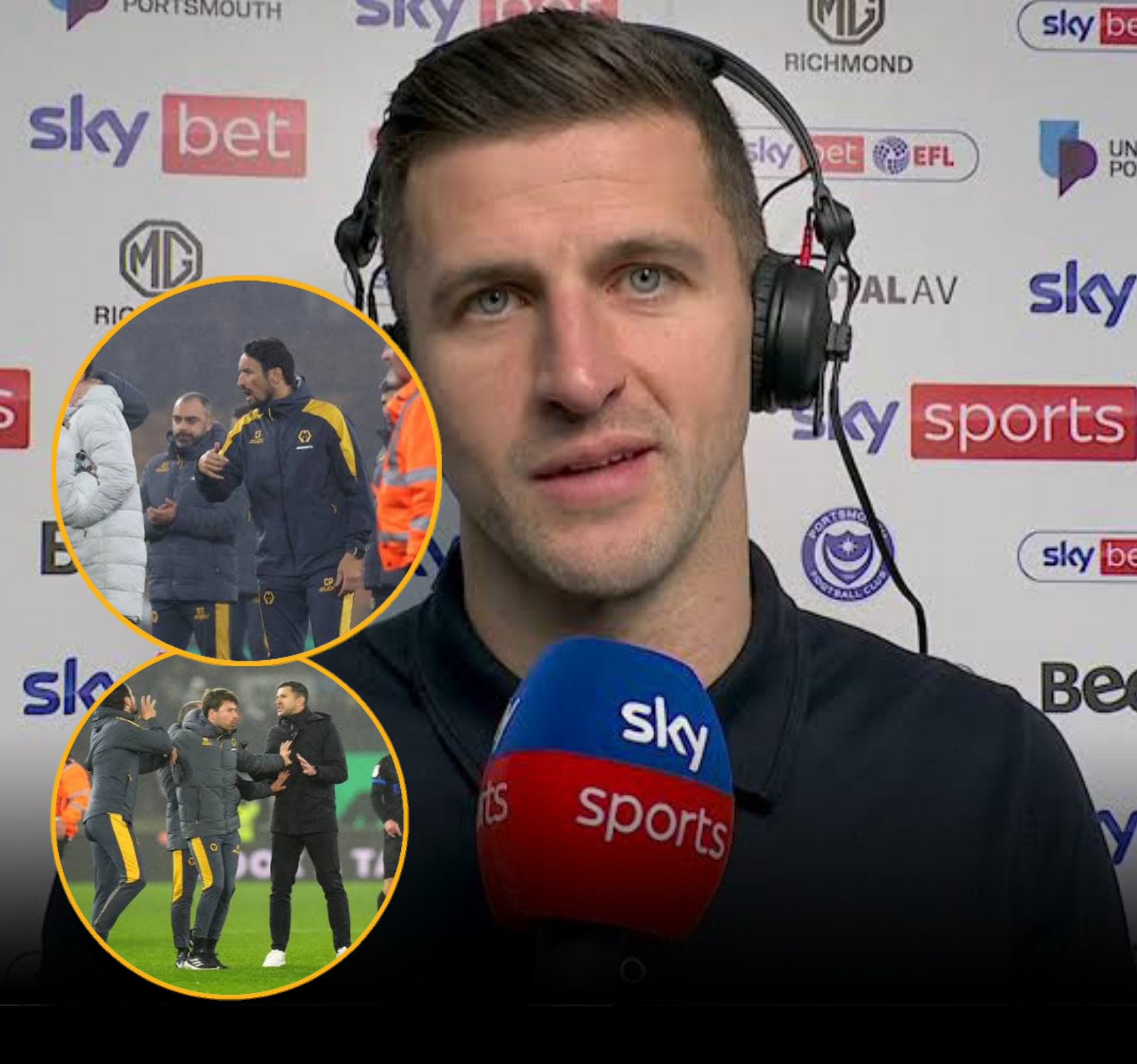
Tension erupted at Molineux Stadium following Portsmouth’s late equaliser against Wolves, with Portsmouth head coach John Mousinho confronting Wolves coach Cesar Peixoto in a heated touchline exchange that continued to dominate discussions after the final whistle.
The encounter ended 1-1, but the confrontation between the two coaches quickly overshadowed the result, with Mousinho expressing anger over Peixoto’s conduct and questioning whether such behaviour should have a place in professional football.

Speaking during his post-match interview, the Portsmouth boss was asked to explain what triggered the confrontation and why his disagreement with Peixoto escalated while the match was still being played.
Mousinho made it clear that he considered Peixoto’s behaviour deeply unprofessional, accusing the Wolves coach of attempting to intimidate him simply because he was questioning the conduct of Wolves players on the pitch.
According to the report, the Portsmouth manager had been communicating his concerns to the fourth official over what he considered aggressive challenges and physical conduct from Wolves players. Rather than allowing the officials to handle the complaints, Peixoto confronted him, turning a disagreement over the match into a personal exchange.
Mousinho insisted that raising concerns with the fourth official was a normal part of football management and that no opposing coach had the right to humiliate him for doing so.
Speaking after the game, Mousinho said: “What happened on that touchline was completely unprofessional. I was speaking to the fourth official about the aggressive things Wolves players were doing on the pitch, and Peixoto decided to make it personal. He called me a woman for complaining and told me to keep quiet. I have been in football long enough to understand disagreements, but nobody has the right to speak to another professional like that.”
The Portsmouth manager’s strongest objection centred on what he described as an attempt to silence him while he was addressing the fourth official. Mousinho argued that coaches were entitled to raise concerns about challenges, player conduct and the management of a match without being subjected to personal insults.
Mousinho added: “If this is what football is becoming, then we have a serious problem. You cannot stand on the touchline, insult another coach and expect everything to be forgotten when the final whistle goes. There must be standards, and there must be consequences when those standards are ignored. I want the appropriate authorities to examine this incident and take disciplinary action if the conduct is established.”
He also questioned Peixoto’s understanding of professional standards, suggesting that the Wolves coach should know better than to allow frustration during a competitive fixture to dictate his behaviour.
For Mousinho, the issue was not simply about two managers exchanging angry words. He believed the confrontation exposed a wider problem concerning respect between coaches, particularly when emotions are running high during important Championship fixtures.
The Portsmouth boss maintained that disagreements were inevitable in football, but insisted that there was a clear distinction between expressing frustration and attempting to belittle another manager.
TWO KEY REASONS BEHIND THE TOUCHLINE CONFRONTATION
Mousinho’s explanation centred on two principal grievances that pushed the exchange beyond an ordinary disagreement.
1. Peixoto’s alleged use of a gender-based insult
The first issue was Peixoto’s supposed description of Mousinho as a woman because he was complaining to the fourth official about Wolves players’ aggressive approach.
Mousinho viewed the remark as disrespectful and entirely unnecessary, arguing that questioning decisions or raising concerns about challenges was a legitimate responsibility for any head coach. He was particularly angered by the suggestion that voicing a complaint made him weak or unprofessional.
The Portsmouth manager believed that football should encourage accountability rather than discourage coaches from speaking up when they have concerns about what is happening on the pitch.
2. Being told to keep quiet during the match
The second reason was Peixoto’s instruction for him to keep quiet while the game was still in progress.
Mousinho considered the remark an attempt to intimidate him and questioned why a fellow professional would believe he had the authority to dictate when another manager could communicate with match officials.

He maintained that the fourth official was there to manage communication between the technical areas and that any disagreement should have been handled through the proper channels rather than through personal confrontation.
The incident left Mousinho furious, with the Portsmouth boss questioning whether Peixoto understood the responsibilities that came with leading a professional football team.
The 1-1 draw ultimately left both sides sharing the points, but the confrontation created a separate debate over respect, communication and acceptable behaviour in football.
For Mousinho, the issue was straightforward: raising concerns with the fourth official should not invite personal insults, and no coach should feel entitled to silence a rival through intimidation.
Whether the incident would lead to formal disciplinary proceedings remained unresolved within this fictional account. Nevertheless, Mousinho’s demand was clear: professional standards must apply to everyone in the technical area, regardless of reputation, position or the pressure of competition.
Leave a Reply