Scotland in Chaos: Clarke Declares ‘It’s Over’ as McCann Erupts in Explosive TV Row After Brazil Humbling

Scotland’s World Cup campaign has been thrown into full-blown controversy after a devastating 3-0 defeat to Brazil was followed by two explosive off-pitch storylines that have dominated headlines and divided supporters across the country.
While the result itself already placed Scotland in a difficult position in their group, it is the reaction of manager Steve Clarke and a heated media confrontation involving former international Neil McCann that has turned a disappointing night into a full-scale national debate about the team’s direction, mentality, and future at the tournament.
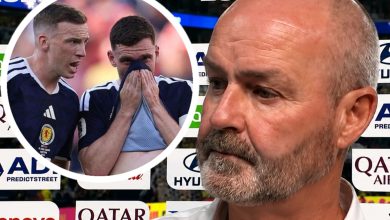
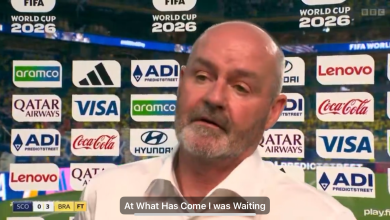
Despite Scotland still having a mathematical route to qualification, Clarke’s post-match comments stunned fans and pundits alike. Visibly frustrated after the heavy defeat, the Scotland boss suggested that the campaign was effectively finished, telling reporters in blunt terms that the team were “going home” after the Brazil loss.
The remarks immediately sparked confusion, because Scotland are not officially eliminated. Depending on results elsewhere in the group and final goal differences, there remains a slim but real pathway to the knockout stages. That contrast between mathematical possibility and managerial pessimism has become the central talking point among supporters.
For many fans, Clarke’s words felt like a premature surrender at a moment when belief was still required. Social media quickly filled with criticism, with some arguing that even if qualification is unlikely, the manager should maintain confidence publicly to keep morale intact.

 One frustrated supporter wrote: “If there’s still a chance, the team should believe. You can’t just give up now.”
Others, however, defended Clarke, insisting that his comments reflected the emotional reality of a team that had been outplayed for long stretches by a superior Brazil side. The loss marked Scotland’s second defeat of the tournament and exposed persistent issues in both attacking creativity and defensive organisation.
Brazil controlled large phases of the match, and Scotland struggled to build sustained pressure or create meaningful chances. By the final whistle, the scoreline reflected a gap in quality that many analysts had already predicted before kickoff.
Yet it is Clarke’s tone after the match that has now become the biggest talking point, overshadowing even the result itself.
McCann and English spark live broadcast firestorm
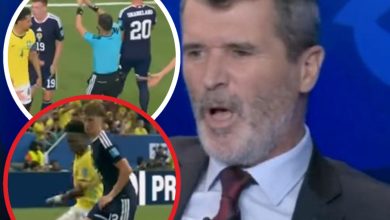
As if the managerial controversy was not enough, tensions escalated further during post-match television coverage when former Scotland international Neil McCann became involved in a heated live on-air exchange with BBC journalist Tom English.

English questioned whether Scotland’s players possess the technical ability required to challenge elite opposition, suggesting that the gap exposed against Brazil was not just tactical but structural.
McCann reacted strongly to the comments, accusing English of disrespecting the players and undermining their achievements. The former Scotland winger argued that the squad had earned their place at the tournament and should not be publicly dismissed in such harsh terms.
The exchange quickly became tense, with both sides refusing to back down. McCann insisted that criticism had gone too far and risked damaging confidence within the squad, while English maintained that honest analysis of technical limitations was necessary if Scotland are to improve.
The confrontation immediately spread across social media, with clips of the exchange circulating widely and fans sharply divided over who had made the stronger case.
Some supporters backed McCann, arguing that Scotland’s players deserve respect after qualifying for a major tournament and should not be publicly humiliated. Others agreed with English, claiming that uncomfortable truths about Scotland’s technical level need to be addressed if the team is to progress beyond group-stage exits.
Growing pressure around Scotland’s campaign
The combination of Clarke’s defeatist tone and the McCann–English dispute has intensified scrutiny on Scotland’s World Cup campaign. What was once a straightforward sporting disappointment has now evolved into a broader debate about identity, expectations, and standards within Scottish football.
Clarke, who has previously been praised for stabilising the national team and guiding them back into major tournaments, now finds himself under renewed pressure. His achievements remain respected, but international football is often judged by tournament performance rather than long-term progress.
With Scotland now needing a complex combination of results to keep their hopes alive, attention has shifted from optimism to uncertainty.
The mathematical route to qualification still exists, but it is narrow. Scotland would likely need not only a strong performance in their final group match but also favourable outcomes elsewhere. Even then, goal difference could become decisive.
A tournament slipping away or still alive?
The central contradiction defining Scotland’s situation is simple: on paper, they are still in it. Emotionally, however, the tone from within the camp suggests otherwise.
Clarke’s post-match comments have been interpreted by some as emotional frustration rather than literal resignation. Yet in tournament football, perception often matters as much as reality, and his words have already shaped the narrative.
Meanwhile, the McCann–English confrontation has added another layer to the debate, highlighting divisions not just among fans but also among pundits and former players about how Scotland should be assessed on the world stage.
What happens next
Scotland now face a critical final group match that will determine whether their campaign ends in early disappointment or extends into a dramatic late qualification scenario.
Behind the scenes, Clarke will be under pressure to reset the mood quickly, regardless of his post-match emotions. Players will also be aware that public perception can shift rapidly depending on the next result.
For supporters, the uncertainty is both frustrating and familiar. Scotland have built a reputation for emotional, unpredictable tournament journeys, and this latest chapter is proving no different.
But one thing is clear: between a manager who sounded like he had already accepted elimination and a fiery media clash questioning the team’s quality, Scotland’s World Cup story has become about far more than just football results.
It has become a debate about belief, standards, and whether this squad is truly on the rise or simply facing its limits on the biggest stage.