BRENDAN RODGERS TENDERS HIS RESIGNATION, LEAVING A BRUTAL MESSAGE FOR CELTIC AFTER THEIR 3–1 DEFEAT TO HEARTS

Celtic Football Club have confirmed that manager Brendan Rodgers has resigned from his position on Monday following Saturday’s 3–1 defeat to Hearts at Tynecastle Park.
In a statement released on Monday, the club announced that Rodgers had tendered his resignation, bringing an abrupt end to his second spell in charge of the Glasgow side. The defeat, which saw Celtic drop further behind Rangers in the Scottish Premiership title race, appears to have been the final straw for the 51-year-old manager.
Celtic described Rodgers’ contribution across his two spells as “very successful” and thanked him for his service, but confirmed he would leave his post immediately.
“The Club appreciates Brendan’s contribution to Celtic during his two very successful periods at the Club,” read the statement.
“Brendan leaves Celtic with our thanks for the role he has played during a period of continued success for the Club and we wish him further success in the future.”
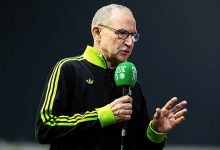
The club also confirmed that former Celtic manager Martin O’Neill and former player Shaun Maloney will take interim charge while the search for a new permanent manager begins.
Rodgers’ parting message
Although Celtic’s official statement remained diplomatic, sources close to the club have indicated that Rodgers left a forthright message for the board and players before his departure.
Speaking to journalists outside Lennoxtown, Rodgers was quoted as saying he felt the team had “lost its identity” and that “standards on and off the pitch had slipped below the level required for success.”
“I’ve always demanded the highest standards,” Rodgers reportedly said. “When those standards aren’t met, it becomes difficult to continue. I love this club deeply, but certain issues have made my position untenable.”
The “issues” are understood to refer to frustrations over the club’s transfer policy, injuries to key players, and what Rodgers viewed as a lack of alignment between the coaching staff and the boardroom.
From success to frustration
A close friend of Brendan Rodgers has revealed that internal pressure and mounting frustration inside Celtic Football Club were key factors behind the manager’s decision to resign earlier today.
Speaking to the BBC under the condition of anonymity, a long-time associate of Rodgers claimed the former manager had been “under relentless internal pressure for weeks” and felt that “the situation had become unsustainable.”
“It wasn’t just about the Hearts game,” the friend said. “Brendan has been frustrated by several things behind the scenes — from the transfer situation to the overall direction of the club. The defeat at the weekend just brought everything to a head.”
The source added that Rodgers had been “openly questioning” the club’s long-term planning and investment strategy, particularly regarding recruitment and squad depth.
“He wanted to build something stronger, but he felt those above him weren’t on the same page,” the friend continued. “He cares deeply about Celtic, but he couldn’t continue under that kind of strain.”
Rodgers’ resignation marks the end of a turbulent second spell in charge of Celtic. Having returned to the club in 2023, he was tasked with continuing the domestic dominance established under Ange Postecoglou.
His first tenure from 2016 to 2019 was one of the most successful periods in Celtic’s modern history. Rodgers guided the team to back-to-back trebles and famously completed an invincible domestic season in 2016–17.
However, his second stint never reached the same heights. While he delivered silverware, including the 2024 Scottish Cup, performances this season have been inconsistent. Saturday’s loss to Hearts was Celtic’s third league defeat of the campaign, leaving them trailing leaders Rangers by five points.
Reaction from fans and pundits
News of Rodgers’ departure has sparked a wave of reaction across Scottish football. Some supporters expressed disappointment at the timing, while others felt it was an inevitable outcome after weeks of poor results.
Former Celtic striker Chris Sutton, speaking on BBC Radio Scotland, said Rodgers’ exit reflected deep-rooted issues within the club.

“This isn’t just about one bad result,” Sutton said. “Brendan has clearly felt let down by the backing he’s received, but the team also hasn’t performed. It’s a messy situation and Celtic have a big decision to make now.”
Fans gathered outside Celtic Park on Monday afternoon, with many voicing frustration at the board’s handling of recent transfer windows. Some banners called for greater investment and a clearer long-term vision.
Celtic confirmed that the process to appoint a new permanent manager is already under way. Early reports suggest that former club captain Scott Brown, current Norway boss Ståle Solbakken, and ex-Leicester manager Enzo Maresca could be among those considered for the role.
In the meantime, Martin O’Neill, who managed Celtic between 2000 and 2005, will take temporary charge, assisted by Shaun Maloney, a former Celtic winger and current Scotland coach. The pair will lead the team into their next league fixture against Aberdeen at Celtic Park.
O’Neill, speaking briefly to reporters, said he was “honoured to help the club” during the transition period.
“Celtic means a great deal to me,” O’Neill said. “I’ll do whatever I can to steady things and bring a bit of confidence back to the players.”
Legacy and uncertainty
Rodgers departs with a record of multiple domestic trophies, a reputation for promoting attacking football, and a complicated relationship with sections of the Celtic support. His second exit, much like his first in 2019 when he left mid-season for Leicester City, will likely divide opinion once again.
Celtic’s focus now turns to stabilising their season and ensuring the title race remains alive. With European fixtures still to come and injuries mounting, the challenge ahead for O’Neill and his players is considerable.
For Rodgers, the future remains uncertain, but his parting message has made one thing clear: the standards he once set at Celtic Park are not easily replaced.