Bruno Génésio Erupts After Controversial Decisions in Lille’s Europa League Defeat, Accuses Officials of ‘Handing’ Aston Villa Victory
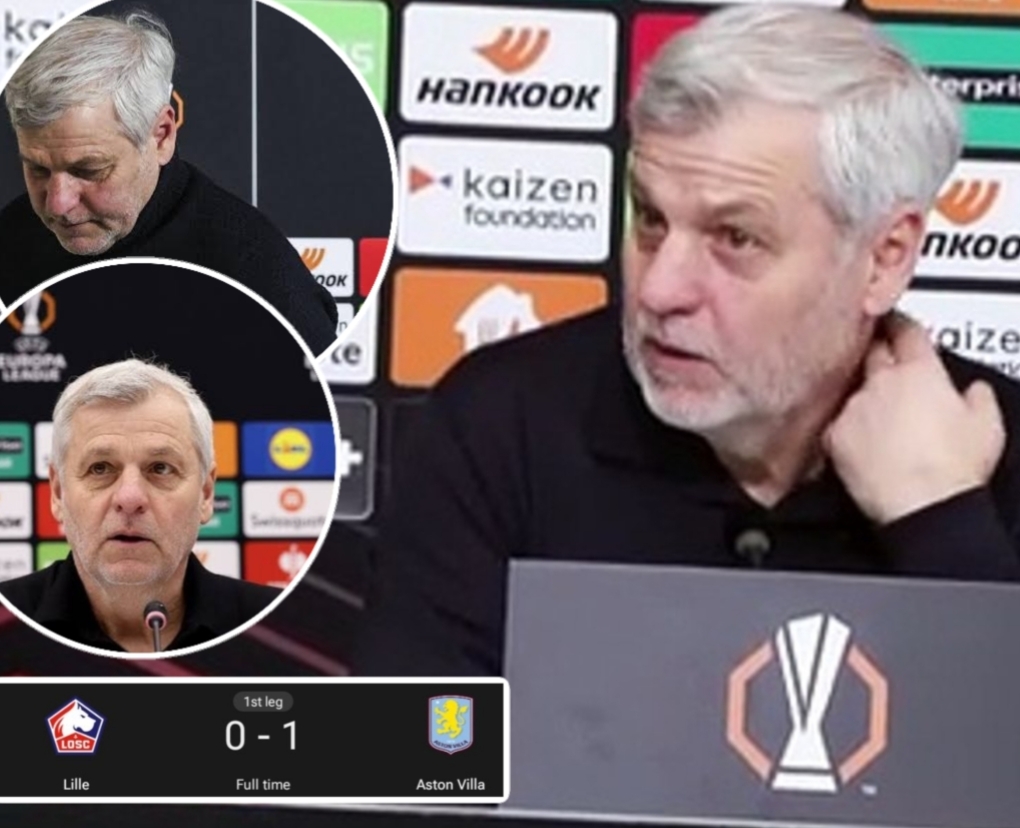
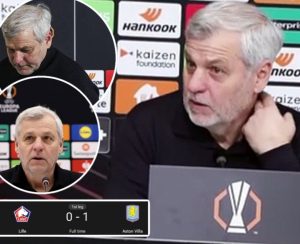
Lille, France LOSC Lille suffered a bitter setback at their home stadium, Stade Pierre‑Mauroy, after a 1‑0 defeat to Aston Villa in the first leg of their UEFA Europa League last‑16 tie on Thursday evening. The match, tense from start to finish, was overshadowed by Lille boss Bruno Génésio’s post-game criticism of what he called “game-changing” refereeing decisions. The defeat leaves Lille with work to do ahead of the return leg in Birmingham.
The only goal came in the 61st minute when Ollie Watkins rose to head home a precise cross, catching the home side off-guard. Despite dominating possession and creating numerous opportunities, Lille struggled to find the cutting edge needed to break down Villa’s disciplined defensive structure.
Génésio Speaks Out
After the match, Génésio did not hold back in expressing his disappointment, particularly at the refereeing.

“We worked really hard to get to this level, that’s why it hurts,” he said. “Some decisions completely altered the flow of the game, and tonight we felt the impact.”
One moment that particularly frustrated him was a disallowed penalty appeal in the second half.
“The penalty we deserved was not given. In a match of this magnitude, these calls hurt they change everything,” Génésio added.
He also stressed the resilience of his players despite the setback:
“We showed character, we fought until the end. But football can be cruel when moments don’t go your way.”
Finally, Génésio highlighted the challenge of playing under a tense atmosphere:
“It’s not just the match on the pitch the energy around the stadium affects everyone, and we felt it tonight.”
The first half was largely cautious from both sides, with Lille controlling possession but failing to create clear-cut chances. Villa remained compact and disciplined, absorbing pressure and looking for opportunities on the counterattack. Despite Lille’s numerical advantage in possession, their final balls often lacked precision, keeping Villa comfortably in control defensively.
The breakthrough came in the 61st minute. Villa’s attack was swift and well-executed — a diagonal cross found Watkins, who rose above Lille’s defenders to head the ball into the net. This goal not only gave Villa the lead but also shifted the momentum, forcing Lille to chase the game more urgently.
Following the goal, Lille increased the intensity, pushing more players forward and taking risks to break Villa’s defensive lines. However, Villa’s goalkeeper Emiliano Martínez made several crucial saves, and the visitors’ backline remained solid, frustrating Lille’s home crowd. Despite repeated efforts and close-range chances, Lille could not find the equaliser.
Home Advantage and Fan Reaction
Playing at Stade Pierre-Mauroy added a layer of pressure and expectation. Lille fans were vocal throughout the match, urging their team on, waving banners, and reacting passionately to every decision especially those perceived as controversial. The home advantage made the defeat even more difficult to swallow.

Off the pitch, tensions were evident before kickoff. Reports emerged of clashes between travelling Aston Villa supporters and French police outside the stadium. Social media footage circulated showing confrontations, including the use of batons, which heightened the charged atmosphere surrounding the fixture. The presence of passionate fans, combined with the stakes of a knockout tie, created a highly intense environment for both teams.
Implications for the Tie
Lille now face the daunting task of overturning a deficit in the second leg at Villa Park. The away goal scored by Aston Villa provides them with a narrow but significant advantage heading into the return fixture. Génésio will need to motivate his squad, both mentally and tactically, to recover from the setback and ensure Lille remain in contention for a place in the quarter-finals.
Aston Villa, meanwhile, will approach the home leg with confidence, having achieved a disciplined away performance and capitalised on a key moment. Manager Unai Emery praised his team’s organisation and mental strength, highlighting the importance of the Watkins goal and defensive discipline.
Controversy and Refereeing Debate
Génésio’s comments are likely to intensify debate about refereeing standards in European competitions. Controversial decisions, particularly in knockout matches, are often scrutinised, and his insistence that certain calls were “game-changing” adds to the ongoing discussion about the influence of officials on match outcomes. UEFA may review incidents from the game, but Lille must now focus on performance, preparation, and strategy for the second leg rather than dwelling solely on officiating.
Looking Forward
Despite the disappointment of losing at home, Lille remain in the tie and retain the chance to progress. Génésio’s criticism of the refereeing, combined with his praise for his team’s resilience, sets the tone for Lille’s approach to the return leg. The squad will need to balance aggression with tactical discipline to break down Villa’s defensive organisation in England.

“We need to regroup and prepare for the second leg,” Génésio concluded. “It’s not over, and the players know what’s at stake.”
The second leg promises to be a high-stakes, tightly contested affair, with Lille seeking redemption in front of Villa’s home supporters. With the aggregate score finely poised, every decision, moment, and play could prove decisive in determining which side advances to the Europa League quarter-finals.