Burnley Interim manager Micheal Jackson instant response to losing first premier league game
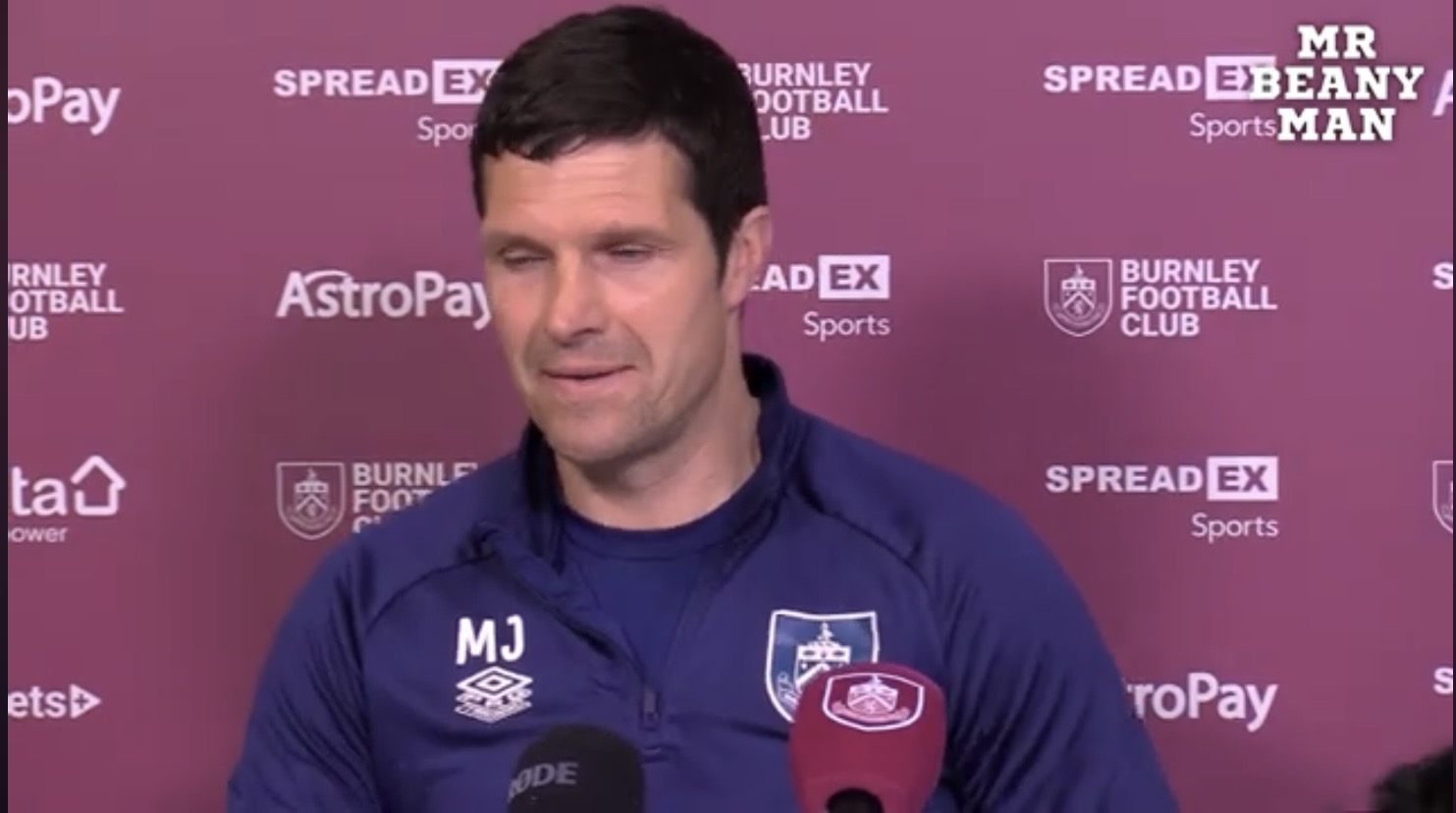
Burnley’s interim manager Michael Jackson has found himself at the center of a social media storm after his brutally honest reaction to his side’s defeat against Leeds United in the Premier League went viral splitting opinion across the football world.
Stepping into the role during a turbulent period for Burnley FC, Jackson had initially steadied the ship, earning praise for organizing a team that looked, at the very least, difficult to beat. But football rarely allows momentum to settle for long. The loss to Leeds marked his first defeat in charge, and it wasn’t just the result that grabbed headlines—it was what came immediately after.
Speaking candidly in his post-match interview, Jackson didn’t hide behind clichés. Instead, he delivered a sharp, unfiltered assessment of his team’s performance. “We weren’t good enough, simple as that,” he said, his tone measured but unmistakably frustrated. “You can talk about effort all you want, but if the quality isn’t there in key moments, you get punished. And today, we did.”
Within minutes, clips of the interview began circulating online. Fans, pundits, and neutral observers quickly weighed in, and the reaction was anything but unified. Some praised Jackson’s honesty, describing it as “refreshing” in an era where managers often deflect or dress up poor performances. Others, however, criticized the comments as potentially damaging, arguing that such bluntness could undermine player confidence at a crucial stage of the season.
The divide highlights a broader debate in modern football: should managers protect their players publicly at all costs, or is there value in calling things out as they are? Jackson’s approach leans firmly toward the latter. He continued in the interview, emphasizing accountability. “We’re fighting for our place in this league. That means standards have to be high every single game. Today, we didn’t meet them.”

For supporters of Burnley, the reaction has been particularly mixed. Some fans took to social media to back their interim boss, suggesting that his comments reflect the urgency of the situation. “He’s right,” one fan wrote. “We can’t sugarcoat performances like that when relegation is on the line.” Others were less convinced, questioning whether such public criticism might create tension within the dressing room.
From a tactical perspective, the defeat exposed several familiar issues. Burnley struggled to maintain possession under pressure, and Leeds capitalized on defensive lapses with clinical efficiency. Jackson acknowledged these shortcomings directly, pointing to “basic errors” and a lack of composure in decisive moments. It’s the kind of analysis that resonates with fans who appreciate transparency but it also places the spotlight squarely on the players.
For Leeds, the victory represented a vital boost, both in terms of points and confidence. Their high-energy approach disrupted Burnley’s rhythm, and their ability to convert chances ultimately made the difference. Jackson was quick to credit the opposition as well, noting that Leeds “took their opportunities well,” but his primary focus remained on his own team’s failings.
The viral nature of the interview speaks to how quickly narratives can form in today’s digital age. A single quote, clipped and shared across platforms, can shape perceptions far beyond the immediate context. In Jackson’s case, the narrative has become one of stark honesty versus managerial diplomacy.
There’s also a personal dimension to consider. As an interim manager, Jackson operates under unique pressures. Every decision, every result, and every public statement is scrutinized not only for its immediate impact but also for what it might mean for his future. His willingness to speak so openly suggests a coach who prioritizes standards over optics but it also raises questions about how that approach will be received by those above him and within the squad.
Ultimately, whether Jackson’s comments prove beneficial or detrimental will depend on what happens next. If Burnley respond positively tightening up defensively, showing greater composure, and picking up points his honesty may be seen as a turning point. If results continue to falter, critics will likely point back to this moment as evidence of a disconnect.
What’s undeniable is that Jackson has made people pay attention. In a league where narratives often revolve around the biggest names and clubs, his post-match reaction has cut through the noise. It’s raw, it’s real, and it has sparked a conversation that extends beyond a single game.
In football, as in many walks of life, truth can be both powerful and polarizing. Michael Jackson has chosen not to dilute it and the internet, predictably, can’t agree on whether that’s exactly what Burnley need or a risk they can’t afford to take.