“He Was a Nightmare” Arteta Praises Everton Striker but Questions Moyes for Substituting Him Early Despite Late 2–0 Win at the Emirates
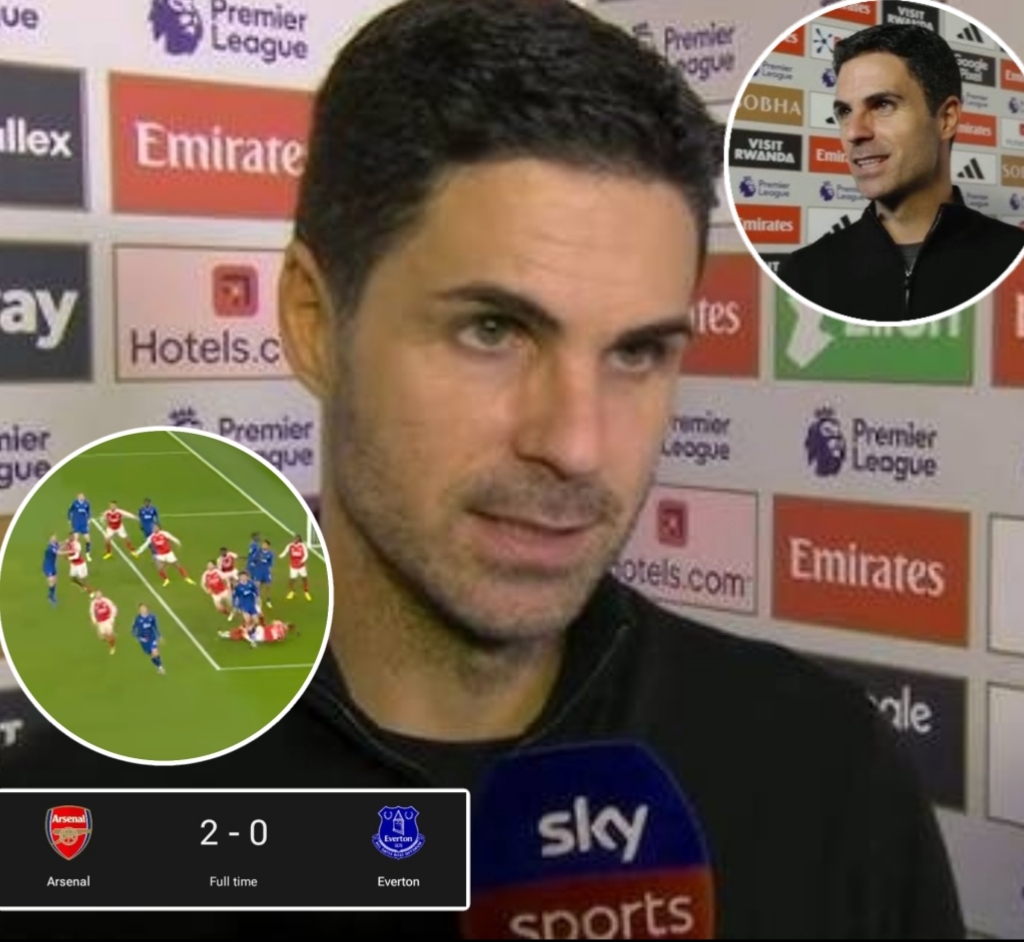
In a Premier League clash that delivered drama right to the final whistle, Arsenal F.C. finally broke down stubborn opponents Everton F.C. with two late goals to secure a 2–0 victory at the Emirates Stadium. Though the scoreline suggests a comfortable win for the Gunners, the story of the night quickly became the performance of an Everton striker who tormented Mikel Arteta’s defence and the substitution that arguably shifted the momentum in Arsenal’s favour.

Arsenal entered the match on a run of impressive form, leading the Premier League and chasing what would be a landmark title tilt. Everton, sitting mid‑table but dangerous in sporadic bursts, approached the game with a disciplined defensive blueprint, content to frustrate their hosts and hit on quick transitions.
For nearly 60 minutes, that plan looked as though it might succeed.
Arsenal Dominates Possession but Lacks Penetration

From the opening whistle, Arsenal controlled territory and rhythm. Their trademark high press and fluid positional play saw them keep the ball in Everton’s half for long periods, rotating passes and probing for openings. The Emirates crowd erupted early whenever Arsenal advanced, sensing their team’s role as orchestrators of the game.
Yet despite their dominance in possession, Arsenal’s forward movements were met with an organised Everton defence that remained resolute. The visitors dropped into compact lines, minimising space between their defence and midfield and making it difficult for the Gunners’ creative players to find clear penetrating passes.
Arsenal’s full‑backs pushed high and wide, but their attempts to create overloads were consistently repelled. The home team’s attacking midfielders saw glimpses of space but could not fully exploit them. For long stretches, Arsenal looked technically superior but lacked the final decisive pass.
Pressure mounted, but chance after chance ended with the ball cleared or blocked. Arsenal’s crosses failed to find their intended targets, and shots from distance always seemed fractionally off. By the time the second half rolled past the hour mark, the Emirates faithful were growing restless and Everton’s confidence seemed to grow in response.
Everton Stands Firm
While Arsenal’s playmakers sought openings, Everton’s game plan was beautifully simple: stay compact, win the second balls, and hit back quickly. Their defenders remained disciplined in their shape, stifling pockets of space and forcing Arsenal wide rather than through the centre.

Everton’s physicality was also evident. Midfield duels were hard fought, and tackles were precise rather than reckless. The visitors’ energy seemed almost contagious, as Arsenal’s previously crisp passing lost a bit of its rhythm in midfield under increased pressure.
It was in these transitional phases moments when Arsenal lost the ball and Everton surged forward that the match’s narrative began to shift subtly.
Beto Turns the Tide and Arsenal Struggle
It wasn’t until about halfway through the first half that Everton’s striker Beto began to make an unmistakable impact on the game. The Portuguese forward’s presence up front soon proved to be a consistent thread of danger against Arsenal’s defence.
Beto’s blend of pace, strength, and clever movement off the shoulder of defenders repeatedly forced Arsenal’s centre‑backs into tough decisions. Every touch seemed purposeful, every run angled to mount pressure. The tactical intent was clear: stretch Arsenal’s back line, exploit the spaces in behind, and make the Gunners pay for any momentary lapse in concentration.
In the first half alone, Beto threatened on multiple occasions. His quick turns opened up half‑chances, and his hold‑up play allowed Everton to carry numbers forward in transition. Arsenal’s defence, generally tight and well‑organized, suddenly found itself scrambling to cut off passes and retreats at the last second.
Mikel Arteta whose tactical setups this season have been lauded for fluidity and creativity admitted after the match that Beto’s influence had caused his side significant issues.
“He was a nightmare for us in the first half the way he ran across the back line, his hold‑up play, and his direct movement challenged us constantly,” Arteta said. “We struggled to match his pace and his positioning in that phase of the game.”
One pivotal moment that underscored Beto’s threat came when Everton’s Dwight McNeil struck a venomous effort that cannoned back off the post, leaving the Emirates crowd collectively holding its breath. Everton might not have been leading on the scoreboard at that point, but they were certainly in the battle and on some metrics, leading it.
The Substitution That Shifted Momentum
In the 69th minute, with Arsenal still seeking the breakthrough and Everton well‑organised at the back, manager David Moyes made a tactical decision that would soon become the talk of social media and pundit forums alike: he withdrew Beto from the pitch.
The substitution was met with a mixture of confusion and frustration from Everton supporters, who believed their striker had been one of the most dangerous players on the field.
Arteta’s post‑match comments suggested the change had a noticeable effect on the game’s trajectory.
“When he came off, we started to feel more comfortable and control the game better,” Arteta said. “His presence had influenced the way we had to defend and transition. Once he was off, we could stretch play more effectively and keep Everton pinned back.”
Whether it was the substitution itself or simply the natural ebb and flow of a long match, Arsenal’s attacking patterns began to look sharper. The edge seemed to be shifting.
Late Arsenal Breakthrough
After years of frustrating draws and narrow defeats against organised defences, Arsenal finally found their moment in the 89th minute.

Substitute Max Dowman already a hot topic among Arsenal faithful for his meteoric rise through the youth ranks delivered a dangerous ball into the Everton penalty area. Amid a cluster of bodies, Viktor Gyökeres reacted fastest, firing the ball across goal and into the back of the net to finally give Arsenal the lead.
The Emirates erupted. Relief, jubilation, and at times mere disbelief rippled through the stands as supporters realised their team had finally found the breakthrough they had been pressing for.
With Everton pushing forward in search of an equaliser, Arsenal hit them on the break once more. In the 97th minute, Dowman demonstrating remarkable composure and speed sprinted into open space and calmly slid the ball into an empty net. The goal not only sealed the 2–0 victory but also etched Dowman’s name into Premier League history as the youngest goalscorer at just 16 years and 73 days.
Fan and Media Reactions
In the aftermath, debate raged online, with fans dissecting every tactical choice of the match.
Everton supporters questioned whether Beto’s substitution was the right call, especially given how effective he had been. Some argued that keeping him on might have kept Arsenal at bay or even led to a shock result.
Arsenal fans, meanwhile, celebrated the patience and resilience of their side, especially the late goals and the emergence of Dowman as a legitimate impact player.
Pundits praised Arteta’s tactical adjustments while also noting his sportsmanship in openly acknowledging the threat posed by the Everton striker.
Title Race Impact and Looking Ahead
The win was significant for Arsenal. Not only did it extend their lead at the top of the Premier League table, but it also demonstrated their ability to grind out results even when elite teams defend deep and effectively.
For Everton, the performance offered encouragement and frustration in equal measure. They had shown they could stifle one of the league’s most potent sides, but decisions and timing dictated the outcome.
As the season progresses, Arsenal will look back on nights like this as foundational to their title push, while Everton will return to training with questions about how to maximise offensive threats against stubborn foes.