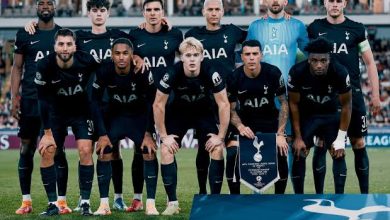
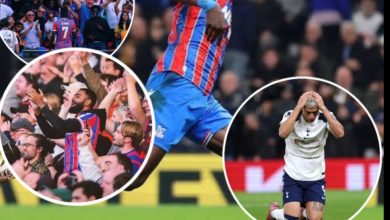
Manchester City Boss Pep Guardiola Demands Answers as ‘Extra Minutes’ Chants Spark Fresh Controversy After Chaotic Late Drama in Tottenham Draw
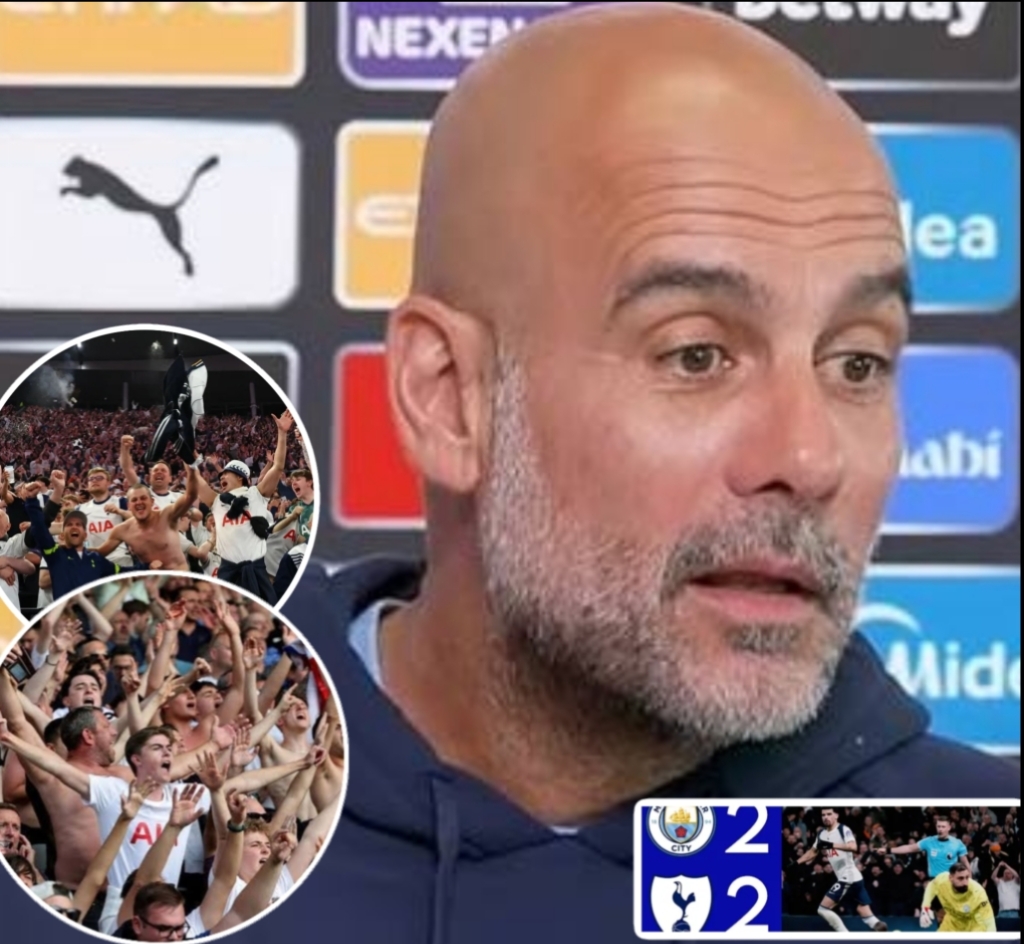
Manchester City manager Pep Guardiola has called for urgent clarity and consistency from Premier League officials after controversial “extra minutes” chants dominated the closing stages of City’s dramatic 2–2 draw with Tottenham Hotspur, turning a thrilling contest into another flashpoint in the growing debate around stoppage time, referee communication, and crowd influence.
What should have been remembered purely as a high-quality Premier League spectacle instead ended with lingering questions, as extended added time, rising tension inside the stadium, and visible confusion among players overshadowed the football itself at the Tottenham Hotspur Stadium.
City’s First-Half Control Sets the Tone
For the opening 45 minutes, Manchester City looked in complete command. Guardiola’s side controlled possession, dictated the rhythm of the game, and consistently exposed Tottenham’s defensive structure with quick passing and intelligent movement.
City struck early in the 11th minute, when Rayan Cherki finished calmly after a sharp attacking sequence, immediately quietening the home crowd. The goal reflected City’s early dominance, with Spurs struggling to disrupt their midfield control.
Tottenham attempted to respond with periods of pressure, but City remained composed and disciplined. Guardiola’s players recycled possession patiently, forcing Spurs to chase and gradually draining their energy.
Just before the break, City delivered a second blow. In the 44th minute, Antoine Semenyo doubled the advantage with a clinical finish following sustained pressure in the final third. At half-time, City held a deserved 2–0 lead, and the contest appeared firmly under their control.
Momentum Swings After the Interval
The second half, however, unfolded very differently.
Tottenham returned from the break with renewed intensity, pressing higher up the pitch and committing more bodies forward. That shift quickly unsettled City, who began to lose the control that had defined their first-half performance.
The breakthrough for Spurs arrived in the 53rd minute, when sustained pressure inside the penalty area resulted in an own goal, reigniting belief among the home players and supporters. The atmosphere inside the stadium lifted immediately, and City suddenly found themselves under sustained pressure.
As Spurs grew in confidence, City’s composure began to falter. Passes became rushed, defensive clearances less assured, and Guardiola was visibly animated on the touchline as momentum slipped away.
The equaliser arrived in the 70th minute, and it was a moment of pure drama. Dominic Solanke produced an acrobatic finish that sent the Tottenham Hotspur Stadium into eruption and completed a remarkable comeback. In the space of less than 20 minutes, City’s two-goal cushion had disappeared.
Stoppage Time Becomes the Central Issue
As the match entered its closing stages, tension escalated sharply. A series of substitutions, fouls, and brief stoppages accumulated, prompting the fourth official to signal a lengthy added-time period of close to ten minutes.
The decision immediately sparked reaction from the stands. Audible “extra minutes” chants echoed around the stadium, adding to an already charged atmosphere and placing further focus on the match clock.
City players were repeatedly seen asking officials how much time remained, while Guardiola gestured from the technical area, clearly frustrated by the uncertainty. Tottenham, meanwhile, dropped deeper, slowing the tempo and clearing their lines whenever possible.
Each additional minute intensified emotions on both sides. City pushed forward in search of a late winner, while Spurs defended with desperation, knowing every second mattered.
When the final whistle eventually sounded, the relief among the home crowd was unmistakable. On the City bench, the reaction was very different.
Guardiola Raises Concerns Without Direct Accusations
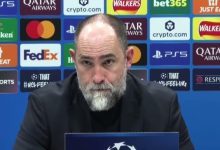
In his post-match comments, Guardiola was careful to avoid direct criticism of the referee, but his concerns were clear and deliberate.
The City manager highlighted the confusion surrounding stoppage time, suggesting that uncertainty at such a critical moment distracts players and undermines focus in matches of this magnitude.
He stressed that while officials have an extremely difficult job, players should not be left guessing how long remains on the clock — particularly when the outcome of the match, and potentially the season, hangs in the balance.
Guardiola also hinted at the impact of the stadium environment, noting that persistent chants and reactions can increase pressure during already intense situations, even if decisions are made in good faith.
Premier League Under Renewed Spotlight
The incident adds to mounting scrutiny surrounding stoppage time in the Premier League this season. Managers, pundits, and supporters have repeatedly questioned how additional minutes are calculated, communicated, and applied across different fixtures.
Former referees have long argued that greater transparency would reduce tension, suggesting clearer explanations for extended added time could help defuse controversy.
Guardiola’s remarks are likely to intensify calls for improved communication, particularly in matches involving title contenders where margins are razor-thin.
While the Premier League has yet to issue a formal response, referee reports and broadcast footage are expected to be reviewed as part of routine post-match assessments.
Dropped Points With Major Consequences
Beyond the controversy, the result itself carries significant implications. City’s failure to protect a two-goal lead means they remain six points behind the league leaders, a gap that could prove costly as the season enters its decisive phase.
Guardiola acknowledged that at this stage of the campaign, small details can define success or failure. One lapse in concentration, one unclear decision, or one extra minute can change the trajectory of a title race.
For City, the draw felt like a missed opportunity not only because of their first-half dominance, but because of how close they came to regaining control late on.
Tottenham’s Resilience, But a Wider Debate
Tottenham will rightly take pride in their resilience and attacking bravery, with Solanke’s performance standing out as a defining moment of the match. Their second-half response reflected character and belief, qualities that continue to define their season.
Yet the broader conversation has already moved beyond the comeback itself.
Instead, attention has shifted firmly toward added time, referee communication, and the influence of crowd pressure issues that continue to shape Premier League narratives week after week.
For Manchester City, focus now turns to their next fixture, but the frustration from north London lingers. On a night filled with quality and drama, Guardiola’s message was unmistakable: in modern football, clarity around the clock matters just as much as what happens on the pitch.