Daniel Farke Sent Off After Full-Time as Leeds United Fall 0–1 to Manchester City Fiery Rant Puts EPL Officiating Under Spotlight
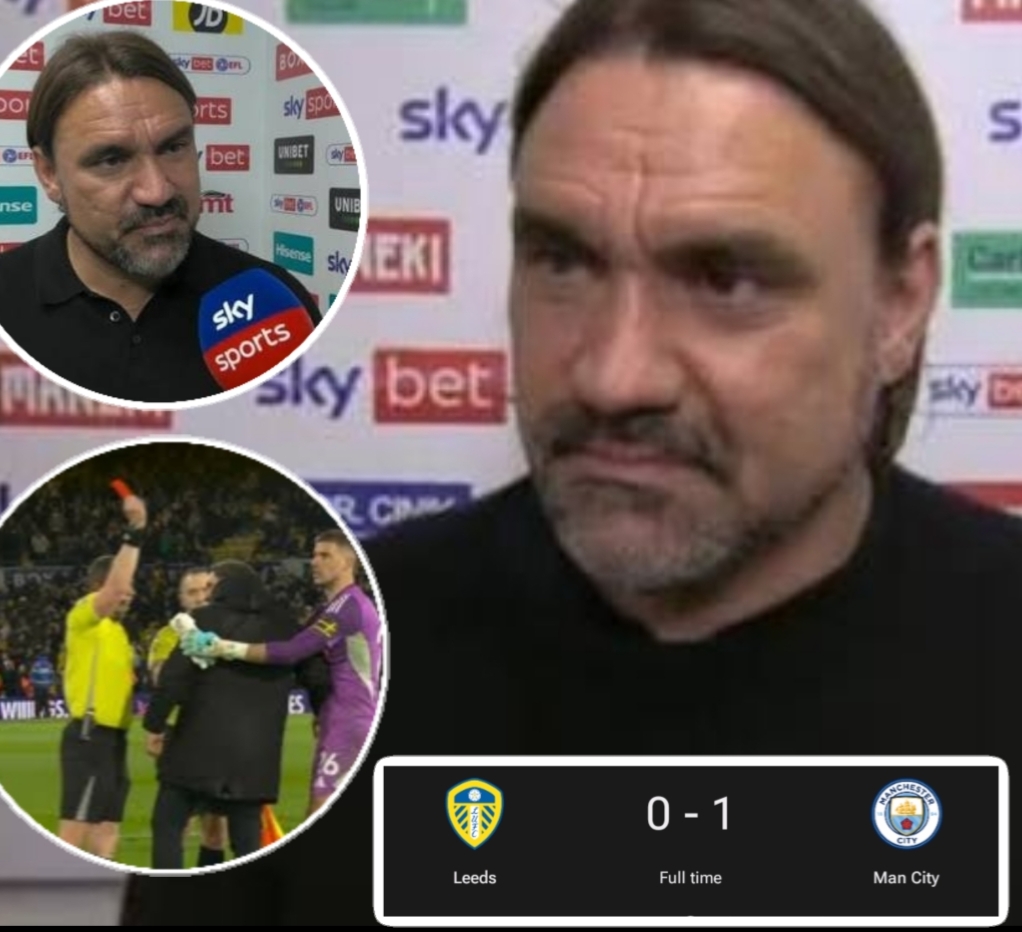
Elland Road witnessed not only a narrow 1–0 defeat for Leeds United on 28 February 2026, but also one of the most explosive managerial reactions of the Premier League season. Daniel Farke, normally composed and analytical in his post-match assessments, delivered a scathing critique of officiating standards and his frustration ultimately resulted in a red card after the final whistle.
The match itself was finely balanced, decided by a single moment deep in first-half stoppage time. Yet by the end of the evening, the conversation had shifted almost entirely toward refereeing decisions, VAR scrutiny, and Farke’s dramatic dismissal.
The Decisive Moment
Leeds began the match with intensity and purpose. Backed by a loud Elland Road crowd, they pressed high and disrupted Manchester City’s rhythm early on. Despite City’s typical dominance in possession, Leeds created dangerous transitions and looked determined to make life uncomfortable for the reigning champions.
However, just as halftime approached and the hosts appeared set to go into the break level, the game turned. In the 45+2 minute, Antoine Semenyo capitalized on a well-worked move to fire City ahead. The timing of the goal was devastating for Leeds conceding in stoppage time shifted the psychological balance firmly in City’s favor.

That strike proved to be the only goal of the contest.
Second-Half Pressure
In the second half, Leeds responded with urgency. Farke’s side pushed bodies forward, increased their tempo, and forced Manchester City to defend deeper than they typically prefer. Several moments inside the penalty area sparked loud appeals from the home supporters, particularly after what appeared to be heavy contact on a Leeds attacker during a promising attacking phase.
Referee Peter Bankes waved play on.
Leeds players surrounded the official briefly, but no on-field review was initiated. VAR did not advise a pitch-side check, and play continued.
For Farke, that moment along with a series of smaller, contentious decisions became central to his post-match fury.
“We Ask for Consistency”
Speaking immediately after the game, Farke was visibly frustrated yet deliberate with his words.
“I don’t like speaking about referees,” he began. “But tonight I must say something. My players gave everything, and we ask for one thing — consistency.”

He pointed to what he described as uneven thresholds for fouls and physical challenges. According to Farke, similar levels of contact were judged differently depending on the situation and the team involved.
“It cannot be that in one moment you say ‘play on’ and in another you stop the game for something softer,” he said. “Either the standard is the same for both teams, or it is not.”
While he stopped short of explicitly accusing the officials of bias, the implication was clear: he believed Leeds did not receive the same interpretation of the rules as their high-profile opponents.
Questions Over VAR Intervention
Farke’s frustration extended to the use of VAR.
“We are told VAR is there to correct clear and obvious mistakes,” he stated. “If that contact in the box is not even worth a proper review, then I don’t understand what qualifies.”
He emphasized that managers are repeatedly told to trust the system. However, trust, he argued, depends on transparency and consistency.
“It’s not about emotion. It’s about clarity. When you prepare all week and the players sacrifice everything physically, you expect decisions to be fair.”
The Elland Road crowd had grown increasingly agitated as the second half wore on, especially when repeated penalty appeals were dismissed without further review. Each decision added to the mounting tension inside the stadium.
The Flashpoint After Full-Time
The most dramatic moment of the night, however, came after the final whistle.
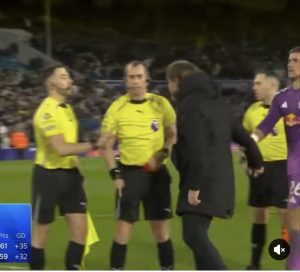
As players exchanged handshakes, Farke approached referee Peter Bankes seeking clarification on several decisions. What began as a discussion quickly escalated. Witnesses described animated gestures and visible frustration from the Leeds manager.
Moments later, Bankes reached for his pocket and produced a red card.
Daniel Farke was sent off after full-time for dissent.
The dismissal capped an already fiery evening and ensured the fallout would extend beyond the 90 minutes. A post-match red card carries potential disciplinary consequences, and the Football Association may review his comments as well.
For a manager who is typically measured in public settings, the red card underscored just how strongly he felt about the officiating.
Manchester City’s Perspective
While much of the focus fell on controversy, Manchester City executed a professional performance. Without Erling Haaland, Pep Guardiola’s side relied on patient build-up and defensive organization.

After taking the lead through Semenyo, City managed the second half intelligently, limiting Leeds to half-chances and slowing the tempo whenever possible. Their composure under pressure demonstrated why they remain firmly in the title race.
The victory moved City within two points of league leaders Arsenal, intensifying the battle at the top of the table.
Bigger Questions About Officiating
Farke’s outburst is not occurring in isolation. Throughout the season, several managers have voiced concerns about refereeing standards, particularly around:
Inconsistent foul thresholds
Varied interpretations of handball
Lack of transparency in VAR decisions
Minimal communication regarding reviews
Whether one agrees with Farke’s assessment or not, his red card ensured the debate would intensify.
His comments were passionate but calculated. He avoided direct accusations of corruption or bias, instead framing his criticism around standards and equality.
What Happens Next?
Leeds must quickly refocus on upcoming fixtures, but Farke may now face a touchline ban depending on the FA’s review of the incident. His dismissal after the final whistle could lead to further disciplinary action.
From a footballing perspective, Leeds showed resilience and competitiveness against one of the league’s strongest sides. Yet the 1–0 scoreline will sting especially given the timing of the goal and the contentious decisions that followed.
Final Thoughts
The night at Elland Road will be remembered for more than just Antoine Semenyo’s stoppage-time strike. It will be remembered for Daniel Farke’s defiant stand, his sharp critique of officiating standards, and the red card that symbolized his boiling frustration.
A narrow defeat to Manchester City is understandable in isolation. But for Farke, the manner of the loss and what he perceived as inconsistent refereeing made it unacceptable.
The Premier League prides itself on being the most competitive league in the world. On this night, however, the spotlight shifted from the football to the officiating and Daniel Farke made sure the debate would not fade quietly.