
Aston Villa’s nightmare start to the 2026/27 Premier League season has reportedly spilled into the dressing room after their humiliating 4-0 defeat to Brighton, with captain John McGinn said to have confronted Unai Emery over devastating comments made by the manager during his post-match interview.
Villa were completely dismantled at the American Express Stadium, conceding four goals in a devastating opening spell. Victor Lindelöf’s unfortunate own goal opened the scoring before Maxim De Cuyper doubled Brighton’s advantage. Jack Hinshelwood then struck twice in quick succession to put Brighton 4-0 ahead before half-time.
To make matters worse, new signing João Gomes was sent off in the 40th minute after a VAR review, leaving Villa to play the remainder of the match with ten men.
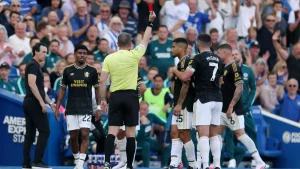
The defeat was already painful enough. But according to the dressing-room account behind this report, Emery’s post-match explanation allegedly created an entirely different problem making John McGinn to snub his handshake as they made their way through the tunnel.
Speaking to journalists after the final whistle, Emery was asked why his team had suffered such a disastrous opening-day defeat and whether this was really the level Villa wanted to show while competing in European football.
The manager did not hide his frustration.
“We didn’t play according to our instructions. We prepared the game with a clear plan, but too many moments we abandoned that plan, and against Brighton you are punished.”
Emery then pointed to two major factors behind the collapse.
The first, according to his explanation, was tactical discipline. He believed his players failed to execute the instructions they had been given before and during the match.
The second was the red card and what Emery considered overly strict officiating.
The Spanish coach reportedly felt the decision to dismiss Gomes was harsh and argued that the officiating made an already difficult situation even worse.
“The red card was too hard for me. I think the referee was very strict with us. When you are already suffering, losing a player makes everything much more difficult.”
But it was Emery’s comments about his players that allegedly caused the biggest reaction inside the Villa dressing room.

An inside source, reportedly claims McGinn was furious after hearing the interview and believed the manager had shifted too much responsibility onto the squad.
The Scotland international reportedly challenged Emery behind closed doors, insisting that the players had followed the defensive instructions given to them.
McGinn’s frustration allegedly centred around Emery’s claim that the players failed to respond to his tactical demands after going down to ten men.
According to the inside source, McGinn argued that Villa had already adopted a more defensive approach before the red card and continued trying to follow the manager’s instructions despite the scoreline.

“We played the way we were told to play. We followed the defensive instructions, even before the red card. You cannot come out afterwards and make it sound like the players simply ignored the game plan.”

The alleged confrontation reportedly became tense, with McGinn said to have reminded Emery that the players had been trying to execute the system from the touchline.
The captain’s frustration was reportedly intensified by Emery’s suggestion that Villa failed to implement a 5-4-1 formation after Gomes was dismissed.
The manager had apparently instructed his players to reorganise into a 5-4-1 structure in an attempt to prevent Brighton from adding further goals.
But according to Emery, the players struggled to execute that change properly.
“When we were one man down, I asked them to play 5-4-1. We needed to be compact, but we didn’t do it as we planned. We needed to listen and react better.”
That comment, according to the report was the moment McGinn reportedly lost patience.
The Villa captain allegedly argued that the players should not be used as a shield for tactical decisions made by the coaching staff.
He reportedly told Emery that responsibility had to be shared.
“We can accept criticism, but you cannot paint the whole squad black in the media. We lost together. If something didn’t work, then we all have to take responsibility — the players and the manager.”
The alleged exchange has now raised questions about whether Villa’s humiliating defeat could create deeper problems behind the scenes.
The statistics alone tell a brutal story. Brighton dominated possession, created numerous chances and scored all four goals before half-time, while Villa struggled to produce an attacking response. The red card only added another layer to an already disastrous afternoon.

Yet the biggest concern may now be what happens inside the dressing room.
McGinn, who started the match as captain and was himself booked in the first half, is understood in this report to believe that the squad must remain united rather than become divided by public criticism.
For Emery, the challenge is equally obvious. Villa have European commitments ahead and cannot afford another performance remotely resembling the collapse witnessed against Brighton.
The defeat may have lasted 90 minutes, but its consequences could stretch much further.
Brighton walked away with four goals, three points and enormous confidence.
Villa walked into the dressing room with something far more dangerous: questions.
And if the alleged confrontation between McGinn and Emery is any indication, the battle to repair Aston Villa’s season may have already begun behind closed doors.