Pat Bonner Spotted This Instantly as Liam Scales Returned to Celtic’s Starting XI

 Martin O’Neill’s return to the Celtic dugout felt like a reset button being pressed across Lennoxtown not just tactically, but mentally. For many within the squad, it marked the end of a confusing and turbulent period, and few players embodied that shift more clearly than Liam Scales.
The months under Wilfried Nancy were defined by uncertainty. Roles were blurred, positional discipline often abandoned, and players were regularly asked to operate in areas of the pitch that worked against their natural instincts. The system was ambitious in theory but chaotic in execution, leaving Celtic exposed defensively and individuals struggling to maintain consistency. Scales, in particular, became one of the most obvious victims of an approach that lacked balance and clarity.
Tasked with responsibilities far removed from those of a traditional centre-back, the Republic of Ireland international was frequently pulled wide and high up the pitch, sometimes resembling a winger more than a defender. The demands placed on him required constant recovery runs of 30 to 40 yards, disrupting his positioning and confidence. As performances dipped across the back line, criticism grew, and eventually Scales found himself removed from the starting XI.
In retrospect, that absence may have served him well. While scrutiny intensified around the team’s ongoing struggles, Scales was afforded the chance to regroup away from the relentless glare of matchday analysis. When the managerial change arrived, it presented him with a clean slate and under O’Neill, that slate came with structure, simplicity, and clearly defined responsibilities.
That clarity was evident on Saturday afternoon as Scales was restored to the heart of Celtic’s defence alongside Auston Trusty in a convincing 4–0 victory over Dundee United. From the opening exchanges, his role was unmistakable: operate as a left-sided centre-back, protect the defensive line, and build play from deep without unnecessary risk.

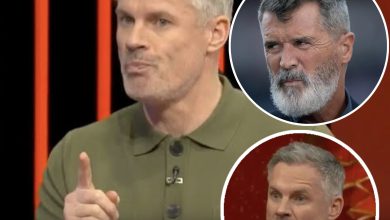
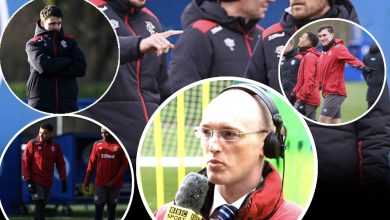
Watching on was former Celtic goalkeeper and club icon Pat Bonner, who immediately noticed the difference. Speaking on BBC Radio Scotland, Bonner highlighted how the change in system allowed Scales to play with freedom born from understanding the kind that comes when a player knows exactly what is expected of him.
Rather than being dragged into wide areas or forced into advanced positions, Scales was positioned where the game naturally unfolded in front of him. This allowed him to defend proactively, step into passing lanes, and distribute possession calmly. His ball use, in particular, stood out. Time and again, he collected possession, took a composed second touch, and shifted play efficiently to the left linking with Kieran Tierney or Tounekti and helping Celtic maintain tempo and territorial control.
Even when Celtic pushed high up the pitch, Scales looked assured. Operating almost as an inside-left defender at times, he retained the awareness and confidence to recover quickly when required, rather than being caught out of position. The contrast with earlier performances under Nancy was stark. Where there had once been hesitation and overextension, there was now composure and economy of movement.
 Bonner also stressed that Scales’ resurgence was part of a broader pattern. O’Neill’s return, supported by Shaun Maloney, has reintroduced logic and balance to Celtic’s setup. Players are once again being asked to do what suits them best, rather than forcing themselves into a rigid or experimental framework. Kieran Tierney’s restoration to his natural left-back role was cited as another clear example of this return to footballing common sense.
This season has not been forgiving for either Scales or Trusty. Both defenders have endured spells of heavy criticism, with sections of the support questioning their suitability and calling for changes. Yet circumstances have a habit of reshaping narratives. With Cameron Carter-Vickers sidelined long-term, the partnership between Scales and Trusty has moved from being a temporary solution to a logical pairing one that offers balance, familiarity, and growing understanding.
Against Dundee United, Scales did more than simply slot back in. He delivered a performance that blended defensive authority with technical efficiency, underlined by impressive underlying numbers:
- Minutes played: 90
- Shots: 1
- Key passes: 1
- Assists: 1
- Passes completed: 107
- Pass accuracy: 99.1%
- Touches: 121
- Aerial duels won: 7
- Interceptions: 1
- Clearances: 3
- Blocked shots: 1
- WhoScored rating: 8.39
Those statistics tell the story of a defender comfortable in possession, dominant in the air, and alert in his positioning qualities that had been muted during the previous regime but flourished once again within a more coherent structure.
As Celtic look ahead to the coming months, questions remain about January recruitment and long-term defensive planning. But for now, Scales has reminded everyone of his value when used correctly. This was not merely a solid display — it was a statement that, given clarity and trust, he can be a reliable figure at the core of Celtic’s defence.