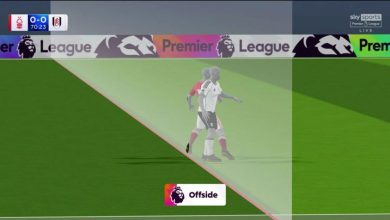
PGMOL RELEASE EYE‑OPENING VAR AUDIO AND MAKE OFFICIAL STATEMENT OVER CONTROVERSIAL DAN NDOYE DISALLOWED GOAL

In one of the most controversial Premier League refereeing decisions of the season, Nottingham Forest striker Dan Ndoye saw a goal ruled out by VAR during his club’s crucial 0–0 draw with Fulham sparking intense debate over the interpretation of the offside law, VAR protocol, and transparency in English football.
The incident occurred on 15 March 2026 at the City Ground, where Forest were fighting to secure points in their battle to avoid relegation. After being introduced as a second‑half substitute, Ndoye appeared to give his side the lead with a calm finish from close range only for the video assistant referee (VAR) to intervene and ultimately overturn the goal for a marginal offside decision.
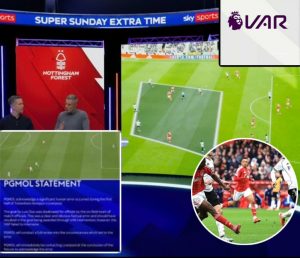
Official Premier League Statement
The Premier League’s Match Centre released an official explanation: VAR recommended overturning the on-field goal because Ndoye was judged to be in an offside position when the ball was played and was considered to be interfering with play.

Forest ultimately had to settle for a goalless draw, which lifted them just above the bottom three on goal difference a small consolation given the dramatic circumstances of the disallowed goal.
VAR Audio and Transparency
Following the match, fans and pundits called for PGMOL to release the VAR audio, which records communication between the VAR officials and the referee. Such releases are extremely rare, typically only occurring when there is a confirmed error that materially affects the outcome, such as in the Luis Díaz disallowed goal incident in 2023.
However, in the Ndoye case, no VAR audio has been released. Sources close to refereeing operations explain that unless a procedural mistake is admitted by PGMOL, internal communications are kept private to protect referees and preserve the integrity of the protocol. This has frustrated many fans seeking clarity on high-stakes decisions.
Understanding the Offside Rule
To appreciate the controversy, it helps to understand the offside law:
Offside Position
A player is in an offside position if any part of the head, body, or feet is nearer to the opponent’s goal line than both the ball and the second-last defender when the ball is played, except if the player is in their own half.
Interfering with Play
Being in an offside position is not an offense in itself. A player is penalized only if they:
Interfere with play by playing or touching the ball
Interfere with an opponent by obstructing vision or challenging for the ball
Gain an advantage from being in that position
VAR Evaluation
VAR uses frame-by-frame video analysis and, in some cases, semi-automated offside technology. Officials review

The exact moment the ball is played
The position of the player’s body parts relevant to offside
Whether the player is actively interfering with play or an opponent
In Ndoye’s case, VAR judged that he was marginally ahead of the last defender at the moment the pass was played and was impacting the defensive play, fulfilling the criteria for an offside offense.
Why the Decision Remains Controversial
Despite VAR following the letter of the law, critics argue that:
The margin was extremely small, often referred to as a “human hairline offside,” raising questions about the practicality of such precision.
VAR lacks consistency across matches; what is called offside in one game might be allowed in another due to camera angles and interpretation.
Fans feel that greater transparency, such as releasing VAR audio, could reduce frustration and build trust.
Analysts also note that “interfering with play” is subjective, especially when it involves the goalkeeper’s line of sight or minor movements by the attacker.
Manager and Fan Reactions
Forest manager Vítor Pereira acknowledged the frustration but emphasised his team must focus on results
“It was a very tight call, and VAR did its job according to the laws of the game. Still, it is difficult for the players and fans.”
Supporters expressed their disappointment on social media, dissecting every pixel of the offside line and arguing the goal should have stood. Some fans called for official VAR transparency, while others defended the referees’ decision, stressing that the offside rule is clear in law, even if hard to judge in real-time.

Broader Implications for the Premier League
This incident underscores ongoing debates about VAR’s role in modern football. While technology is intended to improve fairness, its application sometimes generates confusion and controversy, particularly when marginal decisions influence relegation or title races. Offside interpretations, in particular, remain a grey area that has led pundits and former referees to call for clearer laws and more consistent communication.
Forest now turn their attention to upcoming fixtures, hoping that future matches can bring results free from contentious VAR interventions. For Dan Ndoye, the disallowed goal was a personal blow but highlighted his potential as a key attacking option for the club in critical games.
While PGMOL and the Premier League maintain that the decision complied with established laws and VAR protocol, the lack of publicly released audio leaves fans and analysts speculating about the nuances of the call. This incident exemplifies the delicate balance between technological precision, referee judgment, and fan perception, a debate likely to continue throughout the season.