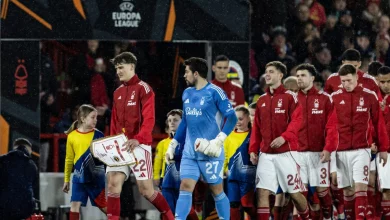
Professional Game Match Officials Limited Release VAR Audio and Issue Detailed Official Statement After Liverpool’s Controversial Late Winner Against Nottingham Forest

Professional Game Match Officials Limited Release VAR Audio and Issue Detailed Official Statement After Liverpool’s Controversial Late Winner Against Nottingham Forest
The debate surrounding VAR in English football has intensified once again after Professional Game Match Officials Limited (PGMOL) released the full VAR audio from the dramatic 0-1 Premier League clash between Nottingham Forest F.C. and Liverpool F.C. at the City Ground, alongside an official written statement explaining the decision-making process behind the match-winning goal.
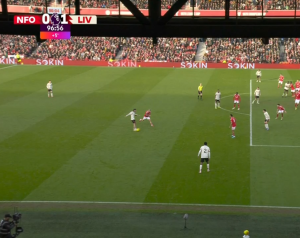
The fixture, which had been tightly contested from start to finish, appeared to be heading toward a hard-fought stalemate before Liverpool struck deep into stoppage time. What followed was a storm of protest from Forest players, audible frustration from supporters inside the stadium, and widespread controversy across football media platforms.
Now, with both the audio and formal clarification made public, the focus has shifted from speculation to scrutiny of the officiating process itself.

A Tense Tactical Battle at the City Ground
From kickoff, Nottingham Forest executed a disciplined and organized game plan. They pressed aggressively in midfield, disrupted Liverpool’s build-up play, and limited the visitors to few clear-cut chances during open play. The home crowd responded to every interception and tackle with energy, sensing an opportunity to secure valuable points.
Liverpool, meanwhile, dominated possession but struggled to convert control into clear opportunities. Forest’s compact defensive block forced them wide, and several attacking sequences broke down before reaching dangerous areas.
The match’s turning points came late.
An earlier Liverpool goal had already been ruled out following a VAR review for handball during the attacking sequence. That decision had heightened tension inside the ground, with both sets of players aware that margins were razor-thin.
Then, in stoppage time, came the decisive moment.
The Controversial Winner
In the dying seconds, Liverpool launched one final attack. A crowded penalty area, a scramble for possession, and a decisive finish saw the ball find the back of the net. Alexis Mac Allister wheeled away in celebration, while Nottingham Forest players immediately appealed.
Forest’s protests centered on two key concerns:
A potential offside position in the attacking phase.
Possible contact between the Liverpool attacker and a Forest defender in the buildup.

The referee delayed the restart as VAR conducted its review. After a brief pause, the signal was given: the goal stood.
Liverpool’s bench erupted in relief and celebration. Forest players surrounded the referee in disbelief.
What the Released VAR Audio Reveals
With the release of the official audio, supporters were given rare insight into the communication between the on-field referee and the VAR team during the check.
The recording confirms that:
A semi-automated offside check was conducted first.
The defensive line and attacking positions were reviewed using calibrated technology.
Officials confirmed that the attacking player was onside at the key moment.
A secondary review assessed possible contact between players in the buildup.
VAR determined that the contact did not meet the threshold for a “clear and obvious” foul.
The conversation between officials was described as calm and methodical. Within seconds, the VAR official communicated to the referee: “Check complete. Goal stands.”
For some observers, the clarity of communication demonstrates procedural discipline. For others, the speed of the review raises fresh concerns about whether such a decisive moment received enough scrutiny.
PGMOL’s Official Statement
Accompanying the audio release, PGMOL issued a detailed written statement to address growing public debate.
In the statement, the organization emphasized:
All established VAR protocols were correctly followed.
The semi-automated offside system confirmed the attacking phase was legal.
The contact reviewed during the buildup did not constitute a foul under the Laws of the Game.
There was no evidence of handball in the decisive scoring phase.
PGMOL further clarified that VAR intervention is limited to instances of “clear and obvious error” or serious missed incidents. In this case, officials concluded that the on-field decision met the required standard.
The statement reaffirmed the governing body’s confidence in the officiating team and stressed its commitment to transparency through the publication of audio and explanatory documentation.
Nottingham Forest’s Frustration
While Nottingham Forest have not publicly accused officials of misconduct, the emotional reaction at full-time reflected deep frustration.
Players were visibly upset, and members of the coaching staff reportedly sought immediate clarification regarding the offside check and foul assessment. Many supporters inside the City Ground felt the review process lacked visible thoroughness given the magnitude of the moment.
In the aftermath, debate among pundits has centered not only on the specific decision but also on broader questions about consistency and interpretation. Critics argue that similar incidents in other matches have resulted in different outcomes, fueling perceptions of inconsistency.
Liverpool’s Response
From Liverpool’s perspective, the audio release and official statement confirm that the system worked as designed. Club representatives have maintained that the checks were comprehensive and that no procedural error occurred.
Privately, sources within the club believe the transparency provided by PGMOL strengthens the legitimacy of the decision. They argue that emotional reactions are understandable in late-game scenarios but that technology and protocol ultimately validated the goal.
Renewed Debate Over VAR Transparency
This episode has reignited long-standing discussions about VAR’s role in modern football.
Supporters calling for reform argue that:
All significant VAR decisions should automatically have audio published.
On-field referees should communicate explanations to stadium crowds in real time.
Greater clarity on subjective thresholds is needed to reduce confusion.
Others caution that releasing audio only after public pressure could create new challenges, including increased scrutiny of individual officials.
What remains clear is that transparency alone does not eliminate disagreement. Even with access to communication and procedural explanations, interpretation of football’s laws remains inherently subjective in many cases.
A Defining Moment in a Tight Season
For Nottingham Forest, the defeat is particularly painful given the resilience displayed throughout the match. A disciplined defensive performance and tactical organization went unrewarded.
For Liverpool, the victory delivers crucial points in what is shaping up to be a fiercely competitive campaign. Yet once again, their success is accompanied by officiating controversy.
The release of the VAR audio and the official PGMOL statement may clarify how the decision was reached, but it does not silence the debate.
If anything, it reinforces the central question facing English football: can technology provide clarity without removing controversy, or will every marginal decision continue to divide opinion?
As the Premier League season progresses, the scrutiny on VAR and PGMOL’s governance is unlikely to fade. This latest episode ensures that discussions around consistency, transparency, and trust in officiating will remain firmly in the spotlight.