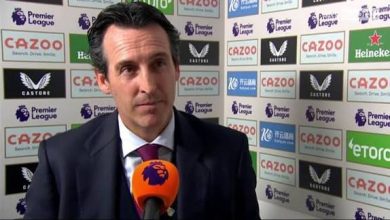
Wolverhampton Boss Rob Edwards Delivers Refreshingly Honest Verdict When Asked to Predict Where Wolves Will Finish This Season
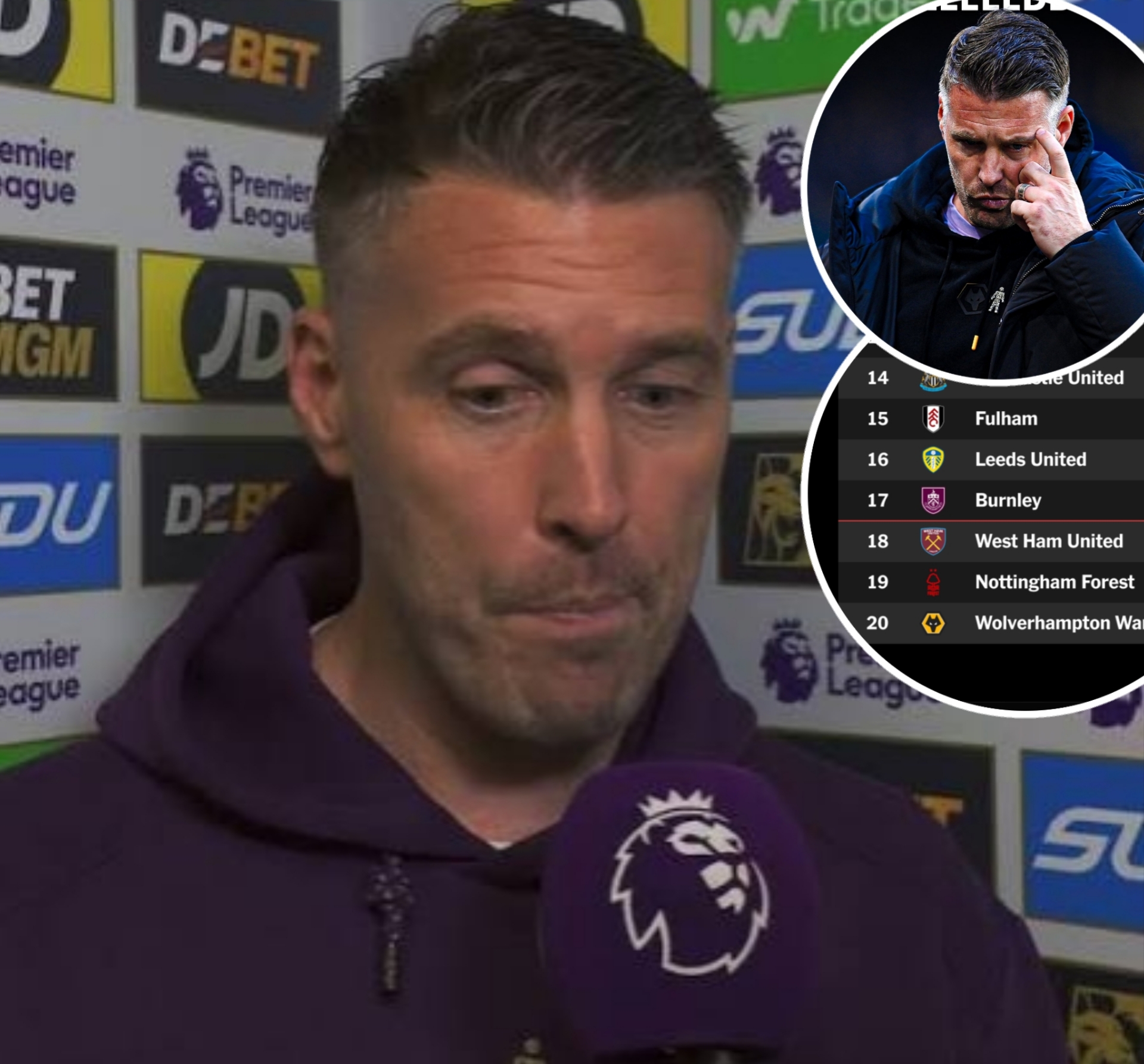
Rob Edwards has made it clear that he has little interest in predicting Wolverhampton Wanderers’ final league position, offering a calm but strikingly honest response that underlined the uncertainty and fine margins of Premier League football.
Asked where Wolves might finish this season, the head coach did not hesitate or attempt to soften his answer.
“I don’t know,” Edwards said. “And I don’t think anyone can genuinely say they do.”
It was a response that immediately stood out, not because of controversy or provocation, but because of its simplicity. In a media environment where managers are often expected to project confidence through forecasts and long-term targets, Edwards chose realism, placing emphasis on performance rather than prediction.
The comments were made during a routine media briefing ahead of Wolves’ next fixture, but they quickly gained attention for breaking from the familiar tone of managerial interviews. Rather than framing the season around ambition or aspiration, Edwards focused on the unpredictable nature of the league itself.
“The margins are incredibly small,” he explained. “A single moment in a game can change a result, and a couple of results can completely change how the table looks.”
Wolverhampton find themselves in a tightly packed section of the Premier League, where movement between positions can happen rapidly over the course of a few matches. Edwards acknowledged that reality, stressing that attempting to forecast a finishing place months in advance offers little practical value.
Instead, the Wolves boss reiterated that his priorities lie elsewhere. Preparation, intensity, and consistency remain the foundations of his approach, with league position viewed as a consequence rather than an objective in itself.
“What we can control is how we train, how we approach games, and how we respond when things don’t go our way,” he said. “That’s where our focus has to be.”
Wolves’ season so far has reflected the challenges Edwards referenced. There have been periods of resilience and organisation, alongside spells where consistency has proved difficult to sustain. Such fluctuations are not uncommon for clubs competing in one of the most demanding leagues in world football, particularly where squad depth and fixture congestion come into play.
Edwards has consistently avoided using those factors as excuses. Instead, he has spoken internally about accountability and adaptability, reinforcing the importance of collective responsibility across the squad.
“The league doesn’t give you anything,” he said. “Every game asks a different question of you.”
The refusal to predict a final league position may surprise some supporters accustomed to hearing public statements of confidence from their manager. However, for others, Edwards’ comments reflect a level of honesty that resonates more deeply than optimistic declarations.
Former players and analysts have frequently pointed out that Premier League seasons are often defined by unpredictable runs of form rather than long-term planning alone. Injuries, suspensions, refereeing decisions and fixture sequences can all influence outcomes in ways that are impossible to forecast.
Edwards’ stance appears rooted in that understanding. Rather than shaping narratives around where Wolves “should” finish, he has preferred to focus on daily standards and incremental improvement.
“There’s no benefit in guessing,” he said. “What matters is what we do next.”
Despite his reluctance to engage in prediction, Edwards was keen to stress that ambition remains central to his thinking. He rejected the notion that realism equates to caution or a lack of belief.
“We want to compete in every match,” he said. “That doesn’t change.”
Wolverhampton’s upcoming fixtures are expected to test both physical and mental resilience, with the season entering a phase where squad management becomes increasingly important. Edwards confirmed that maintaining focus during this period will be crucial, particularly as external scrutiny increases.
“It’s easy to get distracted by noise,” he added. “We try to stay grounded.”
The Wolves boss has built a reputation for clear communication, often choosing plain language over rhetoric. That approach has earned respect within the game, even when results have been mixed.
Pundits have noted that managers who avoid bold public predictions can reduce pressure on their players, allowing performances to develop without the weight of expectation. Edwards’ comments align with that philosophy, reinforcing the idea that progress is often quieter than headlines suggest.
For Wolves supporters, the response offered clarity rather than concern. With the Premier League table as competitive as ever, many recognise that consistency, discipline and adaptability will ultimately decide the club’s fate more than any early-season forecast.
As the campaign continues, Edwards remains firm in his outlook.
“If we do the right things consistently,” he said, “the table will reflect that in the end.”
In a sport increasingly shaped by soundbites and speculation, Rob Edwards delivered something rarer: a straightforward acknowledgement of uncertainty. No promises, no predictions, and no attempt to control a narrative that football itself refuses to follow.
For Wolverhampton Wanderers, it was a reminder that realism, rather than rhetoric, continues to define their season and that outcomes will be earned, not predicted.