42-Year-Old Former Premier League Famous Manager to succeed Interim Boss Martin O’Neill – personal terms agreed

A major managerial development is unfolding at Scottish giants Celtic FC, as a 42-year-old former Premier League manager has reportedly agreed personal terms to take over as head coach, succeeding interim boss Martin O’Neill. The agreement is understood to be at an advanced stage, with only final paperwork and official confirmation remaining before the appointment is publicly announced.

The decision follows a period of transition at Celtic, where Martin O’Neill stepped in on an interim basis to provide stability and leadership during a turbulent spell. His short-term role was primarily focused on restoring order within the squad, maintaining competitive performances, and ensuring continuity while the club’s hierarchy conducted a broader search for a long-term managerial solution. While O’Neill’s experience and authority were seen as crucial in steadying the dressing room, Celtic officials were simultaneously working behind the scenes to identify a younger, long-term appointment capable of shaping the next phase of the club’s sporting direction.
That long-term appointment is expected to be Gary O’Neil, the 42-year-old English coach whose rapid rise in management has drawn significant attention across the Premier League. O’Neil is widely regarded as one of the most promising modern coaches in English football, earning recognition for his tactical discipline, organisational structure, and ability to extract strong performances from squads operating under pressure.


O’Neil’s managerial reputation was first established during his spell at AFC Bournemouth, where he stepped into a challenging situation and quickly stabilised the team. Tasked with guiding a side facing uncertainty and external pressure, he implemented a structured and pragmatic system that helped improve consistency and competitiveness. His calm leadership style and emphasis on collective organisation earned him praise from both players and supporters, marking him out as a coach capable of handling high-pressure environments.
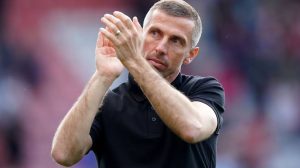
Following his success at Bournemouth, O’Neil went on to manage Wolverhampton Wanderers, where he further developed his reputation in the Premier League. At Wolves, he inherited a squad undergoing transition and faced challenges linked to squad depth, injuries, and financial constraints. Despite these limitations, he maintained a clear tactical identity and ensured his team remained competitive against stronger opposition. His tenure was characterised by disciplined defensive structure, adaptability in formation, and an emphasis on quick transitional play.
At Celtic, his arrival is expected to mark a strategic shift toward a more modern and progressive footballing philosophy. The club’s hierarchy is believed to be targeting a long-term vision built around tactical flexibility, youth development, and sustained domestic dominance, while also improving competitiveness in European competitions. O’Neil’s profile is seen as fitting this direction, given his experience managing in demanding environments and his reputation for improving team structure quickly.
Negotiations between Celtic and O’Neil’s representatives are understood to have progressed rapidly once formal discussions began. Both sides are said to have aligned on key aspects of the project, including recruitment strategy, squad development, and the integration of academy players into the first team. The agreement on personal terms is viewed as a significant breakthrough, signalling strong mutual confidence in the long-term direction of the club.
Interim manager Martin O’Neill’s role during this period is expected to conclude once the appointment is officially confirmed. His contribution, however, is not being overlooked internally. The experienced manager is credited with stabilising performances during a sensitive phase, ensuring that results did not deteriorate further while the club evaluated its long-term options. His leadership provided a steadying influence in the dressing room, allowing the board time to make a considered appointment rather than rushing into a decision.
For supporters of Celtic, the prospect of a new permanent manager brings both anticipation and expectation. The club’s standards remain high, with domestic success considered essential and strong performances in European competitions seen as a key benchmark. While some fans may have expected a more experienced high-profile appointment, others are likely to view O’Neil’s arrival as a forward-thinking move, reflecting a broader trend in modern football toward younger, tactically innovative coaches.
Tactically, O’Neil is expected to bring a high-organisation, high-intensity style of play to Celtic Park. His teams typically focus on compact defensive shape, structured pressing without the ball, and rapid transitions when possession is regained. This approach, combined with his adaptability in adjusting formations based on opposition analysis, could provide Celtic with a more flexible tactical identity both domestically and in European fixtures.
Attention will now turn to the timing of the official announcement, which is expected once final contractual formalities are completed. Behind the scenes, early preparations are already believed to be underway, including planning for squad assessment, pre-season structure, and potential transfer targets ahead of the next competitive cycle.
If confirmed, Gary O’Neil’s appointment will represent a significant moment in Celtic’s recent managerial history. It will mark a clear transition from short-term stabilisation under Martin O’Neill to a long-term project led by a younger head coach with Premier League experience. Expectations will be high from the outset, but there is optimism within the club that his methods and managerial approach can help build a sustained period of success at Celtic FC.