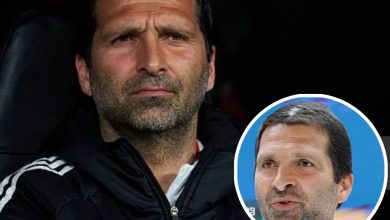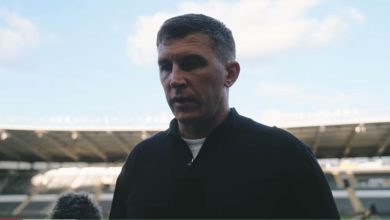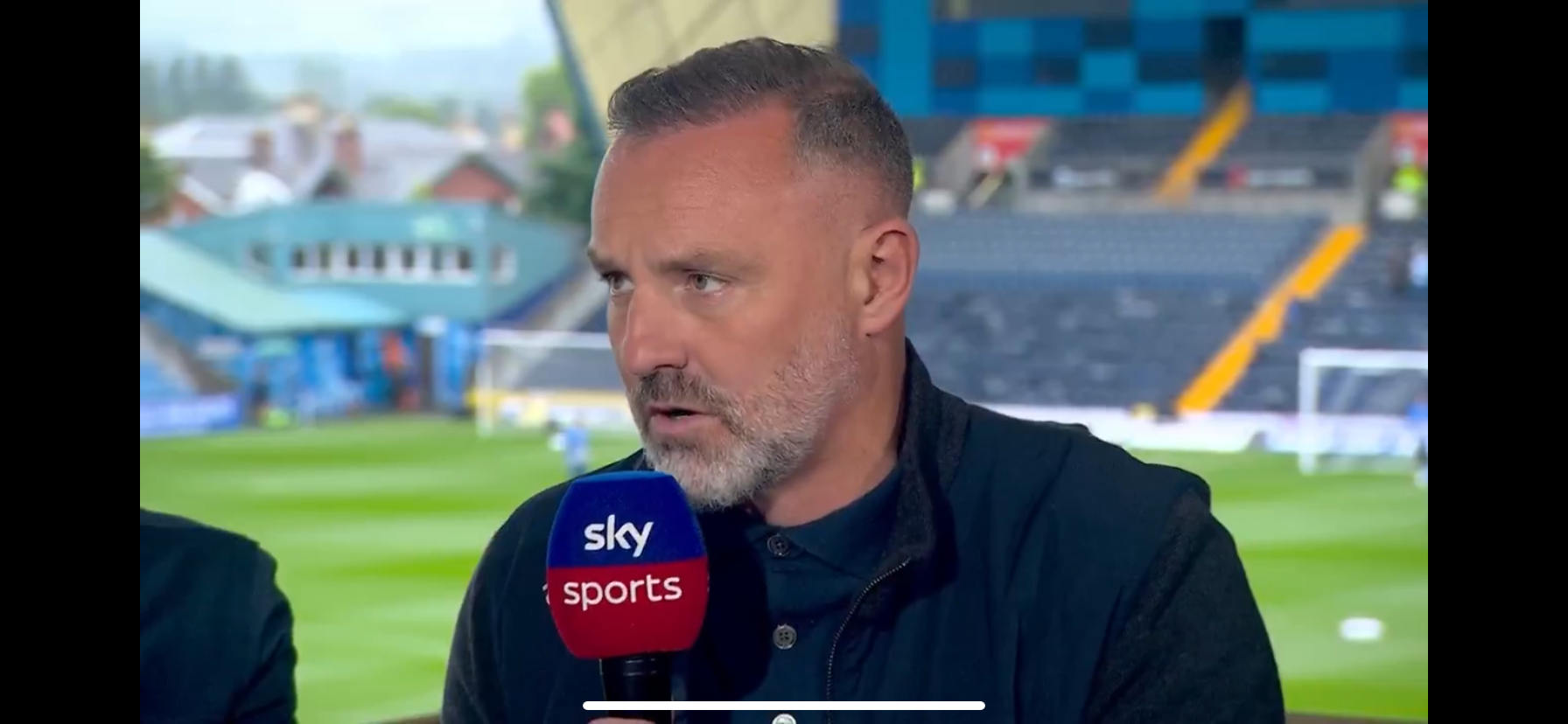
Rangers’ difficult start to the 2026/27 campaign has once again placed Derek McInnes under intense scrutiny, with former Ibrox striker Kris Boyd offering a hard-hitting assessment of what he believes is going wrong at the club.
McInnes arrived at Rangers with huge expectations after his impressive spell at Hearts, where he guided the Edinburgh side to second place in the Scottish Premiership last season. Boyd was initially among those who supported the appointment, believing McInnes could bring stability and a clear direction to Rangers.
However, the opening weeks of the new campaign have created a much different atmosphere around Ibrox.
Rangers endured a difficult start, including disappointment in Europe and performances that left supporters questioning whether the team has developed quickly enough under the new manager.

The pressure increased after Rangers’ Europa League elimination against Jagiellonia Bialystok, with McInnes subsequently acknowledging that his squad was not yet at the required level for European football.
Despite that setback, Rangers responded with an emphatic 5-1 victory over St Mirren, a result that offered McInnes some much-needed breathing room.
But for Boyd, one convincing result cannot completely erase the concerns that have emerged.
BOYD’S VERDICTS ON THE MCDINNES PROJECT
Speaking about Rangers’ situation, Boyd’s assessment has been particularly blunt.
“You cannot keep blaming everything on the manager. The players have to start taking responsibility for what is happening on that pitch.”
The former Rangers striker believes the players must accept their share of the blame rather than allowing every disappointing result to become another debate about McInnes’ position.
Boyd has also questioned some of the manager’s tactical decisions, particularly changes made during difficult matches.
“I think Derek McInnes got a major tactical decision wrong. Rangers were in control, and the changes disrupted the team rather than improving it.”
That criticism has generated considerable discussion among supporters, with some agreeing that McInnes needs to make better decisions during matches while others believe the manager should be given more time to implement his ideas.
Boyd’s concerns do not stop with tactics.
He has also questioned whether Rangers currently possess a strong enough identity on the pitch.
“The biggest concern for me is that Rangers still don’t look like a team with a clear identity. That has to change quickly.”
That is arguably the most significant part of Boyd’s assessment.
For a club of Rangers’ size, supporters expect the team to demonstrate a recognisable style, intensity and confidence regardless of the opposition.
Boyd believes those characteristics have not appeared consistently enough during the early stages of the McInnes era.

He has also raised questions over recruitment.
“The recruitment has to be questioned as well. Rangers have brought in players, but not enough of them look like long-term solutions for this football club.”
The verdict places pressure not only on McInnes but also on the Rangers hierarchy and recruitment department.
If the squad lacks quality in important positions, then the manager cannot be expected to solve every problem through tactics alone.
At the same time, Boyd believes McInnes cannot use the rebuilding process as an excuse indefinitely.
“McInnes needs time, but time cannot become an excuse. Rangers have to start producing results and performances.”

That statement has become one of the major talking points among Rangers supporters because it perfectly captures the difficult situation facing the manager.
There is an expectation that McInnes should be given an opportunity to build his team, but there is also an immediate demand for results.
And Boyd’s final warning is perhaps the most direct.
“This is Rangers Football Club. There has to be pressure, and the manager has to find answers very quickly.”
THE MCDINNES PROJECT UNDER THE MICROSCOPE
McInnes’ project was always expected to require patience.
He inherited a Rangers side that had already gone through significant managerial and squad changes, while supporters were desperate for a sustained challenge to Celtic.
The pressure therefore started immediately.
The European setback intensified the situation, while inconsistent performances domestically created further questions about whether Rangers had made enough progress.
However, the 5-1 victory over St Mirren demonstrated that there is attacking quality within the squad.
New signing James Penrice impressed with a goal and an assist, while Djeidi Gassama also caused problems for the opposition defence.
That victory could prove important for McInnes if Rangers can build momentum from it.
But the challenge is consistency.
One excellent performance cannot completely remove the concerns surrounding the team.
McInnes must now demonstrate that Rangers can reproduce that level of intensity and quality regularly.
FANS DIVIDED OVER BOYD’S COMMENTS
As expected, Boyd’s assessment has divided Rangers supporters online.
Some fans agree with the former striker and believe the performances have been nowhere near the required standard.
@IbroxLoyal: “Boyd is right about the performances, but McInnes needs time. We cannot keep starting over every few months.”
@Gers1872: “The manager has to take responsibility. You cannot keep blaming the players when the tactics clearly aren’t working.”
A third supporter focused on Boyd’s changing assessment:
@BlueSeaOfIbrox: “Boyd backed McInnes when he arrived. Now he is asking serious questions. That tells you how quickly things have changed.”
Another supporter urged patience:
@RangersFaithful: “One bad European result does not mean the whole project is finished. The 5-1 win showed there is something to build on.”
These are illustrative social-media-style reactions rather than verified posts from those usernames.
WHAT HAPPENS NEXT FOR MCDINNES?
For McInnes, the objective is straightforward: build on the St Mirren victory and produce a consistent run of results.
The manager cannot afford for Rangers to return to the passive and error-prone performances that attracted criticism during the opening weeks.
At the same time, the Rangers hierarchy must determine whether further recruitment is required before the transfer window closes.
Boyd’s criticism has therefore opened a much wider discussion than simply whether McInnes is the right man for the job.
The former striker is effectively questioning the entire project — from tactics and recruitment to player mentality and the club’s expectations.
Ultimately, McInnes still has an opportunity to change the narrative.
The 5-1 victory over St Mirren has provided encouragement, but Rangers now need to show that it was the beginning of genuine improvement rather than a temporary response.
For now, Boyd’s verdict has ensured that the spotlight remains firmly on the Rangers boss.
And with supporters already debating whether this is another false dawn or the beginning of a genuine rebuild, every Rangers performance from this point forward will be judged under an increasingly unforgiving microscope.