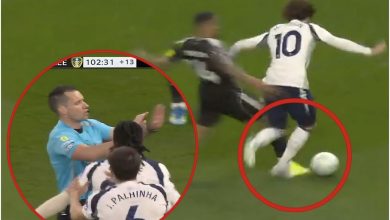
Arsenal VAR corruption is over after a leaked conversation between referee and VAR and reason why west ham goal was disallowed revealed
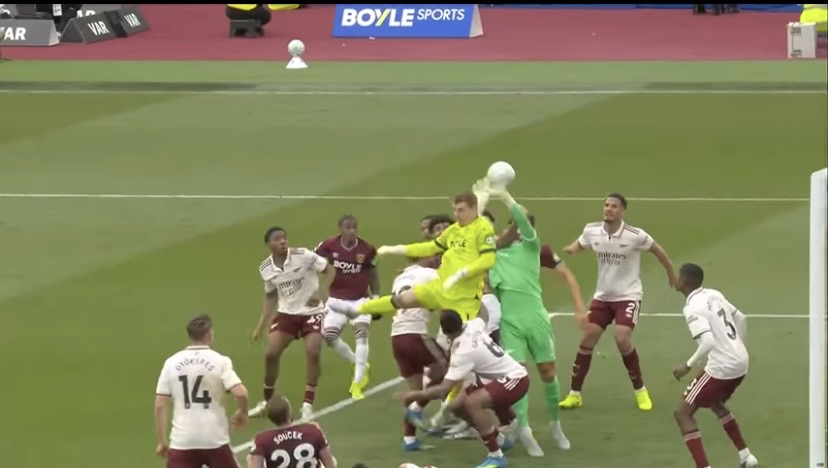
The debate around VAR in English football has reached another boiling point after reports emerged of a leaked conversation between match officials during Arsenal’s recent clash involving a controversial disallowed West Ham goal. For many supporters, especially Arsenal fans who have spent the last two seasons questioning decisions against their club, the incident has reignited accusations of inconsistency, poor communication, and a system that appears to change its interpretation of the rules from week to week.
While claims of “corruption” are always difficult to prove and should be treated carefully, what the leaked discussion has done is expose the confusion and uncertainty that often exists inside the VAR room itself. Instead of bringing clarity to football, the technology continues to create more arguments than solutions.
According to reports circulating online, the conversation between the referee and VAR officials focused heavily on whether the West Ham attacker interfered with play in the build-up to the goal. The audio allegedly revealed uncertainty over positioning, obstruction of the goalkeeper, and whether enough contact existed to justify the goal being ruled out. What shocked many listeners was not simply the decision itself, but the hesitation and disagreement among the officials during the review process.
For Arsenal supporters, this incident feels familiar. Over the past few years, the club has been involved in several major VAR controversies, from questionable offside calls to penalty decisions that appeared inconsistent with similar incidents elsewhere in the league. Fans have repeatedly argued that Arsenal are judged differently compared to rival clubs, especially in high-pressure title races.
The disallowed West Ham goal has now become another example used by critics who believe the current VAR system lacks transparency and accountability. Supporters are asking a simple question: if trained officials reviewing multiple camera angles still cannot agree on basic interpretations, how can fans trust the final outcome?

One of the biggest frustrations surrounding VAR is the lack of communication with supporters inside the stadium. Unlike rugby or cricket, football rarely allows fans to hear the full reasoning behind decisions in real time. As a result, confusion grows, conspiracy theories spread, and confidence in officiating continues to decline.
The leaked conversation has accidentally provided what many fans have demanded for years — access to the thinking process behind controversial calls. Ironically, instead of increasing trust, it may have done the opposite. Listeners pointed out moments where officials appeared unsure of the rules or overly focused on finding reasons to justify a decision rather than objectively reviewing the incident.
That does not necessarily mean corruption exists. Human error, pressure, and inconsistency are more likely explanations. However, in modern football, perception matters almost as much as reality. When supporters repeatedly see controversial calls involving title contenders, emotions naturally take over.
Arsenal fans in particular believe the club has suffered from a pattern of marginal decisions at crucial moments. Whether it is red cards, penalties, or offside reviews measured down to millimetres, many supporters feel there is little consistency across the Premier League. The leaked audio has only strengthened that feeling because it revealed how subjective many “objective” VAR reviews actually are.
The Premier League introduced VAR with the promise of eliminating clear and obvious mistakes. Instead, it has created an environment where every decision is dissected frame by frame, often leading to even greater controversy. Fans no longer celebrate goals comfortably because they expect lengthy reviews. Referees hesitate to make bold decisions on the pitch because they know VAR can intervene. The flow and emotion of football have suffered as a result.
What happens next will be important. Pressure is growing on football authorities to improve transparency. Many fans now want live audio between referees and VAR officials to be broadcast during matches. Others believe independent reviews should take place after every controversial decision. Some even argue the technology should be scaled back entirely.
For Arsenal, the situation represents more than one disallowed goal involving West Ham. It symbolizes years of frustration with officiating standards that supporters believe have lacked consistency and fairness. Whether those frustrations are fully justified or emotionally driven by rivalry and title pressure is open to debate, but the anger is undeniably real.
The leaked conversation may not prove corruption, but it has exposed weaknesses in the system that football authorities can no longer ignore. If VAR is to survive in the Premier League, transparency and consistency must improve quickly. Otherwise, every controversial decision will continue to fuel accusations, divide supporters, and damage trust in the game itself.