Bruno Fernandes Explains Why He Refused Jersey Swap After Heated 2–1 Home Defeat to Leeds United at Old Trafford
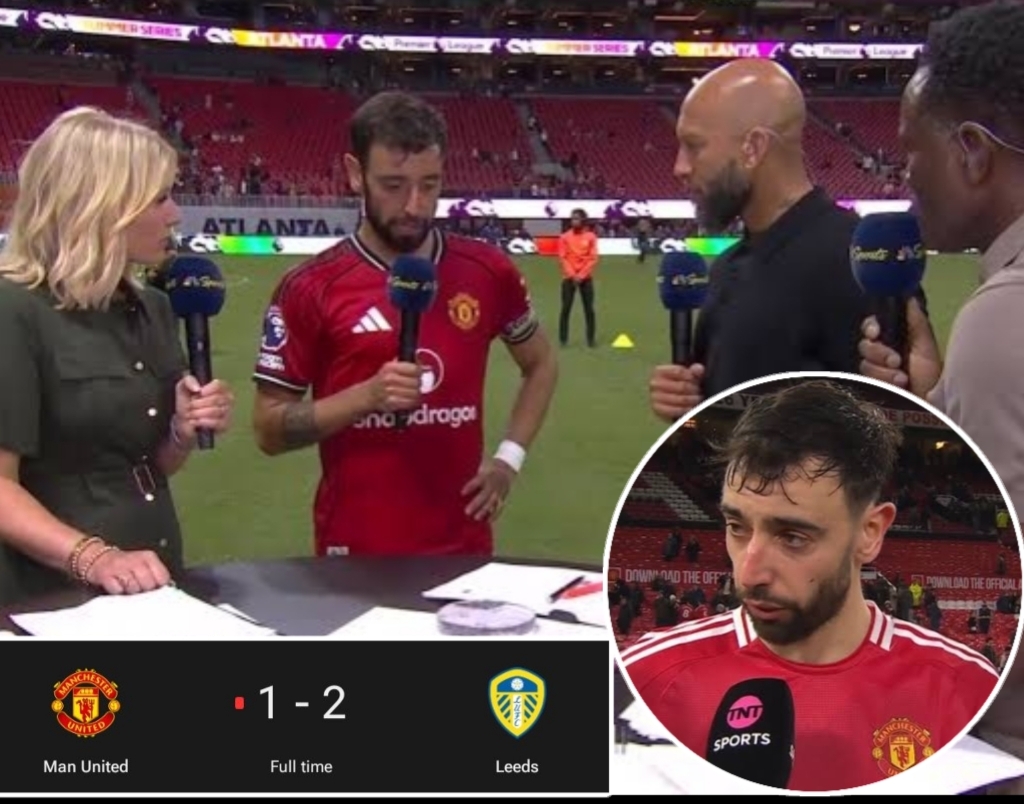
Manchester United captain Bruno Fernandes has addressed the growing controversy surrounding his decision to refuse a post-match jersey exchange following Manchester United’s disappointing 2–1 defeat to Leeds United at Old Trafford, a result that deepened frustration among supporters and sparked widespread debate across football media and social platforms.
The defeat was another difficult night for Manchester United at home, as Leeds United delivered a disciplined, energetic, and tactically organised performance to take all three points. From the opening stages, Leeds set a relentless tempo, pressing high, closing down space quickly, and forcing United into rushed decisions in possession.
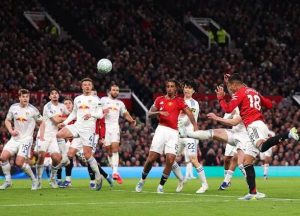
Despite having more of the ball for long periods, Manchester United struggled to break through Leeds’ compact defensive shape. The visitors remained well-structured, aggressive in duels, and dangerous on the counterattack, repeatedly disrupting United’s rhythm in midfield and preventing them from building sustained attacking pressure.

Leeds’ approach paid off at crucial moments in the match, with their efficiency in key areas ultimately deciding the contest. By the final whistle, Old Trafford was left stunned as Leeds celebrated a hard-earned and well-executed away victory, while Manchester United were left reflecting on missed opportunities and another frustrating result.
However, much of the post-match discussion quickly shifted away from the scoreline itself and focused instead on an emotional flashpoint involving Fernandes and Leeds midfielder Gabriel Gudmundsson.
Intense midfield and wide battle sets the tone
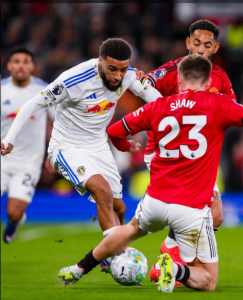
Throughout the match, Fernandes and Gudmundsson were involved in a series of competitive duels that reflected the intensity of the fixture. Gudmundsson’s defensive discipline and physical approach made life difficult for Manchester United in wide and central areas, as Leeds consistently doubled up on attacking threats and closed passing lanes effectively.
Fernandes, operating as United’s creative leader, found himself under constant pressure whenever he tried to influence the tempo of the game. His movements were tracked closely, and every attempt to turn or progress play was met with immediate resistance. This led to visible frustration at moments, as both players engaged in sharp exchanges during stoppages and transitions.
Although the match never fully crossed into disciplinary chaos, the emotional intensity between the two sides continued to rise as the game progressed. Leeds’ commitment in challenges and United’s frustration in possession combined to create a highly charged atmosphere that carried into the final whistle.
Full-time incident sparks immediate controversy
After the match ended, attention quickly turned to Fernandes’ decision to walk straight off the pitch without taking part in the traditional jersey exchange with Gudmundsson. The gesture, widely recognised in football as a sign of mutual respect, is typically observed after Premier League matches, making Fernandes’ actions immediately noticeable.
Footage of the Manchester United captain heading down the tunnel quickly spread online, with fans and pundits debating whether his decision reflected frustration, disrespect, or simply emotional exhaustion following a difficult defeat.
Within minutes, the moment became one of the most discussed topics from the match, overshadowing parts of the performance itself and shifting attention towards Fernandes’ post-match behaviour.
Fernandes breaks silence with aggressive explanation
Speaking after the game, Fernandes delivered a more forceful explanation, making it clear he would not fake gestures while still emotionally charged.
“It was a tough game and emotions were running extremely high,” he explained. “In that moment, I was not in the right state of mind to do the shirt exchange. I’m not going to stand there and force a moment just for appearance’s sake when I’m still heated from the game.”
He made it clear that respect between players was not in question, but insisted that gestures lose meaning if they are not genuine.
“Respect is always there in football. But I’m not going to pretend everything is fine straight away after a game like that. If I’m still emotional, I walk away simple as that.”
Fernandes’ explanation reflects his intense and uncompromising personality on the pitch, where high emotions, fierce competitiveness, and visible frustration are often part of his leadership style rather than something he tries to hide.
Inside Manchester United reaction
Inside the Manchester United camp, the incident is reportedly not being treated as a disciplinary issue. Club staff are said to understand the emotional context of the situation, particularly given the disappointment of a home defeat in a high-pressure fixture.
Sources suggest that Fernandes’ passionate approach is widely accepted within the dressing room, with teammates recognising that his emotional leadership often drives standards during matches, even if it occasionally spills over into post-match moments that attract external scrutiny.
At present, there is no indication of any internal disciplinary action, and the focus remains on recovering from the defeat and improving performances in upcoming fixtures.
Fan reaction splits opinion online
As expected, the incident triggered immediate and intense reaction across social media platforms. Supporters were divided, with opinions sharply split over whether Fernandes’ actions were justified or unprofessional.

Some fans defended the Manchester United captain, arguing that emotional honesty should be respected and that players should not be forced into gestures when still frustrated after a defeat. Others, however, felt that as club captain, Fernandes should have demonstrated greater composure regardless of the circumstances.
Among the wide range of reactions online, one comment went viral, stating:
“He is not on my level.”
The remark spread rapidly across social platforms, further intensifying an already heated debate and reflecting how polarising the moment had become among football fans.
Rivalry intensity adds extra pressure
Encounters between Manchester United and Leeds United have long carried added historical tension, and this fixture was no different. The rivalry between the two clubs ensures that matches are often played at high intensity, with physical battles, emotional reactions, and strong crowd involvement.
This latest meeting continued that tradition, combining a competitive on-pitch battle with a controversial post-match incident that dominated headlines after the final whistle. The emotional nature of the game, combined with the result, ensured that tensions remained high even after play had ended.
Looking ahead for Manchester United
As Manchester United turn their attention to their upcoming fixtures, the focus now shifts to recovery, consistency, and response. Fernandes is expected to remain central to the team’s leadership role as they attempt to bounce back from another disappointing result and restore momentum in their campaign.
Despite the controversy, his message remains firmly focused on moving forward, improving performances, and ensuring the team responds strongly on the pitch in the next challenge.