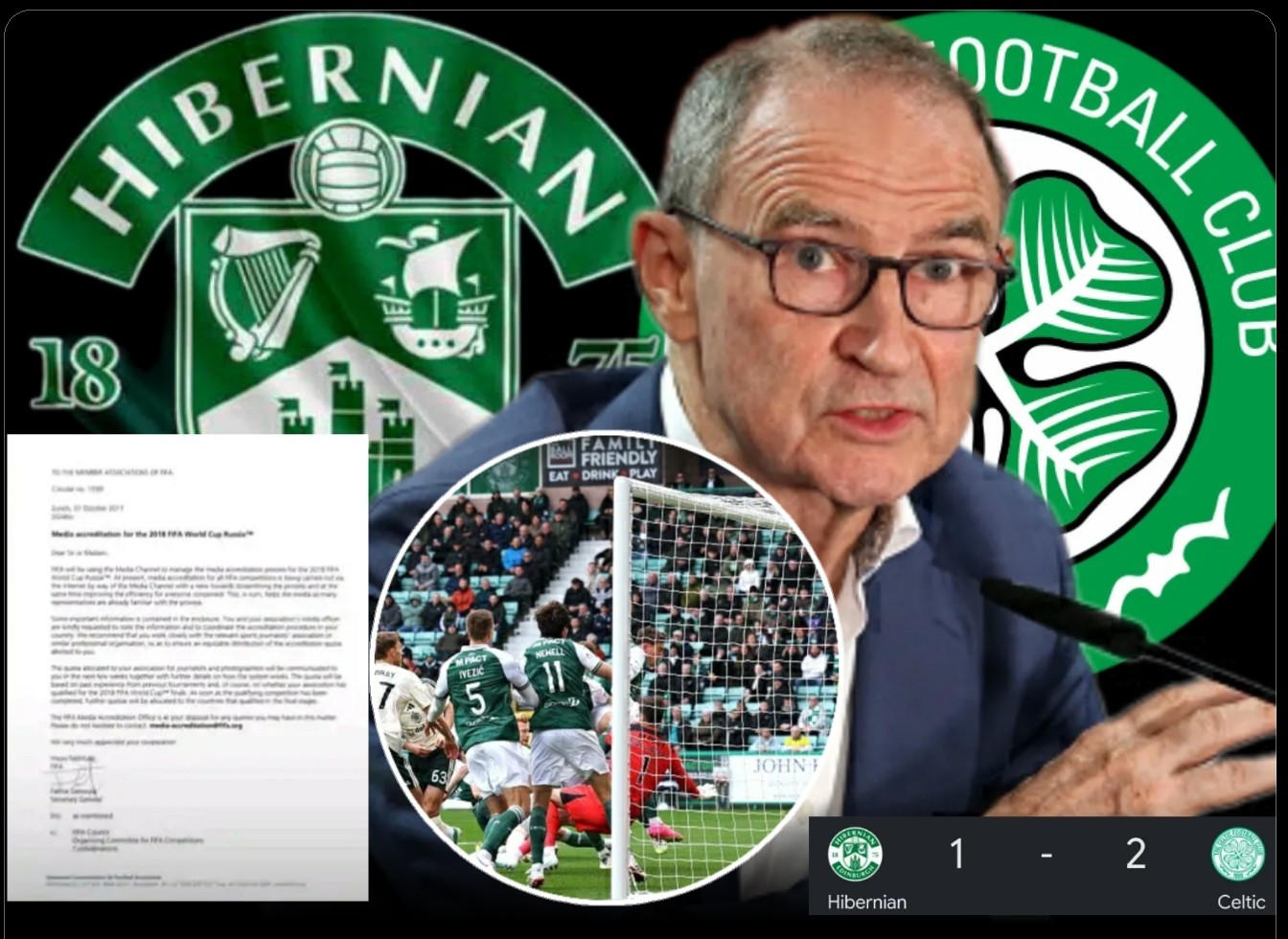
Football has an uncanny ability to subvert euphoria within a single heartbeat. One moment, a club is bathing in the radiant warmth of a hard-fought, defining victory on the road; the next, the ground shifts entirely beneath everyone’s feet. For Celtic, an afternoon that began with the exhilarating relief of a crucial 2-1 triumph over Hibernian at Easter Road dissolved rapidly into an atmosphere of stunned disbelief, all courtesy of a single, unprompted post-match address from manager Martin O’Neill.
In a profession where post-match media obligations are routinely treated as sterile exercises in cliché and damage limitation, O’Neill chose a vastly different path. What was supposed to be a routine dissection of a gritty away win transformed instantly into one of the most compelling and emotionally charged press conferences in modern Scottish football history. The veteran manager stepped before the microphones, paused, and delivered a bombshell statement that has sent shockwaves rippling across Glasgow, leaving supporters emotionally raw and the wider Scottish Premiership scrambling for answers.
The 90 Minutes That Preceded the Chaos
To truly understand the weight of O’Neill’s words, one must first examine the intense theater that unfolded on the pitch over the preceding ninety minutes. Easter Road is rarely a hospitable destination, and Hibernian threw everything they had at the reigning champions from the opening whistle. The hosts stunned the traveling Glasgow contingent by seizing the initiative early, exploiting a lapse in Celtic’s defensive structure to draw first blood and send the home supporters into raptures.
For a team carrying the heavy, unyielding burden of domestic expectation, falling behind away from home is the ultimate stress test. Yet, under O’Neill’s watchful eye, Celtic exhibited the trademark resilience that has defined his managerial ethos across generations. Shuffling their tactical shape and ratcheting up the intensity in midfield, the Hoops clawed their way back into the contest before executing a clinical, championship-winning strike late in the second half to secure a monumental 2-1 scoreline.
As the referee’s final whistle blew, the outpouring of relief from the technical area was palpable. Players embraced on the pitch, and the away end erupted in joyous celebration. The three points were secured; the immediate crisis averted. Or so everyone thought.
The Bombshell That Stunned Parkhead
When O’Neill entered the press room beneath the main stand, the expectation was a standard review of tactical adjustments and a nod to his squad’s character. Instead, the veteran Northern Irishman offered something entirely unexpected. Speaking with an intense, reflective candor that immediately stripped away the protective layers of standard football PR, O’Neill hinted at profound personal and professional realizations sparked by the sheer physical and emotional toll of the campaign.

While stopping short of explicit resignation, the phrasing, cadence, and unmistakable gravity of his delivery carried the undeniable weight of a watershed moment. Journalists in the room exchanged bewildered glances as the subtext became glaringly clear: the man who had steered Celtic through some of their most iconic modern eras was contemplating his future in real-time. Within minutes of the broadcast feed hitting the airwaves, the digital ecosystem erupted. Social media feeds flooded with frantic commentary, and fan channels transitioned from celebratory match reviews to emergency broadcast streams as supporters tried to process the unfolding reality.
Context, Legacy, and the Unforgiving Crucible of Celtic
To evaluate why O’Neill’s words hit the Celtic fanbase like a physical blow, one must consider the unique relationship he shares with the club. His return to the Parkhead hotseat was heralded as the homecoming of a messianic figure—a proven winner summoned to restore absolute domestic dominance and steady a swaying ship.
Yet, managing Celtic is an all-consuming vocation. The fishbowl intensity of Glasgow football leaves zero margin for error. Every tactical decision is micro-analyzed; every dropped point triggers an existential crisis; and the physical grind of managing a heavy-duty schedule across domestic fronts and European competition demands relentless, unyielding energy. O’Neill, never one to shy away from emotional investment, pours every ounce of his being into his teams. Over recent months, insiders have noted the immense toll exacted by the relentless pressure to keep the Hoops at the absolute pinnacle of the game.

The Supporter Reaction: Raw Emotion and Uncertainty
For the Celtic faithful, the reaction was instantaneous and visceral. On forums, fan sites, and outside Easter Road itself, supporters spoke of a collective numbness replacing the joy of the 2-1 victory. Many veteran fans, recalling the glory years of his initial tenure, experienced a heavy sense of déjà vu tinged with anxiety.
Fan groups and supporters’ clubs reported an influx of emotional messages, with many describing the manager’s remarks as a heartbreaking reminder of football’s transient nature. “You expect injuries, you expect bad refereeing decisions, but you never expect the ground to pull away from under your feet right after a massive win,” noted one prominent fan podcast contributor. The emotional spectrum among the fanbase swung wildly from profound gratitude for everything O’Neill has poured into the club to outright dread over what his potential departure would mean for squad morale.
Wider Implications for the Title Race
From a sporting perspective, the timing of this psychological tremor could hardly be more delicate. The Scottish Premiership title race is shaping up to be an unforgiving marathon, with every single fixture carrying championship-defining significance. Rivals across the city and throughout the league are watching developments with hawk-like intensity, fully aware that managerial uncertainty can destabilise even the most robust dressing rooms.

If O’Neill’s post-match reflections are indeed the precursor to a seismic shift in leadership, the Celtic board faces an immediate and monumental challenge. Maintaining squad focus while external media storms swirl around Lennoxtown will require elite-level crisis management. The players, who have visibly thrived under the veteran manager’s motivational mastery, now face the acid test of compartmentalizing the noise to ensure their title defense does not derail.
What Happens Next?
As the dust settles over Leith and the squad returns to Glasgow, the football world holds its collective breath. Attention shifts entirely to Celtic’s corporate hierarchy and training ground, where media scrutiny will be relentless until definitive clarity is provided.
Whether Martin O’Neill’s startling post-match address proves to be an emotional catharsis born of a grueling afternoon or the first definitive chapter of an impending departure, one fundamental truth remains untouched. The bond between this manager and the Celtic faithful is woven deep into the fabric of the club’s modern history. As supporters await official clarification, the entire Scottish game is left to ponder a single, haunting question: Where does Celtic go from here?
Leave a Reply