SFA released official statement on why Daizen Maeda goal stood against Hibernian it’s terrible that VAR now failed
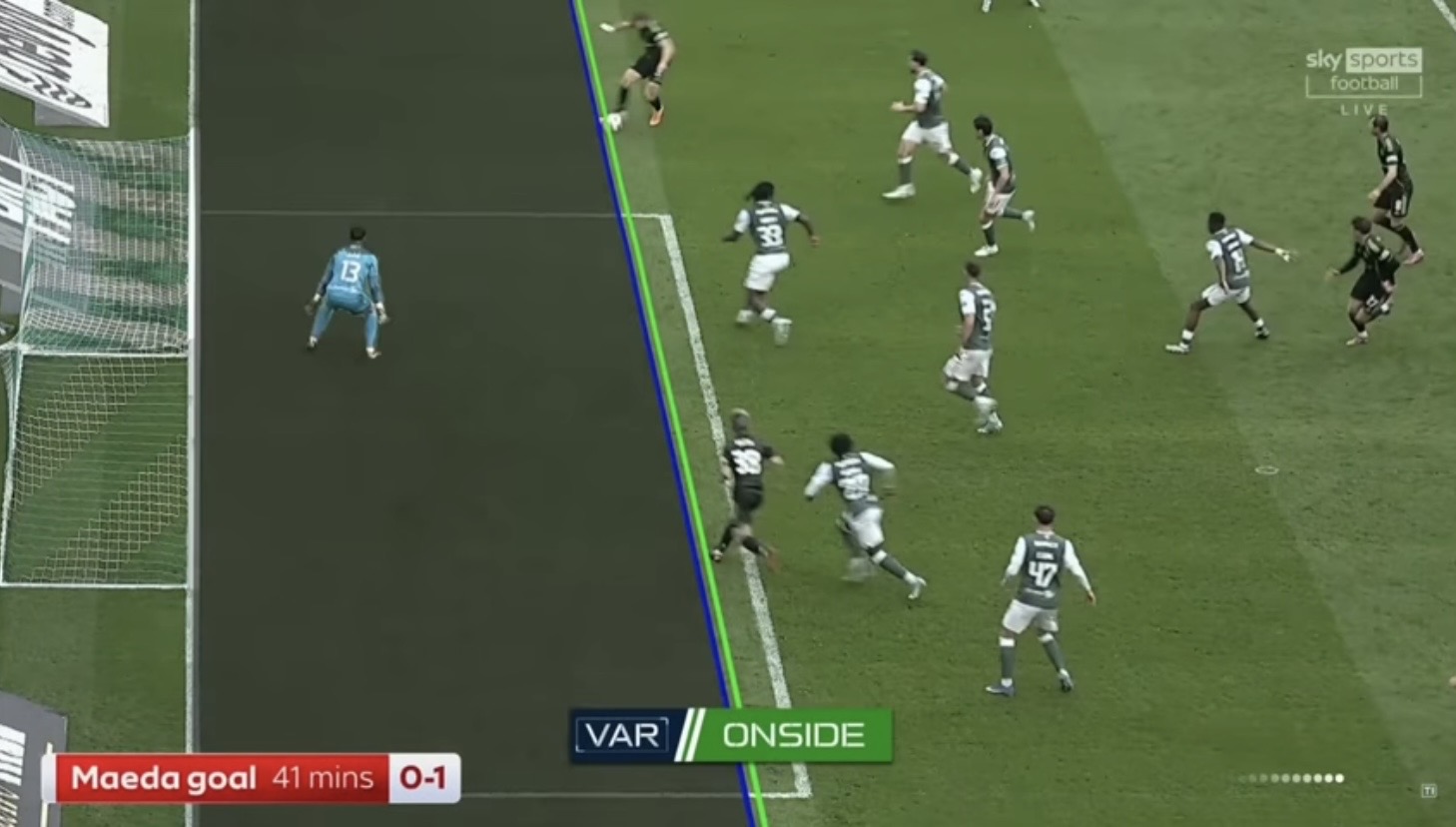
The Scottish Football Association (SFA) has released an official statement addressing the controversy surrounding the goal scored by Daizen Maeda against Hibernian FC, a decision that has reignited fierce debate about the reliability of VAR in Scottish football.
At the center of the dispute is Maeda’s decisive goal, which stood after a VAR review despite strong protests from Hibernian players, staff, and supporters. Many believed there had been a clear infringement in the buildup, with claims ranging from a potential offside to a foul that should have ruled the goal out. However, match officials, backed by VAR, allowed the goal to stand — a call the SFA now insists was correct under the current interpretation of the rules.
In its statement, the SFA explained that the VAR team conducted a thorough check of the phase of play leading up to the goal. According to their findings, there was no conclusive evidence of an offside position at the critical moment, nor was there sufficient proof of a foul that met the threshold for overturning the on-field decision. The governing body emphasized that VAR operates on the principle of “clear and obvious error,” and in this case, that threshold was not met.
Despite this clarification, the reaction from the football community has been overwhelmingly negative. Critics argue that the incident highlights a fundamental flaw in how VAR is applied rather than how it is intended to function. For many fans and analysts, the issue is not just about this single decision, but about a growing pattern of inconsistency that is eroding trust in the system.
Hibernian, in particular, have expressed frustration, feeling that they were on the wrong end of a decision that could have significantly impacted the outcome of the match. From their perspective, the footage appeared to show enough ambiguity if not outright evidence to at least warrant a different conclusion. The sense of injustice has been amplified by comparisons to previous VAR decisions, where similar incidents have produced different outcomes.

The SFA, however, stood firm in its defense. The statement noted that VAR officials must adhere strictly to protocol and cannot re-referee matches based on subjective interpretations unless a clear mistake is identified. This, they argue, ensures consistency and prevents the technology from overstepping its role. Yet ironically, it is this very limitation that many believe is causing the inconsistency fans are complaining about.
The controversy also raises broader questions about transparency. While the SFA provided a written explanation, there have been increasing calls for the release of VAR audio similar to practices in other competitions to give fans a clearer understanding of how decisions are reached. Without this level of openness, skepticism is likely to persist, especially in high-stakes or emotionally charged matches.
Another key issue is the interpretation of what constitutes a “clear and obvious error.” This phrase has become one of the most debated aspects of VAR. In theory, it is meant to limit interference and preserve the authority of the on-field referee. In practice, however, it often leaves room for subjective judgment, which can vary between officials and situations. The Maeda goal is now being cited as a prime example of how that subjectivity can lead to controversy rather than clarity.
For Daizen Maeda and his team, the decision ultimately stands, and the goal counts. But the aftermath has overshadowed the moment itself, shifting attention away from the football and onto the officiating. This is precisely the scenario VAR was introduced to avoid yet incidents like this suggest that the technology is still far from delivering on its promise.
In the end, the SFA’s statement may provide an official explanation, but it has done little to quell the anger among fans and stakeholders. If anything, it has reinforced the perception that VAR, rather than eliminating debate, is simply changing its nature. The challenge now for Scottish football’s authorities is not just to defend decisions, but to rebuild confidence in a system that many feel is no longer working as intended.