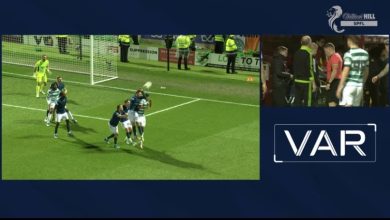
The PGMOL released exact reason why west ham goal against arsenal was disallowed despite what the rules started, game truly gone
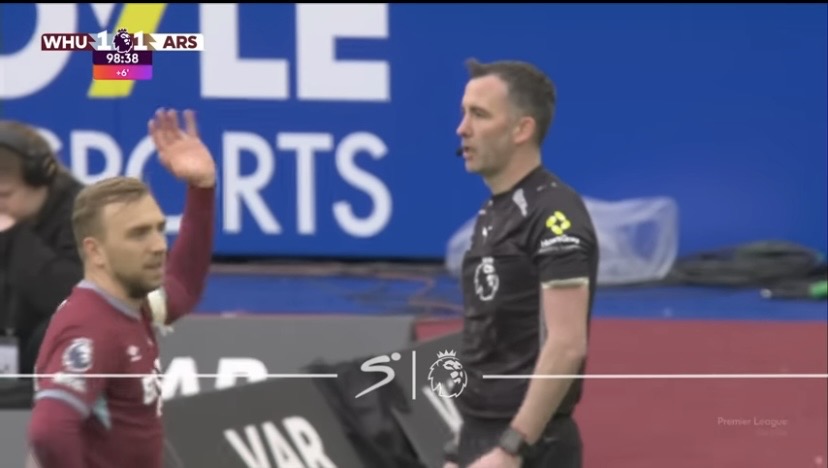
The controversy surrounding West Ham’s disallowed late equaliser against Arsenal has exploded into one of the biggest officiating debates of the Premier League season, and the explanation released by Professional Game Match Officials Limited has only made fans even more frustrated. Supporters across social media are now claiming the game has become overly controlled by VAR interpretations rather than the actual spirit of football.
The incident happened deep into stoppage time when Callum Wilson thought he had rescued a crucial point for West Ham United in their clash against Arsenal. The ball crossed the line after chaos inside the penalty area, sending the London Stadium into celebration. But after a lengthy VAR review, referee Chris Kavanagh overturned the goal and awarded Arsenal a free-kick instead.
According to the official explanation released afterward, the goal was ruled out because West Ham defender Pablo was judged to have fouled Arsenal goalkeeper David Raya during the set-piece sequence. PGMOL chief Howard Webb later defended the decision publicly, insisting the goalkeeper had been “clearly impeded” and prevented from effectively challenging for the ball.
That explanation, however, has triggered even more outrage because many fans believe the interpretation contradicts what is regularly allowed during Premier League matches. Every weekend supporters watch defenders and attackers wrestling inside the box during corners, with referees usually allowing play to continue. In this case, critics argue the contact on Raya was minimal compared to countless similar incidents that never receive punishment.
The biggest frustration among fans is consistency. That word has become the centre of nearly every VAR argument in English football. Supporters can accept difficult decisions if the same standard is applied equally across all matches. What infuriates people is seeing one level of contact punished in one game while identical situations are ignored elsewhere.

Former players and pundits were immediately split after the decision. Some argued the goalkeeper was clearly blocked and that referees have been instructed to protect keepers more aggressively in crowded situations. Others insisted Raya simply failed to command his area and benefited from modern football’s increasing protection of goalkeepers.
What made the controversy even worse was the amount of time VAR took to reach the final verdict. The review lasted more than four minutes, with the referee repeatedly studying replays before finally deciding to disallow the goal. For many supporters, that alone damaged the credibility of the “clear and obvious error” principle. Fans asked a simple question: if it takes several minutes and dozens of replay angles to decide something, how can it truly be considered obvious?
The debate quickly spread beyond just Arsenal and West Ham fans. Rival supporters, former referees, and neutral viewers all weighed in because the moment carried huge consequences at both ends of the table. Arsenal’s title push benefited massively from the decision, while West Ham’s relegation battle became even more difficult.
Some supporters even pointed out previous incidents earlier this season where similar contact on goalkeepers was ignored. That comparison has fuelled accusations that the laws of the game are now being interpreted differently depending on the occasion, the pressure, or the VAR officials involved.
The situation also highlights a growing issue with modern football: supporters no longer celebrate goals freely. The emotional spontaneity that once defined the sport is disappearing because every major moment now comes with a pause for technological inspection. Instead of immediate joy, fans wait nervously for invisible officials in a studio to decide whether celebrations can continue.
PGMOL hoped that releasing the audio and detailed explanation would calm the backlash. Instead, it seems to have achieved the opposite. Many viewers listened to the discussions between the officials and came away feeling the process sounded confused and uncertain rather than decisive.
Whether the decision was technically correct according to the laws is almost secondary now. The real issue is that huge sections of the football public no longer trust the consistency of officiating. That lack of confidence is dangerous for the Premier League because controversy is starting to overshadow the football itself.
For Arsenal fans, the decision could become a defining moment in a title-winning season. For West Ham supporters, it may represent a devastating turning point in their fight for survival. But for many neutral fans, it was another example of why people increasingly feel that football is drifting away from the simplicity and emotion that made the sport special in the first place.