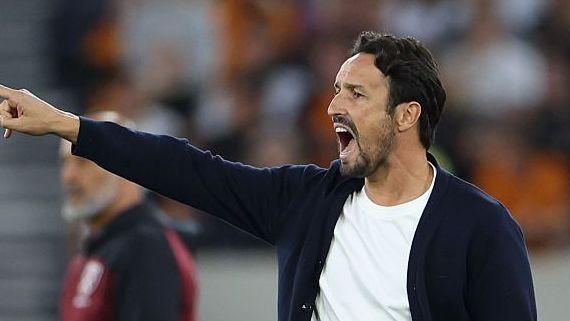
Wolves left Birmingham with a point. But judging by the frustration surrounding César Peixoto after the final whistle, this was not a point that felt like a victory.
Wolves had twice taken the lead. They had shown enough attacking quality to hurt Birmingham and created the kind of opportunities that should normally be enough to secure three points.
They simply failed to finish the job.
And that was where the frustration began.
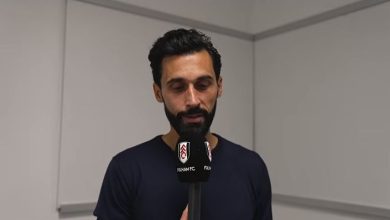
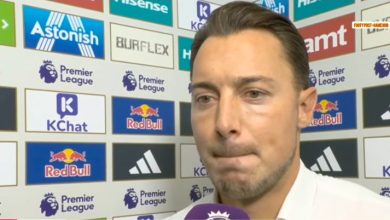
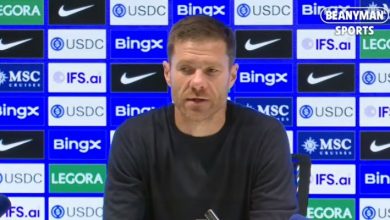
In this post-match interview, Peixoto was asked by a journalist whether he considered the 2–2 draw a fair result.
His response was immediate.
“We should have won this game.”
There was no attempt to disguise the disappointment.
Peixoto believed Wolves had done enough to leave Birmingham with all three points, but crucial mistakes at both ends of the pitch ultimately prevented them from turning their performance into victory.
And when the journalist pressed him about where Wolves had fallen short, two names quickly became central to the conversation.
Jackson Tchatchoua and Adam Armstrong.
Their mistakes came at completely different moments, but both had a major influence on the final result.
The first major talking point was Tchatchoua.
Wolves were leading 2–1 and appeared to have regained control of the contest.
Then came the moment that changed everything.
Tchatchoua attempted to play the ball back towards his goalkeeper, but the execution went horribly wrong.
The ball sailed over José Sá and ended up in the back of the net.
Suddenly, Birmingham were level. For Wolves, it was a devastating way to concede.
The problem wasn’t simply that Tchatchoua made an error. It was when the error happened.
Wolves had the lead.

They had the momentum.
They had an opportunity to manage the final stages of the match.
Instead, one disastrous mistake gave Birmingham a route back into the game.
And that is where Peixoto’s frustration would have been understandable.
But Tchatchoua wasn’t the only Wolves player who would leave the pitch thinking about a missed opportunity.
Because late in the game, Wolves had another chance to win it.
This time, the spotlight fell on Adam Armstrong.
With the match entering its closing stages, Armstrong found himself presented with a huge opportunity to restore Wolves’ lead.
It was the kind of chance that can define a match.
The goal was there.
The opportunity was there.
And three points were potentially there.
But Armstrong couldn’t take it.
His effort went over the open goal.
For a striker, it was an extremely painful moment.
Had Armstrong found the target, Wolves could have been celebrating a dramatic late winner.
Instead, the chance disappeared and so did Wolves’ best opportunity to recover from Tchatchoua’s earlier mistake.
That is what makes the result so frustrating.
Two players.
Two completely different mistakes.
One point.
Tchatchoua’s own goal brought Birmingham level, while Armstrong’s late miss prevented Wolves from potentially going back in front.
The frustration isn’t that Wolves were completely outplayed.
They weren’t.
Wolves showed enough attacking threat to score twice. Fer López put them ahead early, while Ladislav Krejčí restored their advantage after Birmingham had drawn level.
The problem was what happened after those positive moments.
Wolves repeatedly put themselves in a position to win the match and repeatedly allowed Birmingham to remain alive.
That is why the 2–2 scoreline will feel so painful for the visitors.
The question Wolves supporters will be asking is simple:
How did they not win this game?
What if Tchatchoua had found Sá instead of the back of his own net?
What if Armstrong had converted that late opportunity?
What if Wolves had shown greater composure when they were ahead?
Those are the moments that can decide football matches.
And on this occasion, they went against Wolves.
The positive is that Wolves showed enough attacking quality to create opportunities and score twice away from home.
But the negative is impossible to ignore.
You cannot give away an equaliser through an avoidable mistake and then miss a golden opportunity to win the match late on without feeling that something has been left behind.
Wolves had the lead.
They had the chances.
They had the opportunity to take control.
But Birmingham survived.
And that is why, in this report of Peixoto’s post-match reaction, the attention on Tchatchoua and Armstrong carries so much weight.
The manager wouldn’t simply be frustrated by the final score.
He would be frustrated because Wolves had the match within their grasp.
A point was secured.
But two points may have been lost.
For Tchatchoua, the challenge now is to put the own goal behind him and respond.
For Armstrong, it is about making sure the next big opportunity ends differently.
Because if Wolves want to achieve their ambitions, these are precisely the moments they must learn to control.
They had enough to win at Birmingham.
They just didn’t do enough when it mattered most.
And that is why this 2–2 draw could leave Wolves asking the same painful question long after the final whistle: How did we let this one slip away?