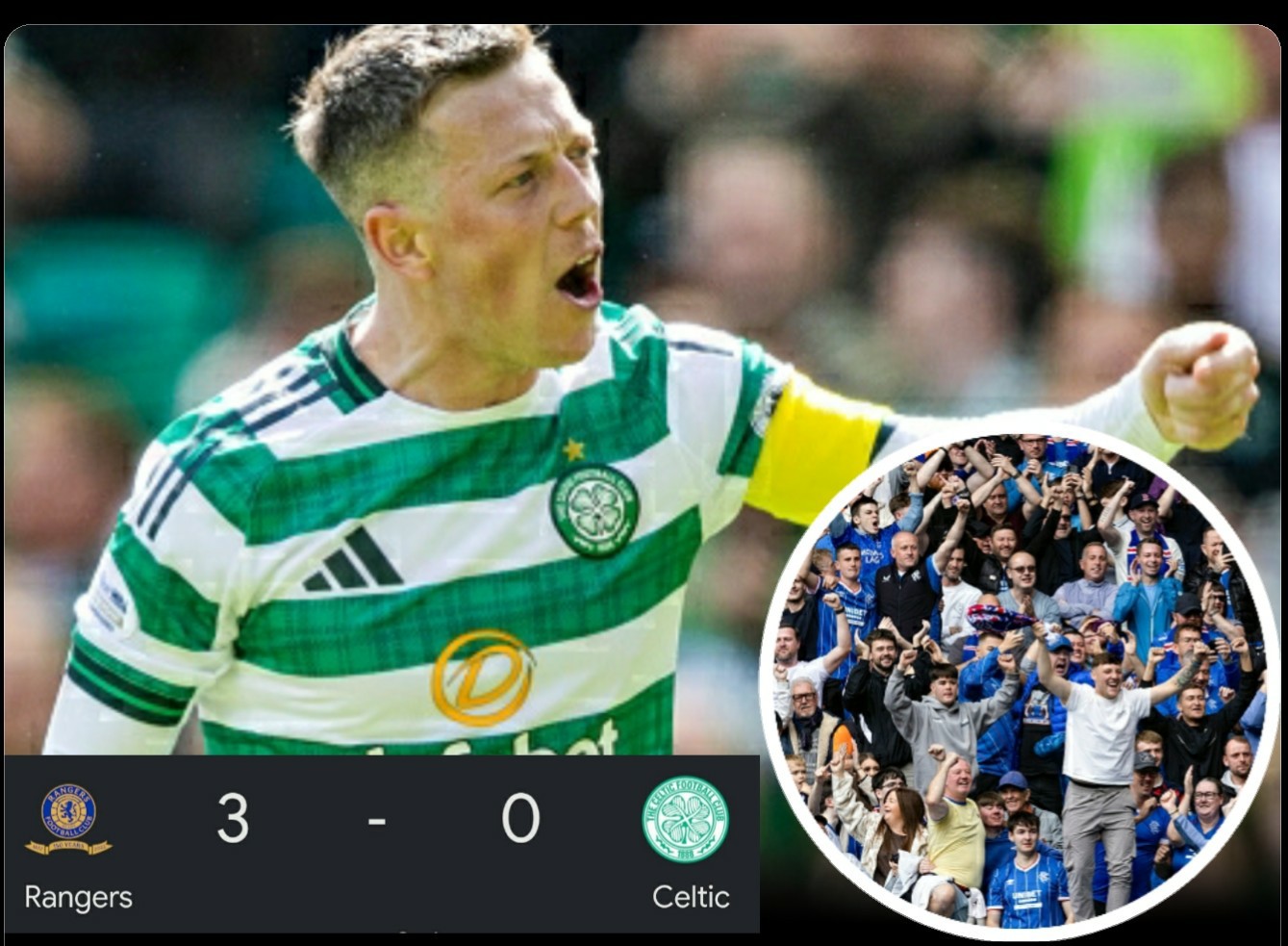
Callum McGregor has once again found himself at the centre of the Old Firm conversation as the Celtic captain’s strong stance on the behaviour surrounding Rangers and Celtic continues to fuel debate among supporters.
The latest controversy comes against the backdrop of one of the most highly charged periods in recent Old Firm history. Celtic and Rangers entered Sunday’s Scottish League Cup quarter-final at Ibrox under unusual conditions, with Celtic supporters prevented from attending following the authorities’ decision to prohibit away fans from Old Firm fixtures this season.
The measures were introduced after disorder during the clubs’ previous meeting at Ibrox in March, when Celtic progressed from the Scottish Cup quarter-final following a goalless 120 minutes and a penalty shootout.

McGregor’s stance puts behaviour back under the spotlight
McGregor has spent years operating at the heart of one of football’s most intense rivalries. His position as Celtic captain means his comments and actions are frequently scrutinised far beyond the pitch.
The latest debate centres on claims surrounding offensive chanting and whether certain behaviour from supporters has crossed a line that should not be tolerated simply because it occurs within the traditional intensity of an Old Firm fixture.
While the specific wording attributed to McGregor in some versions of the story has not been independently established, the wider issue is very real. Police Scotland had already delivered a general behaviour warning to Celtic ahead of Sunday’s match, while the authorities had taken the exceptional step of removing away supporters from the fixture.
That context has made every discussion about chanting, crowd conduct and responsibility particularly sensitive.
An Old Firm rivalry under unprecedented pressure
The traditional atmosphere surrounding Rangers and Celtic is one of the defining features of Scottish football. Yet there is a growing recognition that rivalry and abuse cannot simply be treated as the same thing.
The absence of Celtic supporters at Ibrox created an atmosphere unlike a conventional Old Firm fixture. McGregor himself had spoken before the match about the importance of remaining composed and sticking to Celtic’s footballing identity despite the environment inside the stadium.
Instead of allowing the occasion to become dominated by emotion, the Celtic captain urged his teammates to focus on their football.
That message became even more significant once the match began.
Rangers deliver a statement on the pitch

Rangers ultimately produced the strongest possible response on the football pitch, defeating Celtic 3–0 in a commanding League Cup quarter-final performance.
Dan Neil scored twice, while Kevin Kelsy added a third as Derek McInnes’ side overwhelmed Celtic and secured a place in the semi-finals. It was McInnes’ first Old Firm victory as Rangers manager and a major result for a team that had faced significant scrutiny during the opening stages of his tenure.
For Celtic, the defeat represented their first domestic loss of the season and brought a disappointing end to their hopes of progressing in the competition.
McGregor was seen trying to rally his teammates during the second half, including urging them to prevent Rangers from adding further damage.
The supporters’ debate continues
The reaction beyond the pitch has been every bit as intense.

For some supporters, strong language and passionate chanting are viewed as part of the unique culture of the Old Firm. Others argue that there must be a clear boundary between passionate rivalry and behaviour that becomes abusive, threatening or discriminatory.
That disagreement has become increasingly difficult for Scottish football to ignore.
The authorities’ decision to remove away supporters for Old Firm matches this season demonstrates just how seriously the problem is being treated. Celtic and Rangers supporters will not be present at each other’s grounds for the remainder of the campaign under the current arrangements.
What happens next?
The immediate focus will now return to football, but the wider debate is unlikely to disappear.
Rangers have advanced to the League Cup semi-finals, where they will face Aberdeen, while Celtic must respond quickly after suffering a heavy derby defeat.
For McGregor, the challenge is equally clear. As Celtic’s captain, he remains one of the most influential voices in the dressing room and one of the figures most closely associated with the club’s identity.
Whether the latest controversy ultimately leads to meaningful change will depend on more than one player’s words. Clubs, supporters, authorities and players all have a role to play in determining what the next chapter of the Old Firm rivalry looks like.
The passion between Rangers and Celtic is unlikely ever to disappear. But after another fixture surrounded by controversy, security concerns and fierce debate, the question facing Scottish football is whether that passion can remain intense without allowing unacceptable behaviour to become part of the spectacle.