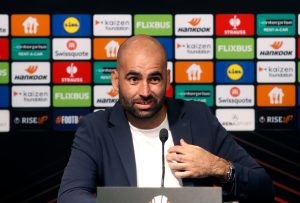
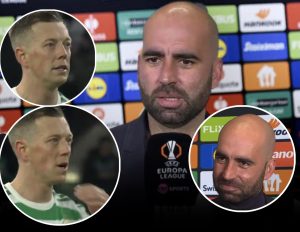
BRUTAL! Martin O’Neill ABSOLUTELY DESTROYS Clueless TV Reporter on Live TV Over Disrespectful Celtic Question

A heated television exchange involving Celtic manager Martin O’Neill would certainly attract attention, particularly when questions about the club’s performances, players and ambitions are involved. O’Neill is a familiar figure in Scottish football, known for his passionate personality, direct communication style and strong connection with Celtic supporters.
For Celtic supporters, questions directed at their manager are never simply about football. They can touch on the club’s identity, expectations, history and the enormous pressure that comes with representing one of Scotland’s biggest institutions.
Why Questions About Celtic Can Spark Strong Reactions

Celtic operate under intense scrutiny. Every result, tactical decision, team selection and public statement can become a major talking point among supporters and the media.
A manager in O’Neill’s position must balance several responsibilities. He is expected to explain disappointing performances, defend his players when necessary, acknowledge mistakes and reassure supporters that the team remains focused on its objectives.
At the same time, journalists have an important responsibility to ask difficult questions. Supporters want answers when performances fall below expectations, and press conferences provide an opportunity to examine decisions that might otherwise remain unexplained.
The challenge is finding the right balance between tough questioning and respectful communication.
If a question appears unnecessarily personal or dismissive, a manager may decide to challenge its wording rather than simply accept its premise. Equally, a journalist may believe that a difficult question is justified by the circumstances surrounding the team.
That tension is part of modern football, where every exchange can quickly become a major talking point.
Martin O’Neill’s Connection With Celtic
O’Neill has a significant history with Celtic and remains a recognisable figure among the club’s supporters.
During his original managerial spell from 2000 to 2005, he led Celtic through a successful period that included domestic trophies and a memorable run to the 2003 UEFA Cup final.

Those achievements helped establish a lasting connection between O’Neill and the Celtic support.
His managerial personality has often been associated with strong opinions, tactical conviction and a willingness to speak directly about football matters. Consequently, any reported confrontation involving him is likely to attract interest from supporters who remember his earlier years at the club.
For many fans, a manager’s willingness to defend the club publicly can be an important part of the relationship between the dugout and the stands. Nevertheless, the circumstances surrounding any particular exchange matter, and the exact words used should be established before conclusions are drawn.
The Media’s Role in Scottish Football
Scottish football has a passionate audience, and Celtic-related discussions frequently generate intense debate across television, radio and social media.
Managers face questions about results, recruitment, injuries, tactics and the expectations placed upon their teams. Reporters, meanwhile, must ask questions that are relevant to supporters while giving those involved an opportunity to respond.
Disagreement between a manager and a journalist does not automatically mean that either party has acted improperly. The wording of the question, the response given and the surrounding context all help determine how an exchange should be understood.
When a disagreement occurs live on television, the audience also sees the participants’ immediate reactions. Short clips can then circulate online, sometimes without the full conversation that preceded them.
That is why the complete footage is especially important when assessing claims that a manager confronted a reporter over a disrespectful question.
Celtic Supporters Will Want the Full Story
For Celtic supporters, the headline raises an obvious question: what exactly was asked, and how did O’Neill respond?
The answer would help establish whether the exchange concerned the team’s performance, a particular player, the manager’s decisions or a wider issue involving the club.

Without confirmed details, it would be unfair to invent dialogue or present an unverified confrontation as an established event. The most useful account would include the reporter’s original question, O’Neill’s full response and the context in which the exchange took place.
If authentic footage confirms the incident, supporters will be able to judge the exchange for themselves and decide whether the question was reasonable or whether the manager had grounds to challenge it.
Until then, the central issue remains the balance between accountability and respect in football journalism.
One thing is certain: whenever Celtic are involved in a major media debate, the reaction can extend well beyond the television studio.
Did Martin O’Neill have a valid reason to challenge the reporter, or should managers simply answer difficult questions and move on? The full exchange, rather than the headline alone, is what supporters need to see before reaching a conclusion.