O’NEILL STUNS INTERVIEWER AFTER ‘MOTHERWELL ROBBERY’ CLAIMS AS HE FIRES BACK WITH QUESTION THAT HAS FANS IN TOTAL MELTDOWN
Celtic FC’s dramatic 3–2 win over Motherwell FC will be remembered as one of the most controversial Scottish Premiership matches of the season, with a stoppage-time VAR penalty, late goals, and a post-match interview involving Martin O’Neill all combining to create a night that quickly spiralled into major online debate.
What should have been a straightforward discussion about a hard-fought away victory instead turned into a wider talking point about refereeing, VAR intervention, and the way modern football narratives are shaped in real time on social media.
Motherwell strike first in high-intensity start
Motherwell began the match with real intensity and purpose, pressing high and forcing Celtic into mistakes during the opening stages. Their aggressive approach paid off in the 17th minute, when Elliot Watt finished confidently after sustained pressure, giving the home side a deserved early lead.
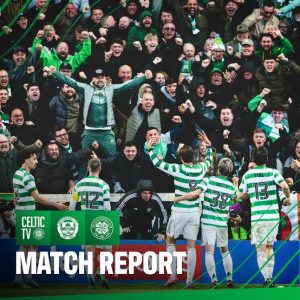

The goal lifted the atmosphere inside the stadium and disrupted Celtic’s rhythm, with the visitors struggling initially to impose their usual control in midfield.
However, as the first half progressed, Celtic gradually worked their way into the game, increasing possession and finding more space between the lines.
Celtic respond with momentum shift before half-time
Celtic’s improvement was eventually reflected on the scoreboard. Two quick goals from Daizen Maeda and Benjamin Nygren turned the match around, shifting momentum firmly in favour of the visitors before the interval.
Maeda’s movement caused constant problems for the Motherwell defence, while Nygren’s composure in attacking areas allowed Celtic to exploit spaces that opened up as the home side began to tire.
By half-time, Celtic had taken control of possession and territory, appearing to have wrestled momentum away after a difficult start.
Motherwell refuse to fade in second half
Despite Celtic’s dominance for long spells, Motherwell remained disciplined and dangerous in transition, refusing to allow the match to drift away from them.
Their persistence was rewarded in the 85th minute when Liam Gordon struck a crucial equaliser, making it 2–2 and sending the home crowd into celebration.
That goal completely changed the atmosphere, turning what had looked like a controlled Celtic win into a tense and chaotic final phase. Both teams pushed forward in search of a winner, with the game opening up dramatically in the closing stages.
VAR penalty in stoppage time decides the match
Just when it looked as though the match would end level, controversy struck deep into added time.
A VAR review led the referee to award a penalty for handball inside the area in the 99th minute, a decision that immediately triggered furious protests from Motherwell players and staff. Several players surrounded the referee in frustration, while supporters inside the stadium reacted with anger and disbelief.
The incident instantly became the defining moment of the night, overshadowing everything that had come before it.
Celtic forward Kelechi Iheanacho stepped up under extreme pressure and converted the penalty, sealing a dramatic 3–2 victory with virtually the final kick of the game.
Post-match interview becomes viral talking point
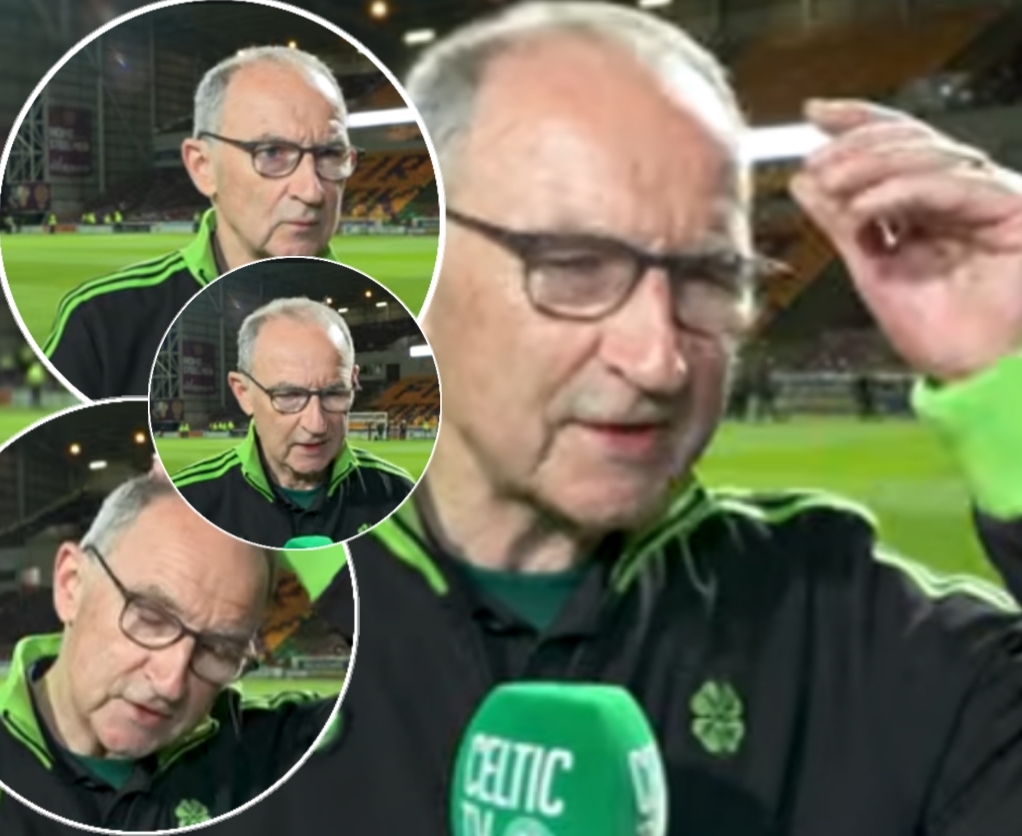
After the final whistle, attention quickly shifted from the pitch to the media room, where former Celtic manager Martin O’Neill became the centre of a post-match exchange that rapidly gained traction online.
During his media duties, O’Neill was asked about growing online claims suggesting Motherwell had been “robbed” by the late penalty decision. The question immediately changed the tone of the discussion.
What followed was a brief but striking moment that has since been widely circulated on social media.
Reporter: “There are claims online that Motherwell were robbed by that late penalty decision… what’s your view on that?”
O’Neill: “Robbed?” [pause] “Who exactly is being robbed there the players, or the game?”
The response shifted the dynamic of the interview instantly, with O’Neill challenging the framing of the question rather than engaging directly with the accusation.
The exchange continued briefly:
Reporter: “It’s just how some fans are describing the incident…”
O’Neill: “Yes, but that’s the point, isn’t it? People interpret moments differently depending on the outcome.”
Reporter: “So you don’t agree with that view?”
O’Neill: “Emotions are always high after matches like that. I’ll leave that for others to judge.”
The clip spread rapidly online within minutes, becoming one of the most discussed moments of the night.
📣 Social media reaction splits opinion
Reaction online was immediate and divided. Many supporters praised O’Neill for refusing to be drawn into controversial language, suggesting he handled the question with composure and experience by challenging its framing rather than escalating the debate.
Others, however, felt the response was sharp and dismissive, arguing that it avoided addressing the frustration surrounding the late penalty decision.
Across platforms, short clips of the exchange were shared widely, with many users focusing more on O’Neill’s reaction than the match itself a reflection of how quickly post-match moments can dominate modern football narratives.
Wider debate over VAR and timing
Beyond the interview, discussion also focused heavily on the role of VAR in deciding matches in the final moments. The timing of the penalty decision, coming in the 99th minute, became a key point of debate among supporters and commentators online.
While some argued that the correct decision should be made regardless of timing, others questioned whether such marginal calls should define tightly contested matches in stoppage time.
The controversy ensured that the game remained a talking point long after full-time, with analysis shifting away from tactics and performance toward refereeing consistency and technology’s influence on the game
Celtic leave with all three points, but the victory has been overshadowed by controversy and conversation far beyond the pitch.
Between the late VAR penalty and Martin O’Neill’s now-viral post-match exchange, the match has become another example of how quickly modern football stories can be shaped not just by goals and results, but by moments in interviews and the reactions they generate online.
What should have been a routine league fixture has instead become a full-scale talking point one that continues to divide opinion long after the final whistle.